The bend happens where the hand can hide it
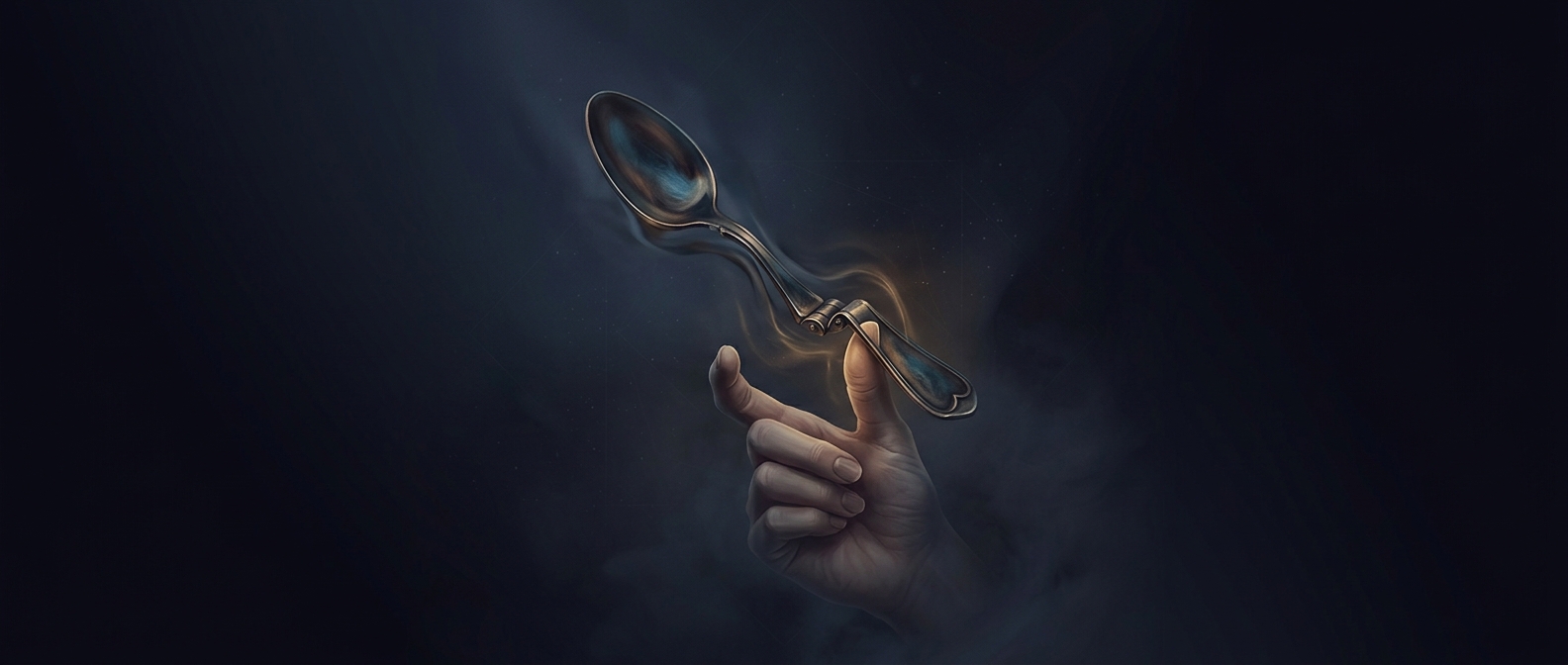
A spoon’s handle is a small lever. Pressing it sideways near the bowl or gripping it between the fingers gives the performer a point to push against; the thumb can supply steady force while the other hand disguises the pressure. The metal does not need to soften or change shape mysteriously. It yields when the force at a narrow spot exceeds what it can spring back from.
Misdirection makes a gradual bend look sudden
The performer may apply pressure while attention is drawn to a face, a spoken claim, or a hand movement that seems unrelated. A slight bend can begin before the audience notices, then deepen as the spoon is turned or covered. Changing its angle also changes how the curve catches the light, making an existing bend appear more dramatic.
Some spoons are easier to bend than others: thin, soft metal yields more readily than thick, stiff cutlery. A performer can also start with a spoon that has already been weakened or partly bent. The audience sees the final change, but not necessarily when the force began or how much work it took.
Why the thumb matters
A thumb is compact, strong, and easy to place behind a finger or the spoon itself. That lets it press at the crucial point while the grip looks casual. The trick is not that metal becomes pliable on command; it is that a small, concealed force can do real work while attention is elsewhere. Once you know where to watch, the thumb’s pressure—and the spoon’s changing angle—become part of the method rather than evidence of magic.