Why a Small Aim Can Send a Ball Far Off Course
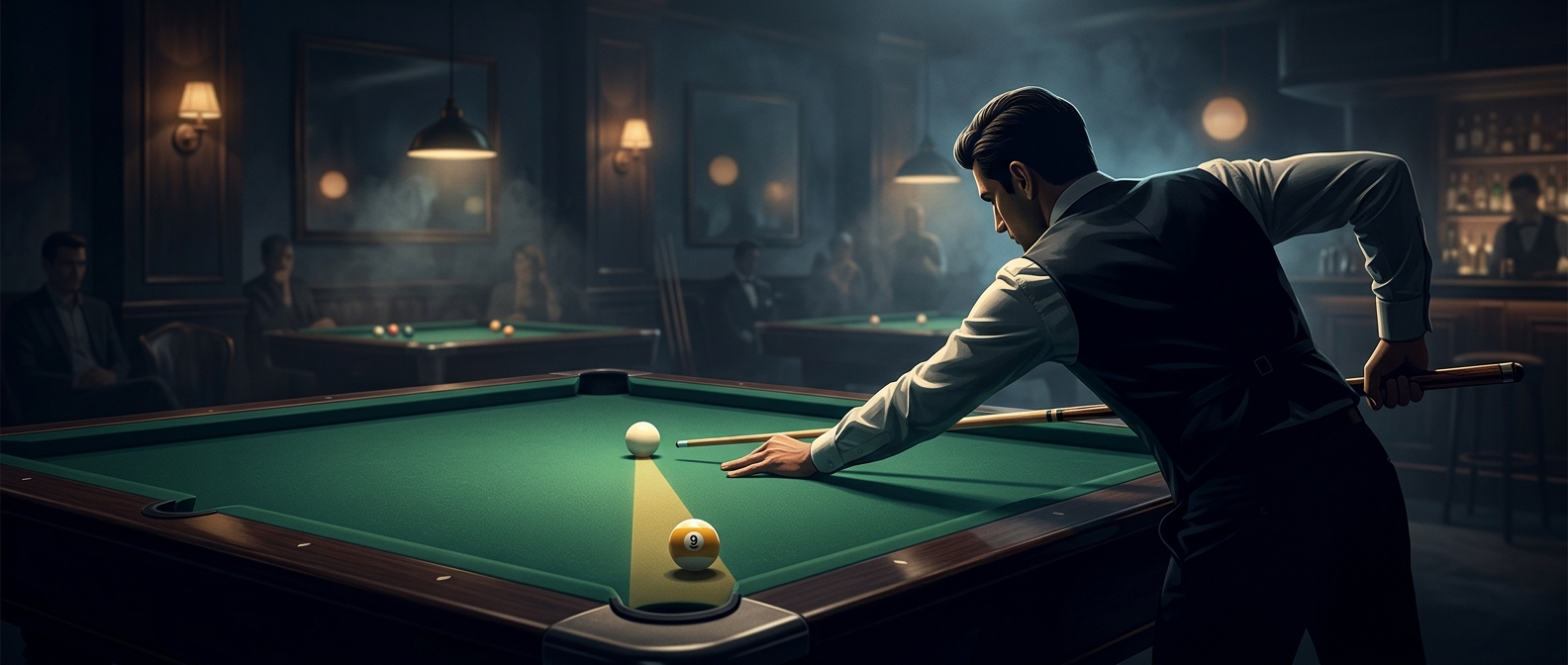
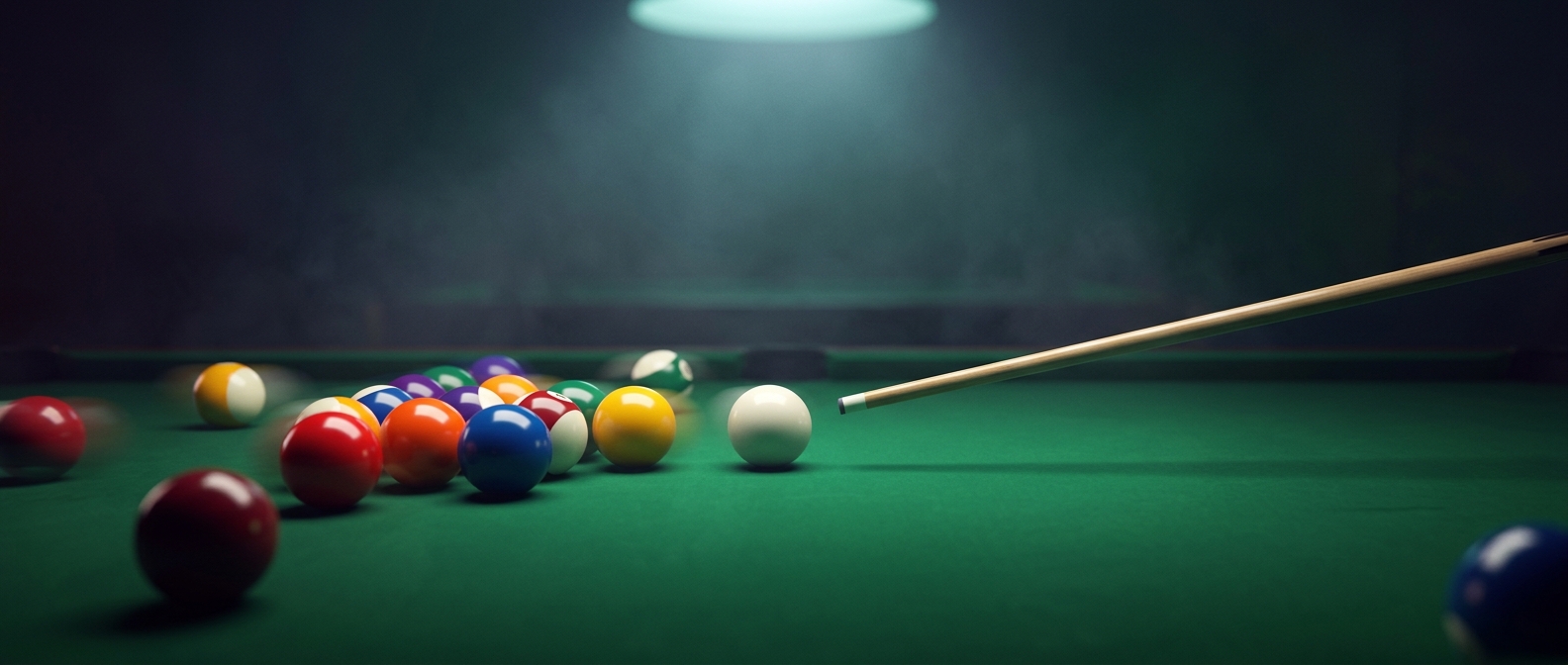
A pool shot is a controlled collision. The cue stick accelerates the cue ball, which then transfers some of its motion to another ball. If the cue ball hits the target squarely, the target travels forward. If it strikes off-center, the target heads along a different line while the cue ball may continue in another direction. That difference is what lets a player pocket one ball and still plan where the cue ball will stop.
The useful geometry is less like aiming a projectile and more like choosing where two rolling objects will meet. A player judges the contact point on the target ball, not just the pocket. Aiming at its center sends it roughly straight; aiming to one side produces a cut shot, sending it at an angle.
Spin Changes What Happens Next
The cue ball can also be struck above, below, or to either side of its center. That adds spin, or rotation, which affects how it rolls after impact. A ball hit above center tends to keep moving forward after contact; one hit below center can slow, stop, or draw backward, depending on the shot. Side spin can alter how the cue ball rebounds from a cushion, the table’s padded rail.
These effects depend on speed, contact, and the felt’s friction, so a player has to balance several choices at once: how hard to hit, where to strike, and what path the cue ball should take afterward.
Why Chalk Matters
Chalk on the cue tip helps it grip the cue ball instead of sliding off. That grip makes off-center hits more reliable, especially when a player wants spin. Without enough friction at the instant of contact, the cue tip can glance across the ball—a miscue—sending the shot unpredictably.
The numbered balls and pockets make the table a geometry problem with consequences: every successful shot changes which angles remain available for the next one.