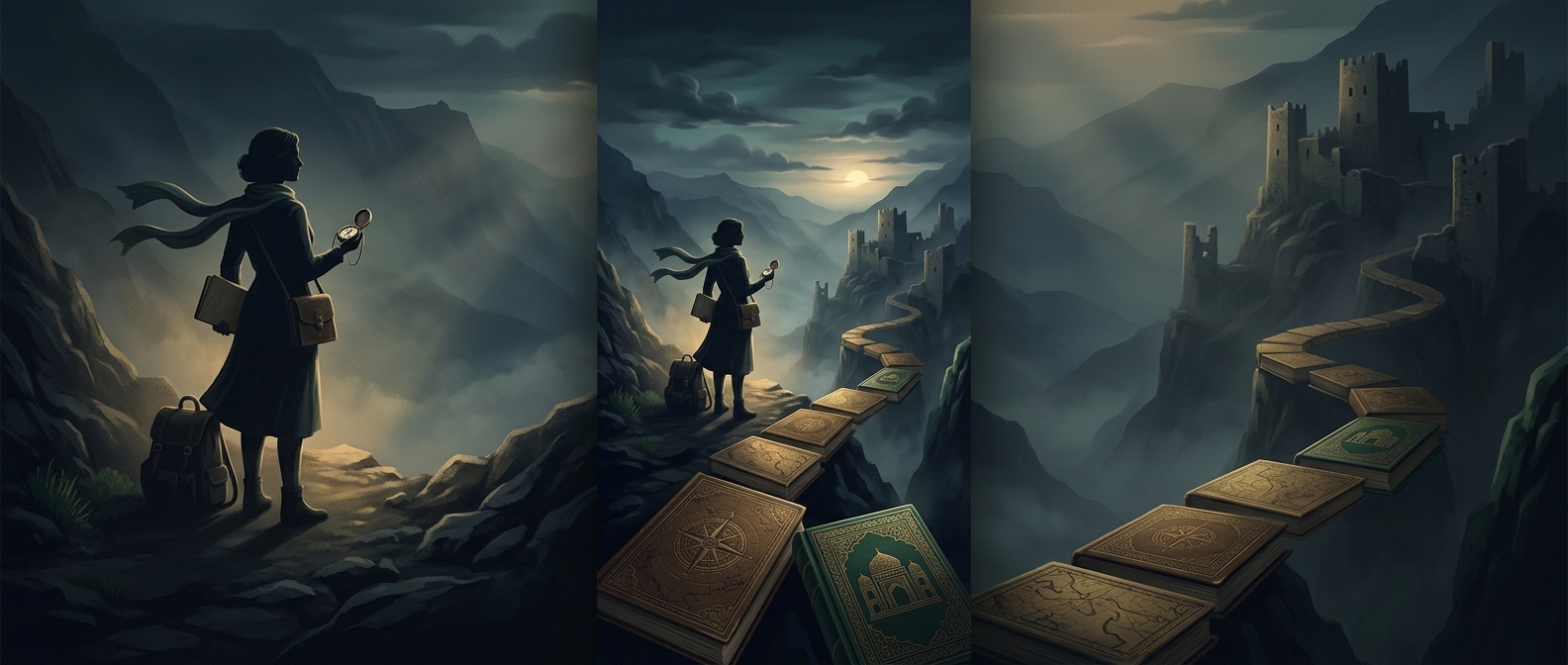
Following the name into the mountains
The “Valleys of the Assassins” was not an official name for a single valley. It was a dramatic label for the rugged Alamut region of northern Iran, associated with the medieval Nizari Ismailis, a branch of Shia Islam whose leaders held mountain fortresses there. “Assassins” was the name that entered European accounts; the mountain communities and their history were more complex than the legend suggested.
That gap between a famous story and a real landscape gave Freya Stark a practical reason to go. In the 1930s, she traveled through remote country where steep routes and scattered settlements made movement difficult. Reaching the region meant more than finding a point on a map: it meant navigating terrain and learning how its people lived, while testing inherited accounts against what she could observe.
From expedition to travelogue
Stark’s book, The Valleys of the Assassins and Other Persian Travels, brought the journey to readers far beyond Iran. A travelogue could turn difficult travel into a narrative, but it also let Stark connect ruins and place-names to the ordinary geography surrounding them—passes, villages, and mountain routes. The legendary label drew readers in; the journey made the setting more than a backdrop for medieval tales.
The enduring appeal is that contrast: a name loaded with remote history, encountered not from a distance but by traveling through the valleys themselves. A fortress on a mountain ridge could be both a remnant of a political past and a landmark in someone’s present-day landscape.