Why a clap at El Castillo can sound like a bird
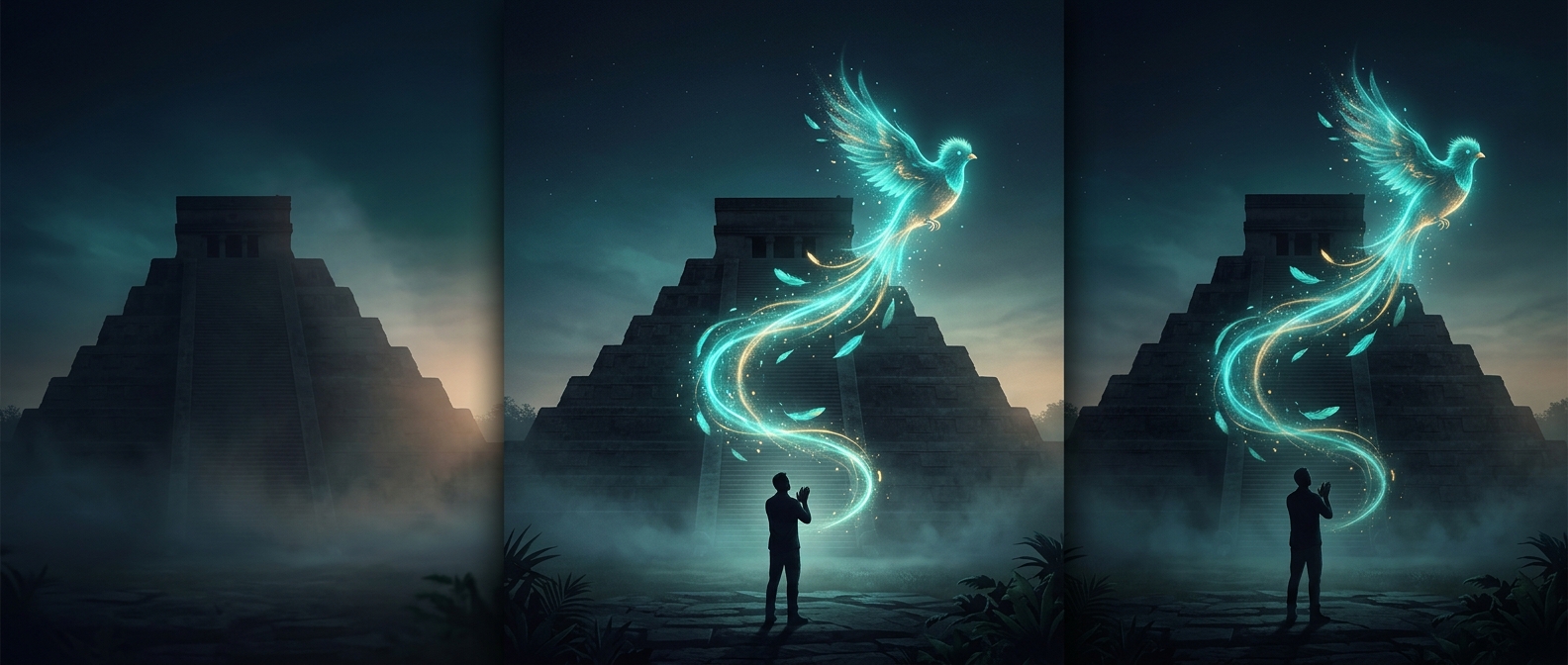
At Chichén Itzá, a sharp clap facing the pyramid’s staircase can return as a brief, chirping echo. The effect comes from the staircase’s many hard stone surfaces: each step can reflect part of the sound back toward the listener, with tiny differences in when and how strongly those reflections arrive. Together, the returns reshape the clap into a short, pitched-sounding burst rather than a simple repeat.
A clap contains many frequencies at once. The staircase does not send every part of that sound back in exactly the same way, so the echo can seem to rise or fall in pitch. Visitors often compare it to the call of a quetzal, a bird with deep cultural significance in Maya traditions. The resemblance is an auditory impression—not evidence that the pyramid reproduces a bird call perfectly.
An acoustic effect built into a monumental setting
The sound is easiest to notice when the clap is crisp and the surroundings are relatively quiet. Where someone stands, the direction of the clap, and the ambient noise all affect what they hear. The staircase acts less like a loudspeaker playing a recording than like a surface that breaks one sound into a patterned set of reflections.
That distinction matters: the echo can be striking without proving that its makers designed the pyramid specifically to imitate a bird. What visitors can experience directly is the meeting of sound and architecture—a single handclap transformed by the repeated stone steps into something unexpectedly alive.