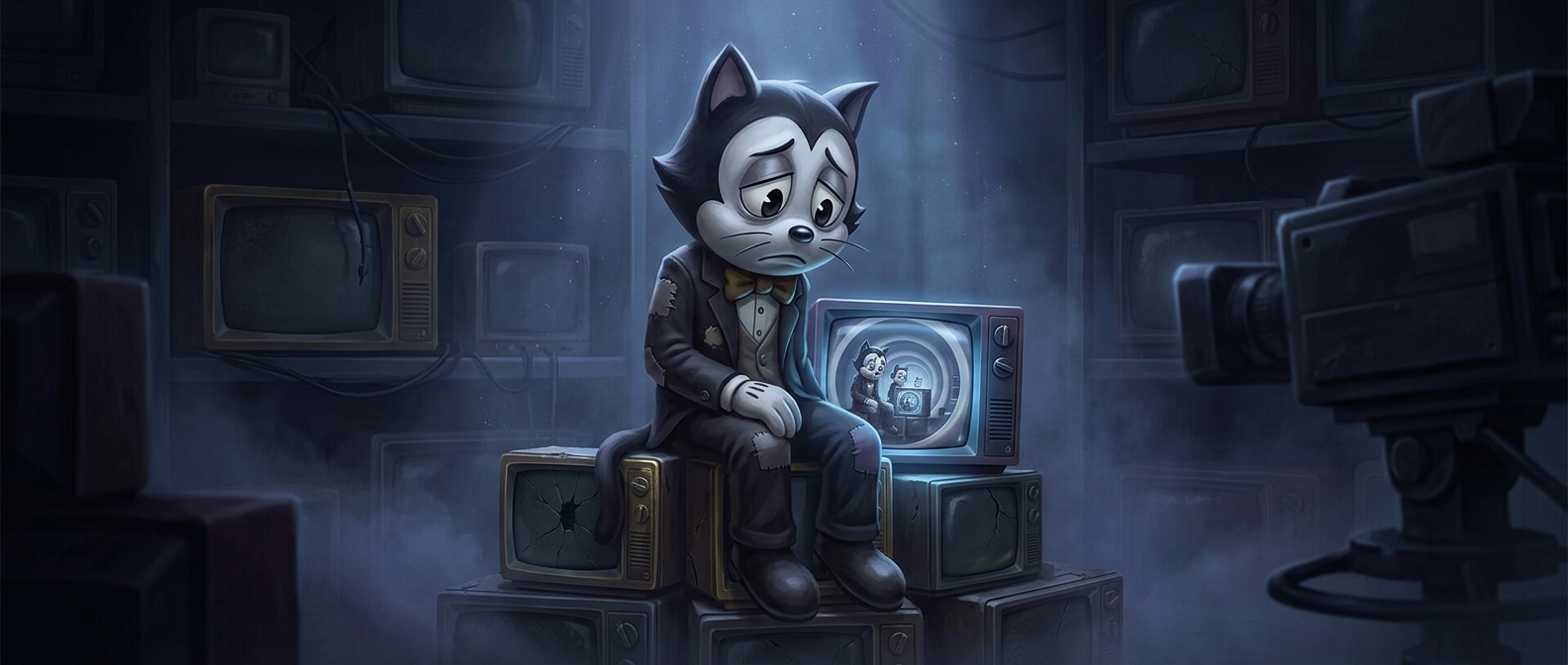
When a Mascot Starts Questioning the Audience
A cartoon mascot is built to feel familiar: a simple, cheerful figure whose job is to entertain. The bear’s doubts disrupt that arrangement. Instead of treating its cartoon world as unquestioned, it asks whether it has an independent self—or whether it exists only because people want it to.
That question turns the character’s usual role inside out. A mascot normally performs for an audience; this one seems aware that an audience may be the reason it exists. Its cheerfulness can then read as more than a personality trait: it is part of the image people expect from it, even while its private thoughts resist that image.
The Unease Behind the Cute Exterior
The contrast works because the bear’s doubts resemble a real philosophical problem in miniature: how can someone know they are more than the roles or expectations placed on them? For a human character, that might mean questioning a job or identity. For a cartoon mascot, the question reaches further—without viewers imagining or drawing it, would there be anyone there at all?
That tension lets a bright, familiar character carry unsettling ideas without changing its appearance. The bear can remain cute while making the audience reconsider the relationship between a fictional figure and the people who give it meaning. Its existential crisis is therefore part of the performance, too: the mascot’s most revealing act is asking whether there is a self behind the act.