Why a Dog’s Nose Has Economic Value
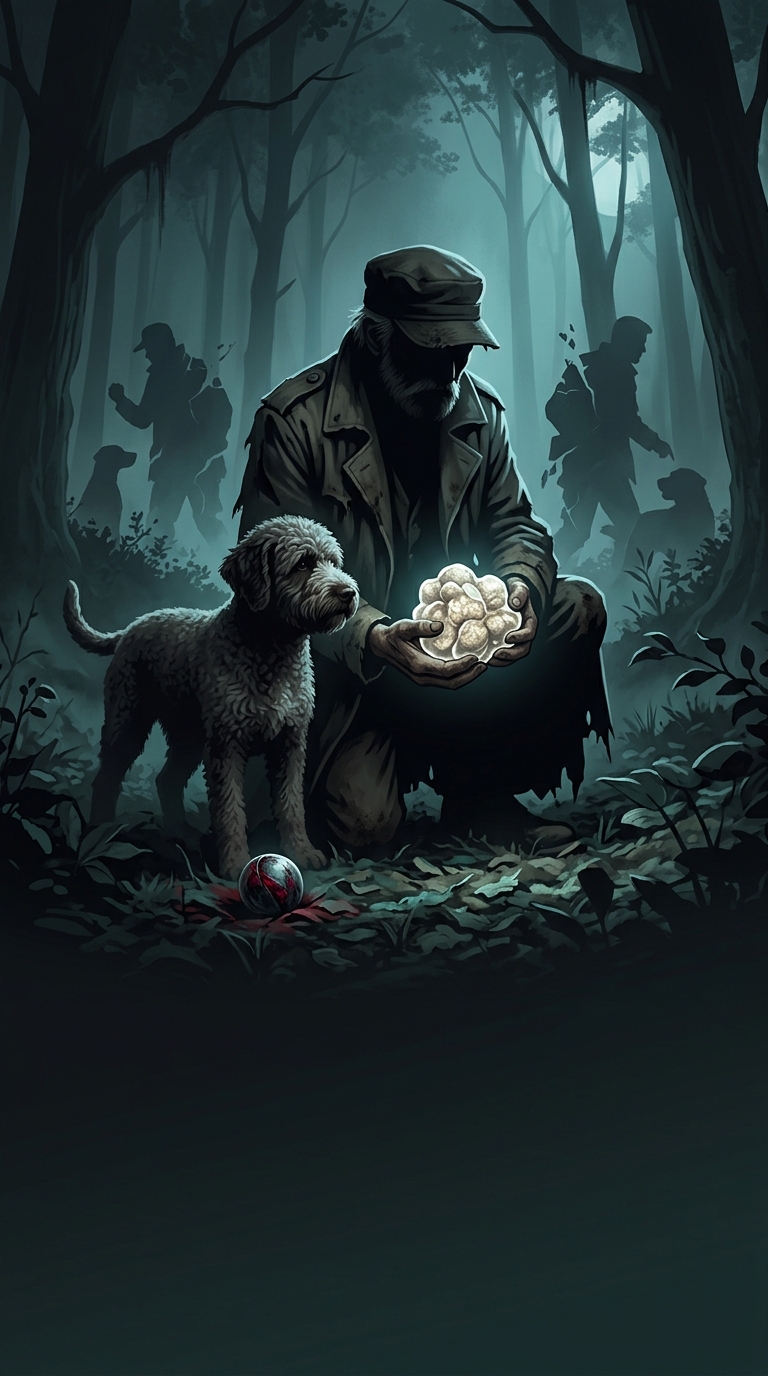
Truffles grow underground, often close to the roots of trees, so a hunter cannot simply scan the ground and spot a ripe one. As a truffle matures, it releases a distinctive aroma that can travel through the soil and into the air. A trained dog learns to recognize that scent and indicate where it is strongest, allowing the hunter to dig with care rather than turn over a wide patch of ground.
That ability is not interchangeable with ordinary equipment. A detector can register a signal, but it cannot roam a woodland floor, distinguish a target amid competing smells, and guide a person to a small patch of earth. The dog is a working asset whose value comes from both its natural sensitivity and the time spent teaching it what to find.
The Cost of Making a Rival Less Competitive
Truffles are a scarce, variable product: where they grow and what can be found changes with local conditions and the season. That makes each successful search matter. A hunter with an experienced dog can locate more opportunities than someone searching without one, while the quality and condition of the harvest affect what it can earn.
Poisoning a competitor’s dog is therefore an attack on productive capacity, not merely the loss of an animal. It can erase years of training and leave the hunter without the tool needed to work. The damage also reaches beyond one day’s harvest: replacing an experienced dog takes time, and a less capable search can mean fewer truffles found during a limited season.
A Market That Starts in the Woods
The restaurant-facing price of a truffle rests on work that happens far from the dining room: finding it, lifting it from the soil without damaging it, and getting it into trade while it is still in useful condition. Because a skilled dog helps determine whether that work can happen at all, competition over the animal can become competition over access to the product. The truffle’s chain of value begins not at the market stall, but with a nose searching the forest floor.