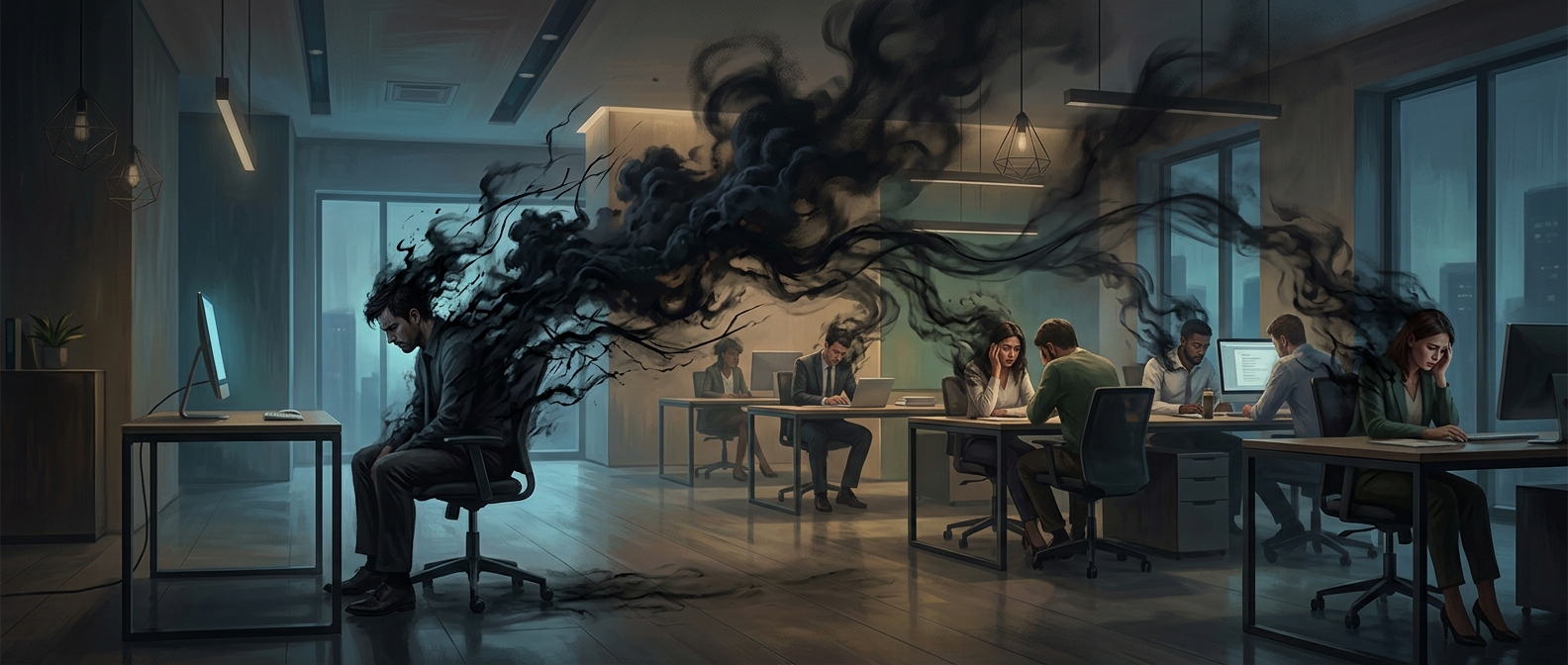
How a tense expression changes the room
A coworker’s irritation can become a workplace signal before anyone says what is wrong. A tight jaw, clipped reply, or heavy sigh gives colleagues clues about how to approach the person—and whether the situation feels safe or tense. People often unconsciously mirror expressions and vocal patterns. That small imitation can feed back into their own feelings, making the mood easier to catch than a spoken explanation would be.
From one person’s mood to a team’s attention
Once several people notice the same tension, they may begin interpreting ordinary events through it: a delayed answer can seem dismissive, and a routine correction can sound hostile. The resulting caution or defensiveness changes how people share information and coordinate work. A bad mood does not automatically infect everyone, but repeated contact gives it more chances to shape the room.
This is why emotional spillover has practical consequences. Colleagues may spend attention managing the atmosphere—choosing words carefully, avoiding a conversation, or trying to repair a misunderstanding—instead of concentrating on the task. The cost is not just unpleasantness; it can be friction in everyday collaboration.
What interrupts the spread
Naming the concrete problem can help separate it from the mood surrounding it. A clear, task-focused exchange gives coworkers something specific to respond to, rather than leaving them to guess what a frown or sharp tone means. In an office, one person’s expression can set the emotional weather—but it does not have to dictate the next conversation.