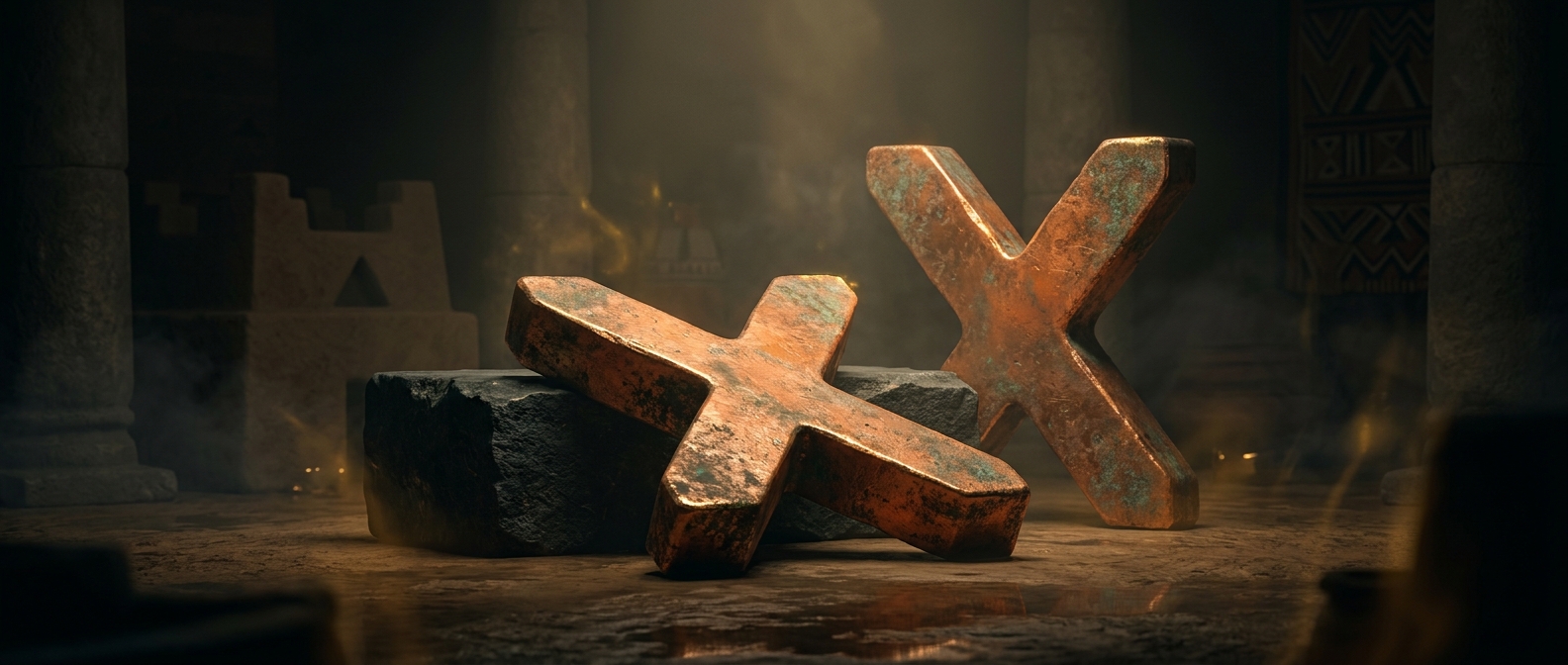
Copper shaped for high-value exchange
Katanga crosses were cast copper ingots used as money in parts of Central Africa. Their cross-like form made them recognizable objects, but their worth rested on the copper itself: a useful, durable metal that could be worked into tools and other goods. Unlike small coins meant for everyday purchases, some crosses were substantial stores of value, weighing as much as two pounds.
Why a metal ingot could settle a deal
A large payment required something both parties could assess and accept. Copper made that possible: the ingot was tangible wealth, and its material could be reused rather than being valuable only because a government promised it was. Crosses could therefore move value between people in transactions too consequential for ordinary small change, including land purchases and tribute to rulers.
Their use also shows that money does not have to be a lightweight coin or paper note. In this setting, wealth could be carried as metal whose value was tied to a practical commodity. That same role connected the crosses to grim transactions, including slave trading: copper money could facilitate exchanges without making those exchanges any less coercive or destructive. A single heavy ingot could represent not pocket change, but a major transfer of wealth and power.