Why a Disc Change Could Break a Climax
A suspenseful scene depends on more than what appears on screen. The player is tracking who is in danger, what has just happened, and what they expect to happen next. That mental picture helps suspense build: each new sound, movement, or line of dialogue is interpreted as part of the same unfolding moment.
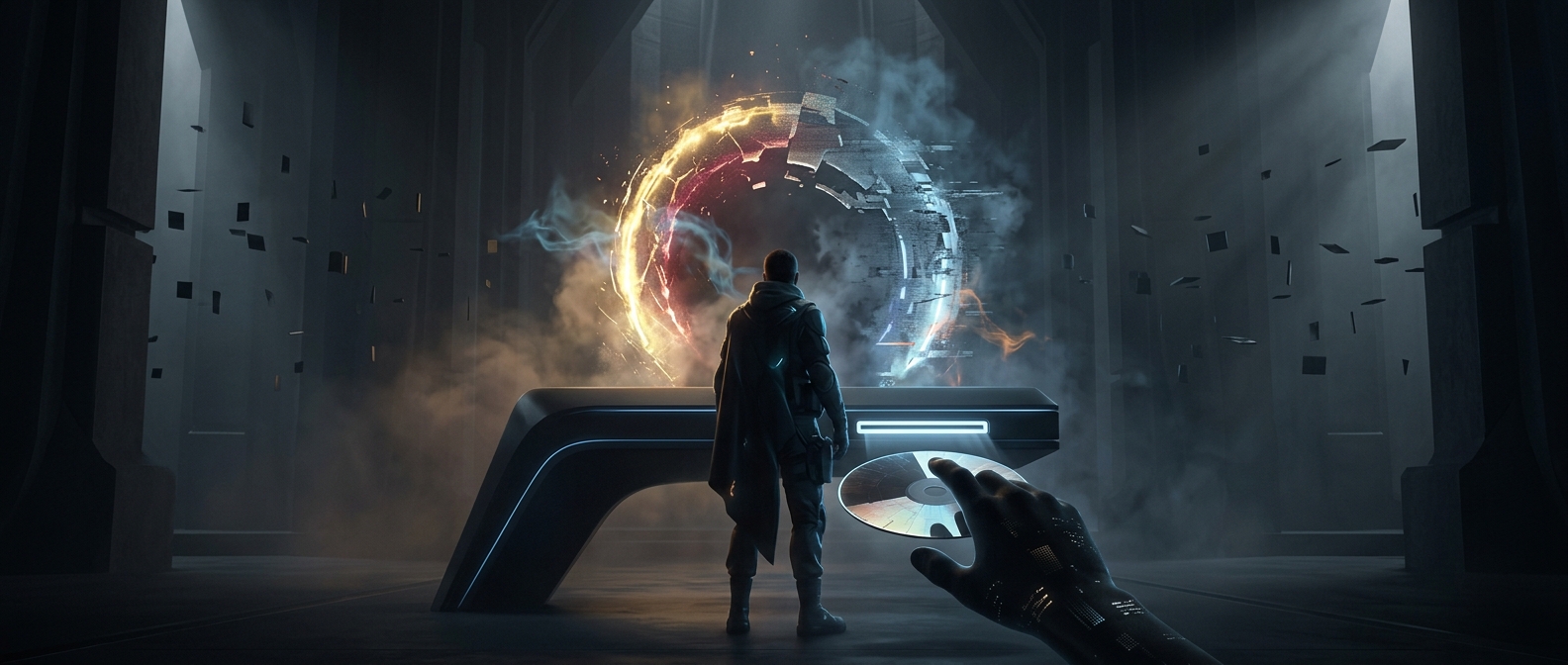
A disc change forces a different kind of attention. The player must stop following the scene, operate the console, and make sure the game can continue. The story may still be waiting at the same point, but the player’s attention has shifted from the fictional danger to a practical task.
The Cost of Switching Attention
This is a small version of a familiar mental disruption: changing tasks means letting go of one set of concerns and picking up another. During a tense encounter, the player may have been anticipating an attack or deciding what to do. Handling the swap replaces those immediate questions with procedural ones—where the next disc is and whether it is in place.
The interruption also makes the game’s physical machinery noticeable. A moment that had felt like direct participation becomes an activity mediated by a console and its discs. When play resumes, the player has to reconstruct the scene’s emotional momentum rather than simply carry it forward.
Why the Break Was Hard to Avoid
Games spread across multiple discs when their content exceeded what one disc could hold. A change was therefore a practical boundary in the delivery of a large game, not necessarily a dramatic pause chosen for the story. If that boundary fell near a major confrontation, the hardware’s schedule could collide with the narrative’s timing.
The scene could recover, but the pause changed its shape: instead of one continuous build to a decisive moment, the climax became a sequence with a real-world chore in the middle.