How a prophetess became a printed sensation
Mother Shipton’s reputation grew through stories attached to Ursula Southeil, a woman said to have lived in northern England in the fifteenth century. The difficulty is that the predictions now most closely associated with her are known through later printed accounts, not a surviving record showing that she made them before the events they supposedly foresaw.
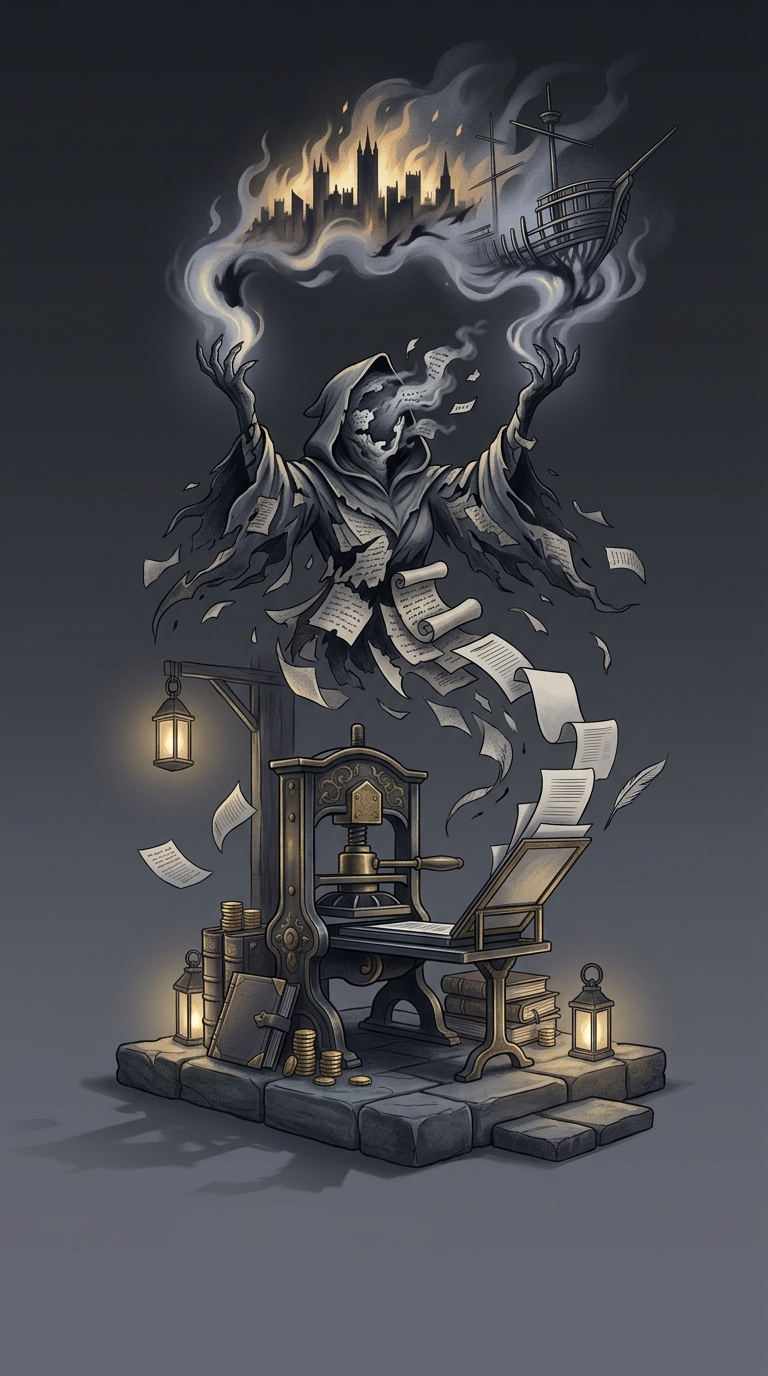
That gap matters. A prophecy can look remarkably exact when readers encounter it after the event: vague images are matched to familiar outcomes, and a text’s supposed date can make it seem older than its surviving evidence supports. Stories about the Great Fire of London and iron ships fit that pattern of retrospective interpretation.
Why publishers had reason to invent them
In the seventeenth century, printed prophecies could attract buyers looking for wonder, warnings, and clues about the future. A publisher could give a prediction the authority of an old seer, then connect its language to striking developments of the present. The result was not merely a tale about the past; it was a saleable pamphlet that promised readers the past had anticipated their own age.
That commercial setting helps explain why scholars treat the celebrated predictions cautiously. It does not prove that every story about Southeil began as a deliberate fraud, but it makes later publication a more plausible source for the famous claims than a securely documented medieval forecast.
The revealing detail is the timing
The legend’s power depends on readers imagining that the words came first and the events followed. If the wording entered circulation only after the events—or was reshaped then—the apparent miracle changes into a story about how people make meaning from old-sounding verses. Mother Shipton remains a vivid figure in English folklore, but the pamphlets tell us more reliably about the appetite for prophecy in their own time than about what she could have predicted centuries earlier.