A court astronomer’s unsettling dinner guest
Tycho Brahe’s household joined careful observation of the heavens with beliefs that modern readers would separate from science. In the late 1500s, astrology and ideas about hidden powers were part of the intellectual world in which astronomy developed. Brahe could measure the planets with extraordinary precision and still take seriously the possibility that someone might glimpse what ordinary people could not.
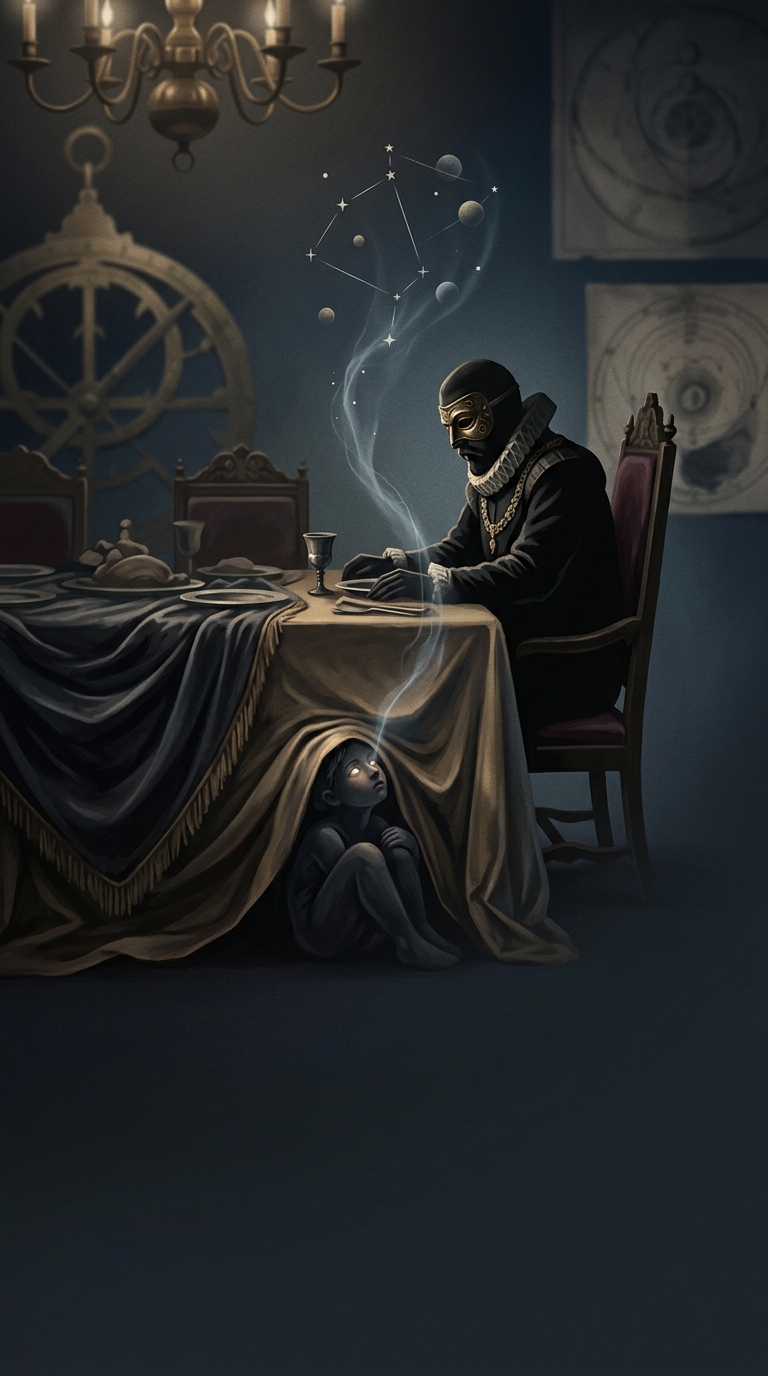
Jepp, a little-known member of Brahe’s household, was said to possess prophetic insight. Accounts place him beneath the dinner table, where he received scraps and was expected to speak up with predictions. The setting made the belief part of everyday life: not a formal experiment, but a strange presence woven into the routines of a wealthy nobleman’s household.
Precision and prophecy under one roof
Brahe’s astronomical work depended on repeated, meticulous measurements made before the telescope was in use. Those observations helped later astronomers describe planetary motion. But measurement did not require Brahe to reject every supernatural explanation. To him and many contemporaries, the sky could be both something to chart and a source of hidden meaning.
That contrast is what makes the Jepp story memorable. Brahe’s reputation rests on disciplined observation, yet his household also made room for an alleged seer beneath the table. The scene captures an era when the boundaries between astronomy, astrology, and mysticism were still unsettled—and when a dinner guest’s scraps might be treated as the price of a prophecy.