What salt does in the body
When you eat salt, it dissolves into sodium and chloride. Sodium helps regulate fluid balance and supports nerve and muscle function, but too much can raise blood pressure in some people. The body responds to the sodium, not to whether it arrived as a coarse sea-salt flake or a fine table-salt grain.
Why the crystals can mislead
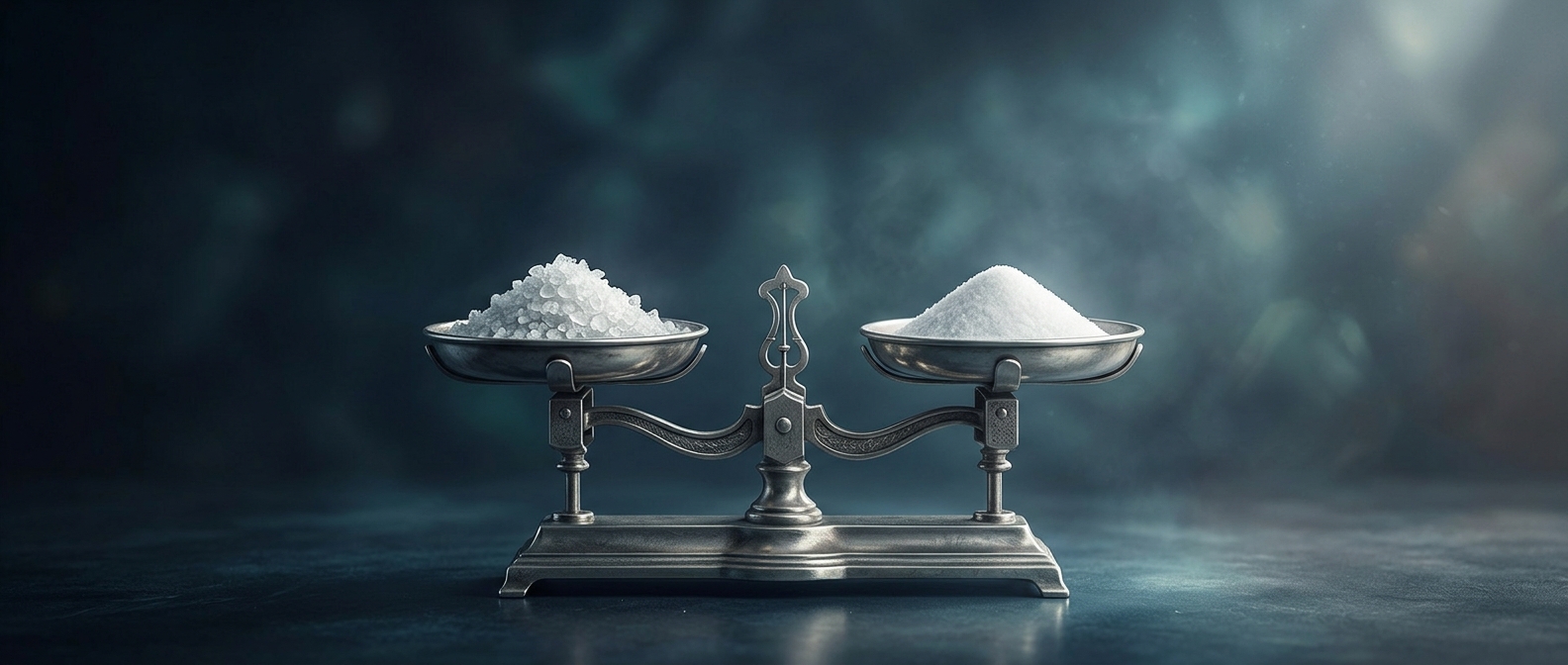
Sea salt is made by evaporating seawater; table salt is typically mined and processed. Their crystals can differ in size, shape, and texture, and sea salt may retain tiny amounts of other minerals. Those differences can affect how salt tastes and feels on food, but they do not make sea salt a meaningfully lower-sodium choice by weight.
A spoonful can be different: coarse, airy crystals leave more empty space than tightly packed fine grains, so equal-volume measures may contain different amounts of salt. That is a measuring difference, not a health advantage. If sodium intake matters, compare nutrition labels and pay attention to how much you use.
The distinction that matters
Some table salt is iodized, meaning iodine has been added. Iodine is needed to make thyroid hormones, and iodized salt can help provide it; many sea salts are not iodized. But salt is not the only possible dietary source of iodine, and choosing iodized salt does not make unlimited salt advisable.
For sodium, the practical lever is the amount used. A dramatic finishing pinch may be easier to notice—and therefore use sparingly—because its larger crystals crunch on the tongue, but the crystals themselves do not protect the body from sodium.