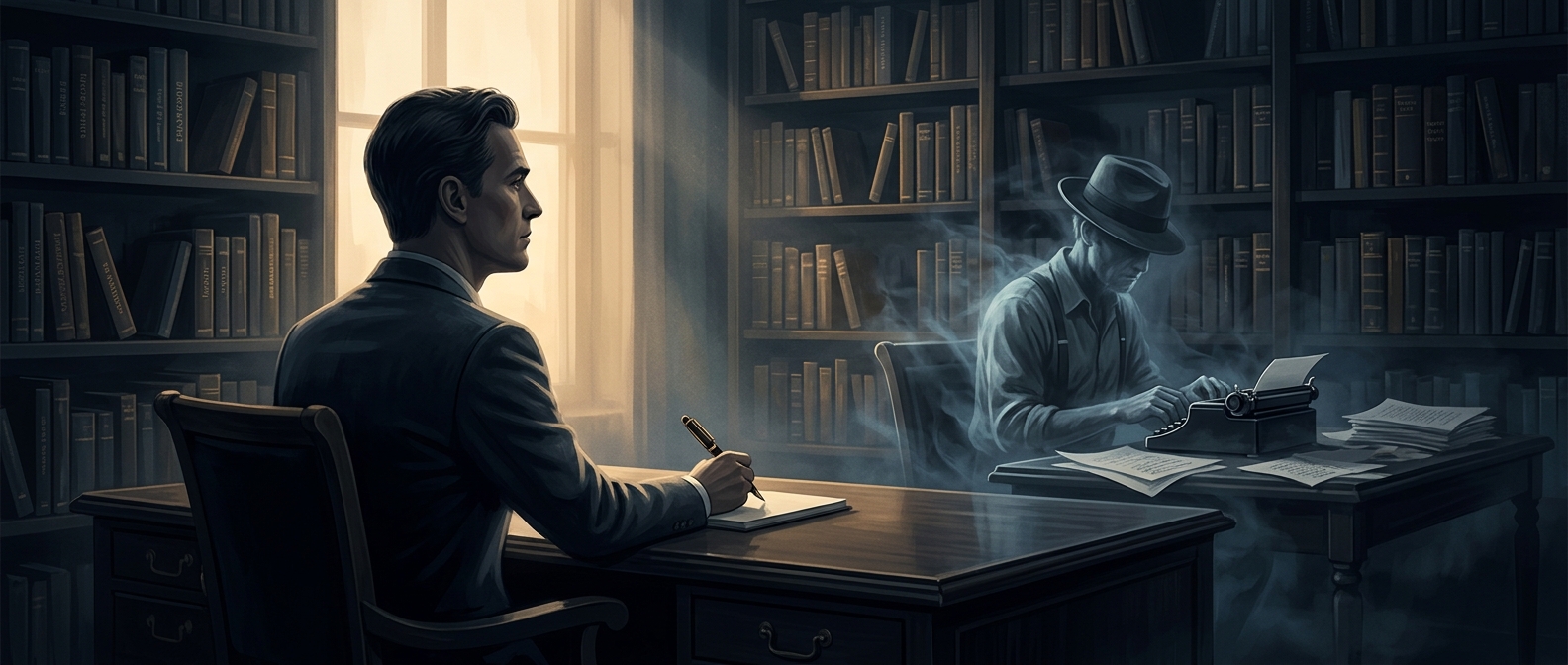
A working library, not just a collection
A historical romance can turn on a detail that occupies only a sentence: whether a character may enter a room unescorted, how a formal introduction works, or what clothing allows someone to move comfortably. Those details shape what characters can plausibly do—and therefore which romantic encounters and conflicts feel believable.
Reference books help authors check the world around the relationship. A book on dress may clarify how a corset fastens or how many layers a gown requires; a history of etiquette may help distinguish a genuine social restriction from a modern assumption. The point is not to load the story with facts, but to find the few that affect a scene.
Why keep the books close
Romance covers many settings and periods, so an author’s shelves can serve very different projects: historical research, language, domestic life, architecture, or the practicalities of travel. Physical books are easy to mark, revisit, and compare. A familiar reference can also save time when a writer is drafting quickly and needs to verify a small point without breaking the flow of a scene.
The research has a creative payoff. A rule of etiquette can keep two characters apart in public; a garment’s awkward fastenings can make a private moment more complicated. The most useful detail is often the one that changes what a character can do, not the one that merely proves the author did research.