Why rice appears in a cleansing ritual
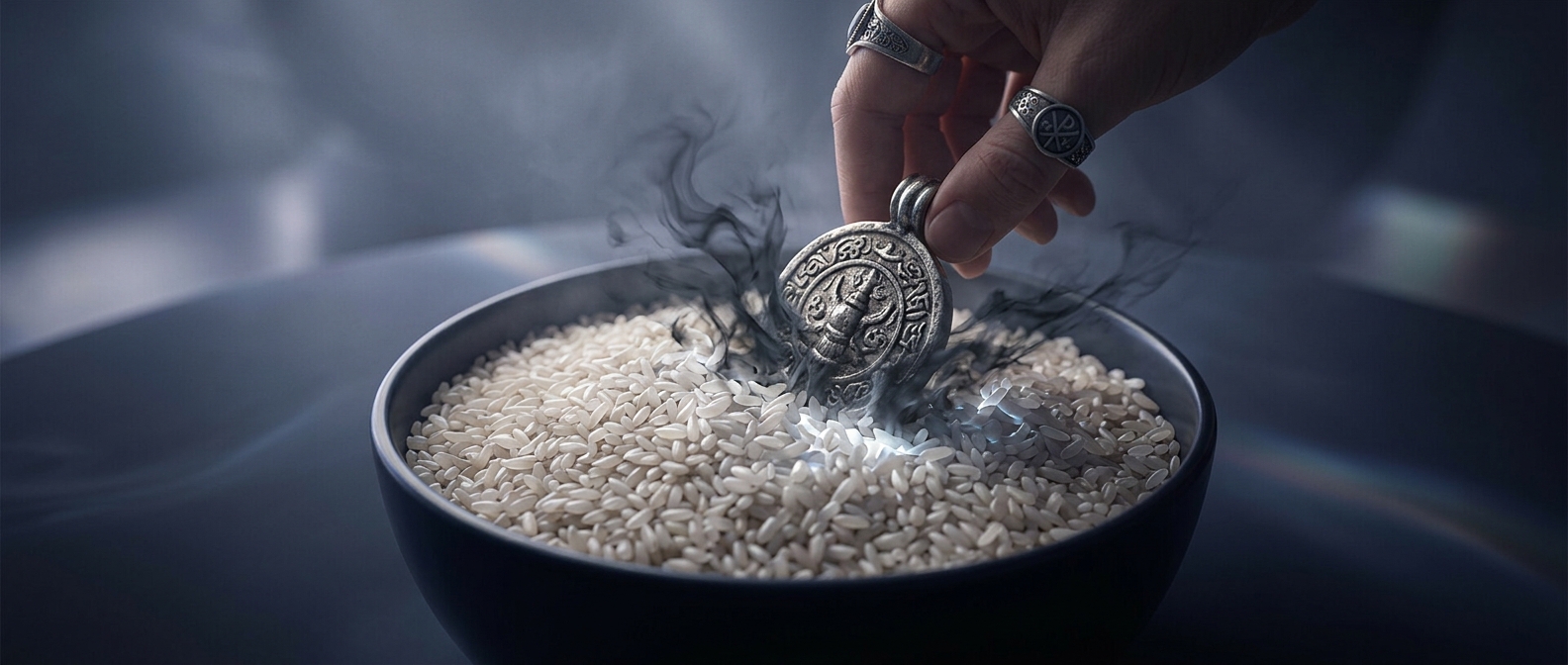
In some contemporary spiritual practices, burying crystals, cards, or other ritual objects in uncooked rice is meant to clear away unwanted energy. The idea is symbolic: rice is treated as a clean, ordinary material that can absorb or draw out what has collected on an object. Practitioners may use the ritual after a difficult interaction or before using a tool again, giving the object a deliberate pause and reset.
A familiar household remedy becomes a metaphor
The practice echoes the folk advice to put a wet phone in rice. That advice gave rice a popular image as something that pulls moisture from what it surrounds. But the comparison is metaphorical, not evidence that rice extracts negativity—or reliably repairs electronics. In the ritual, “cleansing” describes a spiritual interpretation, not a measurable physical process.
The ritual’s practical meaning
Burying an object creates a clear, physical action: cover it, leave it undisturbed, then uncover it. That sequence can mark a transition between uses and help someone focus on the intention they associate with the object. The rice is therefore part of the ritual’s meaning, rather than a scientifically established cleansing agent. One practical consideration is that grains can lodge in small crevices, so delicate tools may be better placed in a separate container before being surrounded by rice.