A danger that could rise from below
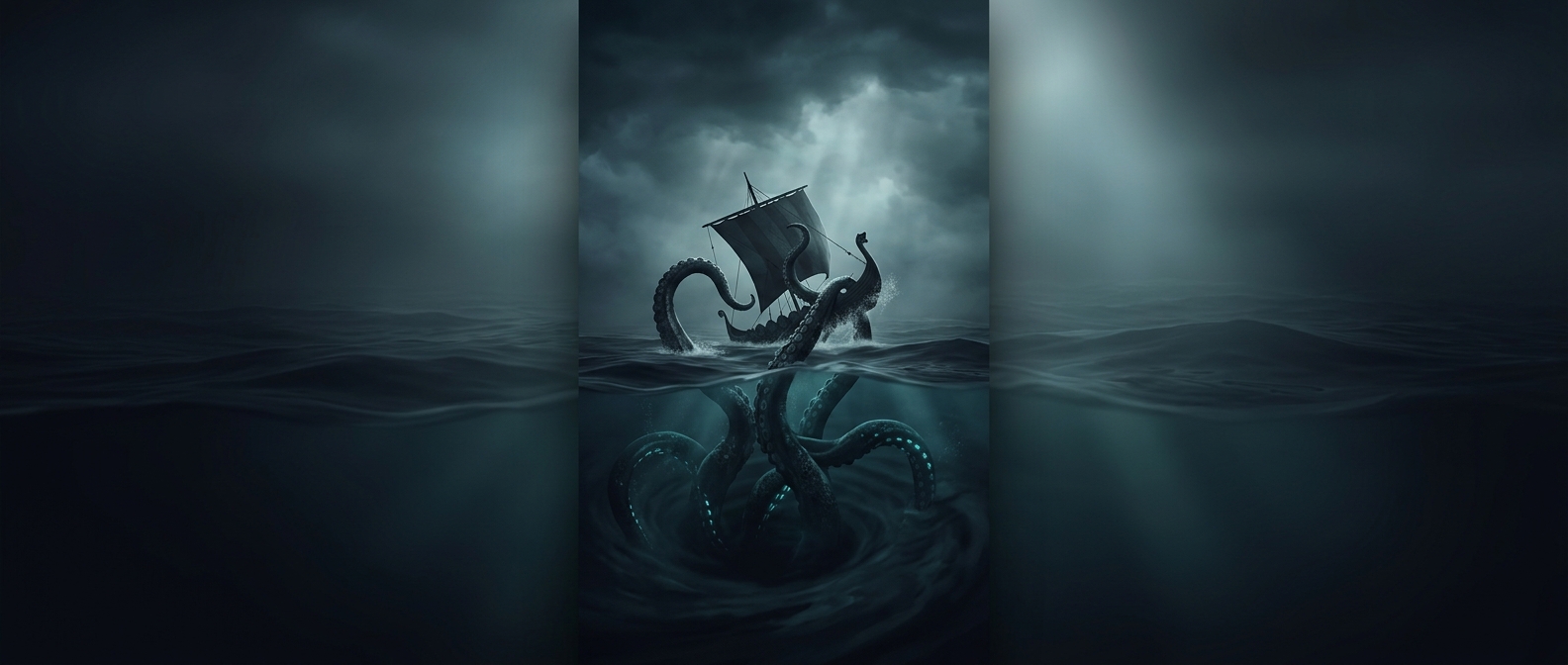
For people in small wooden boats, the sea hid more than weather. A sudden whirlpool, a tangled net, or a powerful animal could threaten a vessel, while the depths offered no way to see what was coming. In Scandinavian maritime folklore, the kraken gave that danger a shape: an enormous creature able to surface beside a boat and pull it down.
Stories did not settle on one consistent anatomy. The kraken might be imagined as so vast that sailors mistook its back for land, or as a many-armed creature whose limbs could seize a ship. Those shifting details made the legend useful as a warning about waters where an unseen force could overwhelm even experienced crews.
From sea tales to a familiar monster
A huge tentacled kraken resembles a cephalopod—a group that includes squid and octopuses—but resemblance is not proof that a particular animal inspired the legend. Sailors could pass along reports of strange shapes, violent currents, or damaged boats, and each retelling could turn uncertainty into a more vivid encounter.
The story’s lasting power comes from that transformation: a dangerous, hard-to-explain sea becomes a creature with intent. The kraken makes the ocean’s central threat feel personal—not merely that a boat might sink, but that something below might reach up and take it.