Why rubber suddenly became valuable
Raw latex from a rubber tree is sticky and softens in heat, making it unreliable for many products. Vulcanization—heating rubber with sulfur so it becomes more stable and elastic—made it practical for tires and other goods. As bicycles and automobiles spread, manufacturers needed far more rubber, and the Amazon’s wild trees became a source of immense commercial value.
A forest that could not be farmed like a field
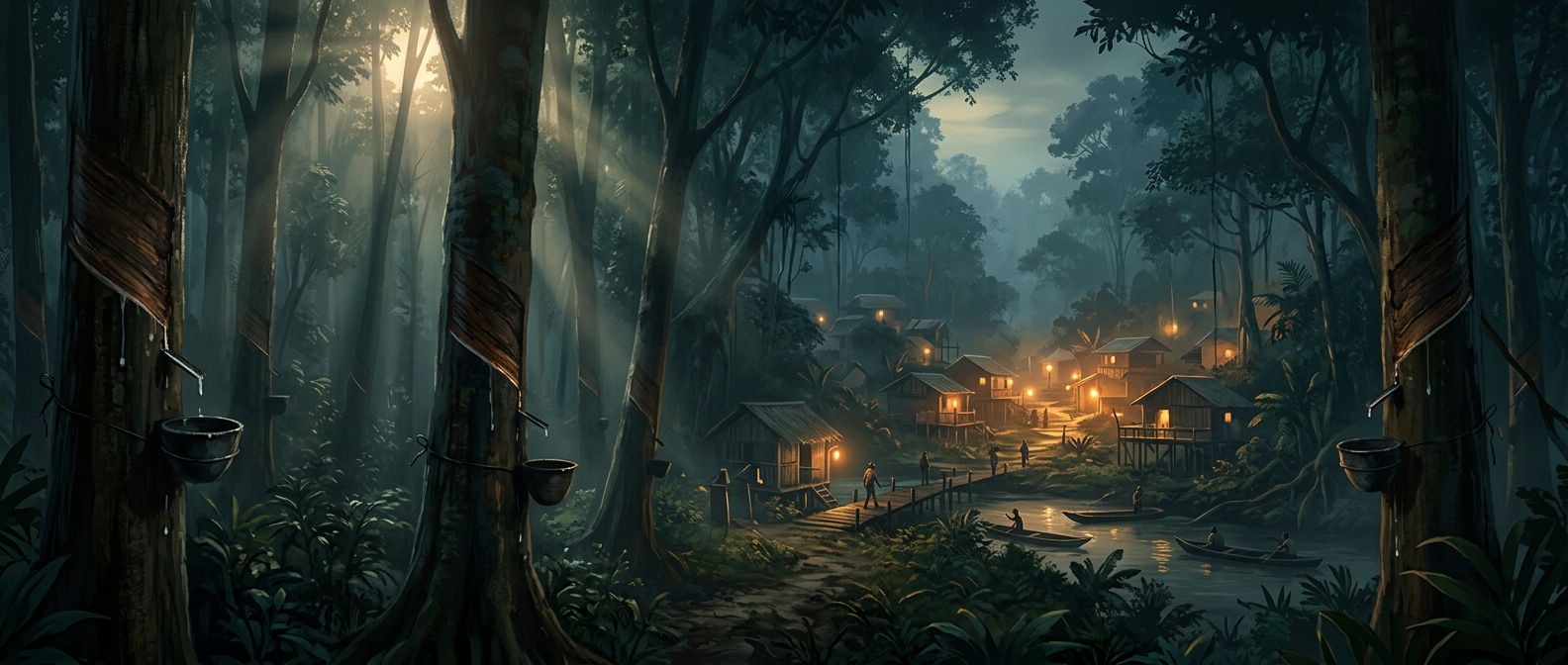
Rubber trees grew scattered through the forest rather than in neat, concentrated stands. Collectors had to travel between trees, cut small channels in their bark, and gather the latex that dripped into cups. The work was labor-intensive, and the latex had to move by river through a chain of remote collection points before it could reach export markets.
That trade made river ports and supply towns grow rapidly. Merchants, transport operators, and exporters concentrated wealth in places that had been difficult to reach, while imported goods and new construction made the boom visible. But the town economy rested on labor extracted far beyond the storefronts and docks.
The cost behind the boom
Indigenous people were forced or pressured into tapping trees, often through systems of debt and violence that tied workers to employers and suppliers. The forest’s distance from outside oversight helped those abuses persist. Rubber wealth, in other words, did not simply flow from a valuable plant: it depended on controlling the people who could reach the trees and carry the latex out.
The boom also had a built-in vulnerability. Because wild trees were spread across a vast area, Amazon rubber was costly to gather. Once rubber could be produced more cheaply in plantations elsewhere, the trade weakened—and towns built around the export rush could lose their economic purpose as quickly as they had gained it.