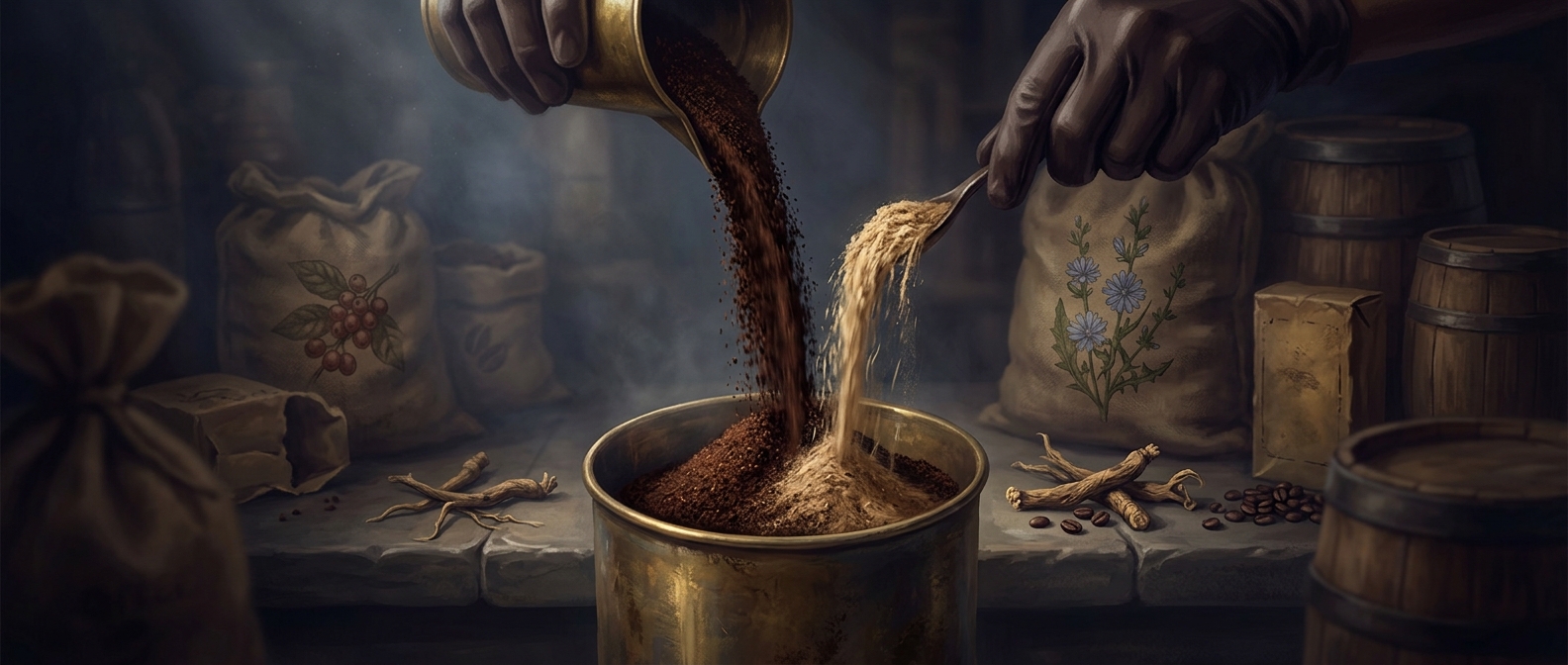
A root that could stand in for scarce beans
Chicory is the roasted root of a flowering plant. Ground and brewed, it produces a dark drink with a roasted, slightly bitter flavor. When blockades made imported coffee difficult to obtain, chicory offered households and sellers a practical way to make limited supplies go further: blend it with coffee, or brew it on its own when beans ran short.
The economics were straightforward. A portion of relatively inexpensive chicory could add volume to a costly, hard-to-replace import. But it changed the cup, too. Chicory contributes a heavier, earthier taste, so the result was not simply weaker coffee; it was a different blend with its own character.
Shortage can turn a workaround into a preference
Once people became familiar with that flavor, the blend did not have to disappear when coffee became easier to get. Cafés and households could keep serving it because customers had come to expect it, while sellers had a reason to preserve a distinctive, economical style. Repeated use turned an emergency measure into a habit—and, in some places, a marker of local taste.
That is how scarcity can leave a lasting culinary trace: not just by changing what people can buy, but by teaching them to like a substitute. In regions where chicory coffee endured, the taste of a blockade outlasted the blockade itself.