The Brick Is Hit From Below
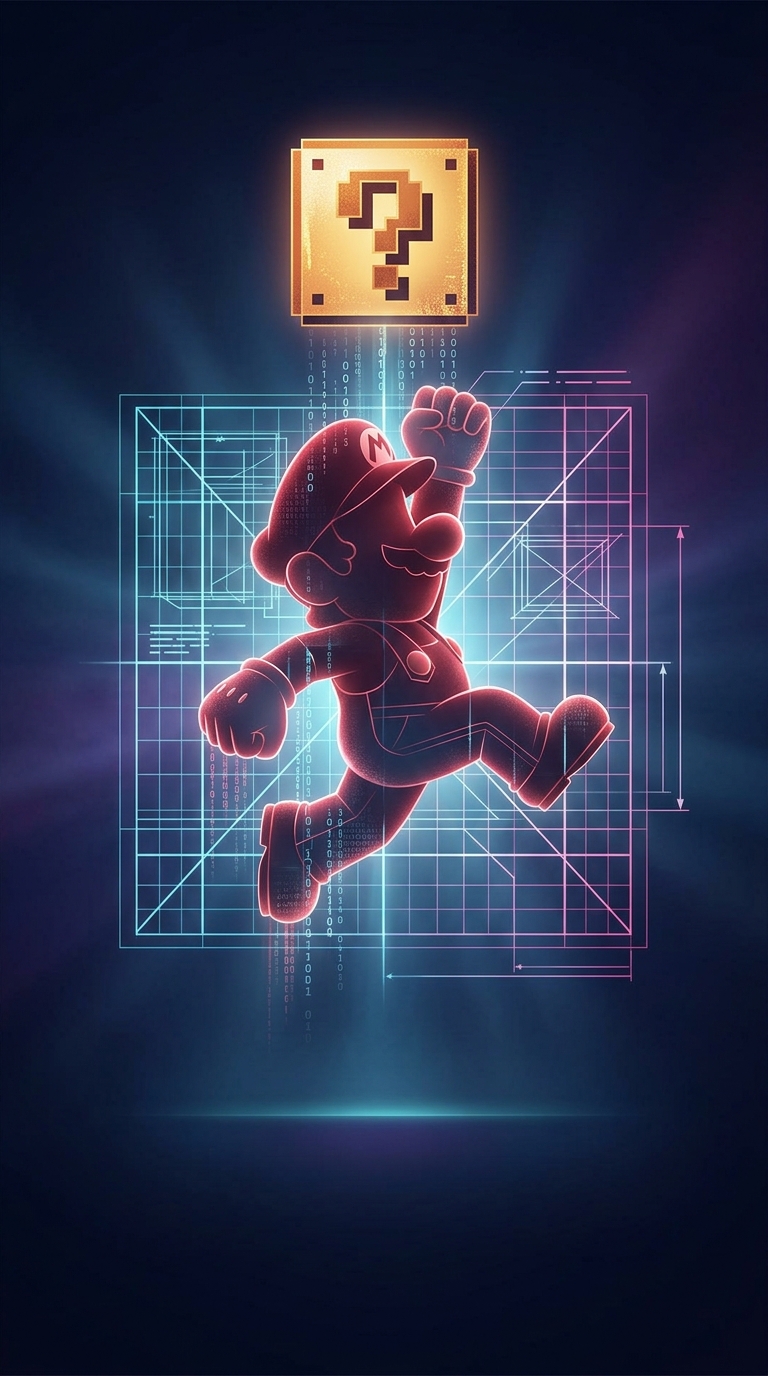
In the original Super Mario Bros., Mario does not need to ram a block with his forehead. The game depicts him punching upward: a tiny raised hand appears beneath the block at the moment of impact. The 1985 instruction manual makes that gesture easier to recognize than the game’s small, fast-moving sprite does.
The distinction matters because the block’s response is tied to Mario’s position and the timing of his jump. When he strikes a block from underneath, it jolts upward. A question block may release an item; a brick breaks only when Mario is large enough. The game turns one brief upward hit into several different outcomes.
A Gesture Compressed Into Pixels
During a jump, Mario’s body rises right up against the block, leaving little room for a clearly drawn arm. His hand is only a few pixels, and the animation lasts a short moment. At ordinary play speed, the contact can look like a headbutt—even though the manual’s image identifies it as a punch.
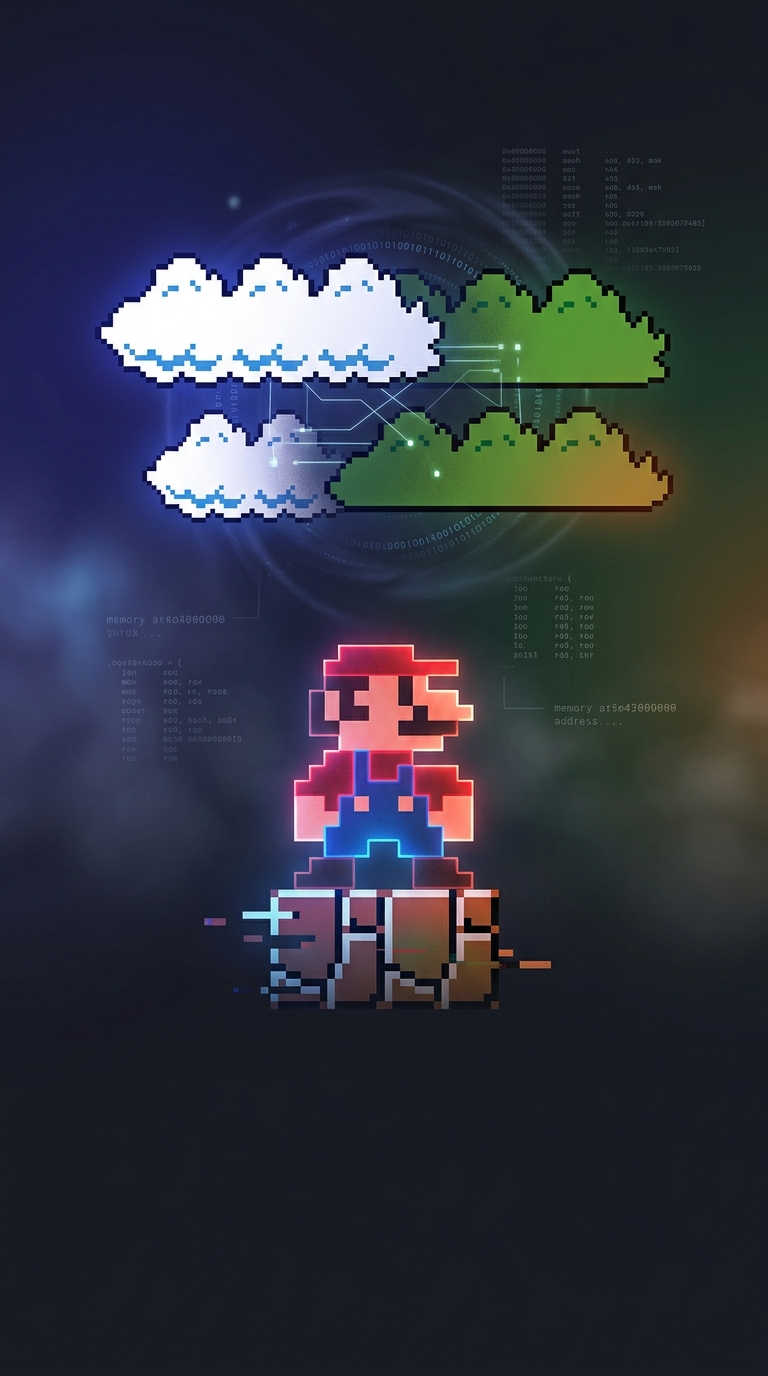
That tiny hand changes how the familiar action reads: Mario is not simply bouncing off the scenery. He is reaching up to strike it, and the blocks react as though that contact has force. In a game built from compact sprites and quick feedback, a few pixels carry the whole gesture.