What an engine NFT actually changes hands for
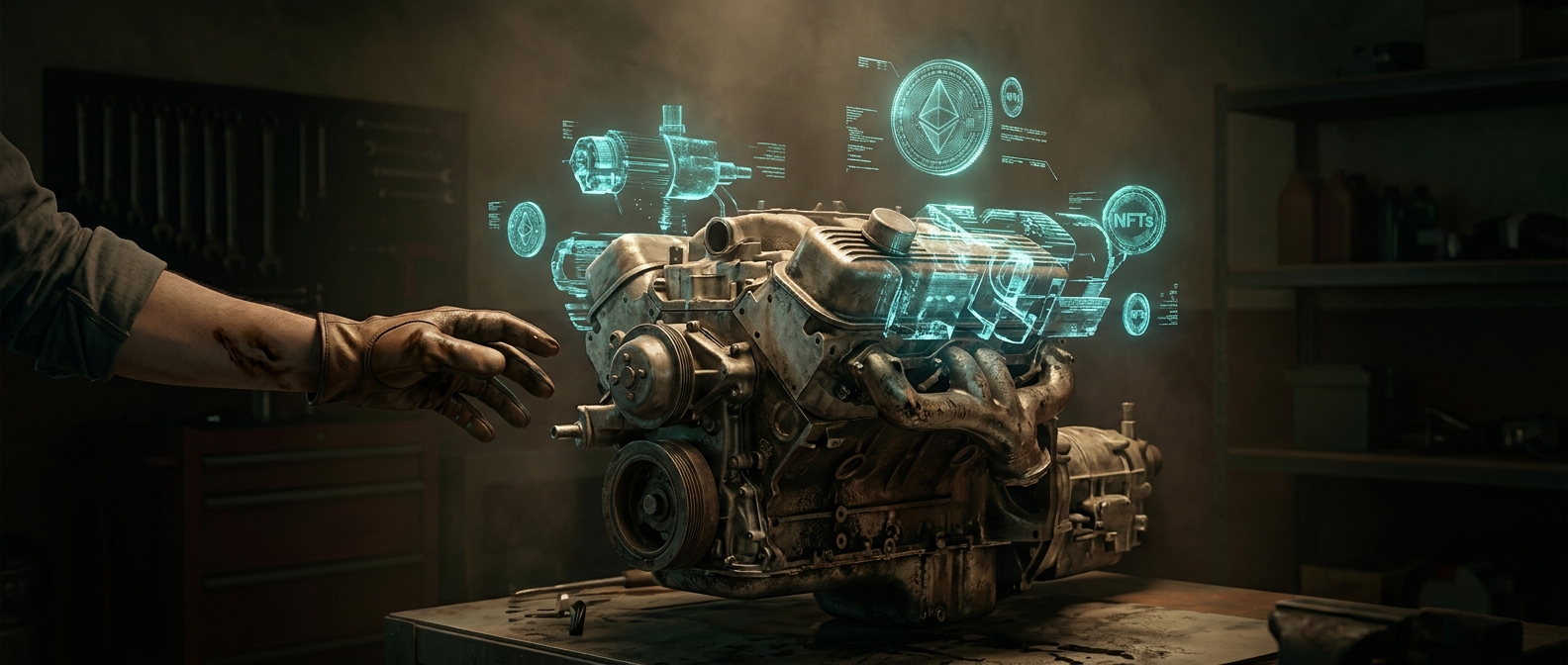
An engine-themed NFT is a unique digital token recorded on a blockchain, a shared ledger that tracks transactions. When collectors trade one, they transfer control of that token to another digital wallet. The token may point to an image, animation, or other file representing an engine, but the file and the token are not the same thing: the token is the ledger entry, while the media may be stored elsewhere.
That distinction matters. Buying the token does not, by itself, buy a real engine, the rights to manufacture one, or permission to use an associated image in any way. Those rights depend on the terms attached to the particular collectible. The blockchain can make a token’s transfer history inspectable, but it cannot prove that the pictured engine exists or guarantee that an external file will remain available.
A different kind of collecting tradeoff
Digital collecting removes the practical burdens of a physical engine: no floor space, corrosion, parts hunts, or repairs. A token can also be transferred without arranging transport for a heavy machine. In return, the collector gives up the object’s physical presence. There is no metal to inspect, no seized bolt to work loose, and no engine to start—or restore.
That gap helps explain why a digital collectible and an old garage can appeal for different reasons. The NFT makes ownership legible as a digital record; the machine makes its history tangible through wear, sound, and the work required to keep it running. A token may represent an engine, but only the engine can leave grease on the collector’s hands.