From a chariot to a general word for wheels
The name car belongs to an old family of words for wheeled vehicles. Latin carrus meant a wagon or cart, and is linked to an older Gaulish word for a chariot or wagon. The connection to warfare is real, but it describes one use of some early vehicles—not the meaning of every later form of the word. A chariot was a vehicle; carrus could refer more broadly to a wagon.
That broad meaning is the key to the word’s long life. Vehicles changed, but the basic idea—a wheeled thing that carries people or goods—remained recognizable. Related forms of the word traveled through European languages and took on different uses over time.
The automobile was a new use, not a new root
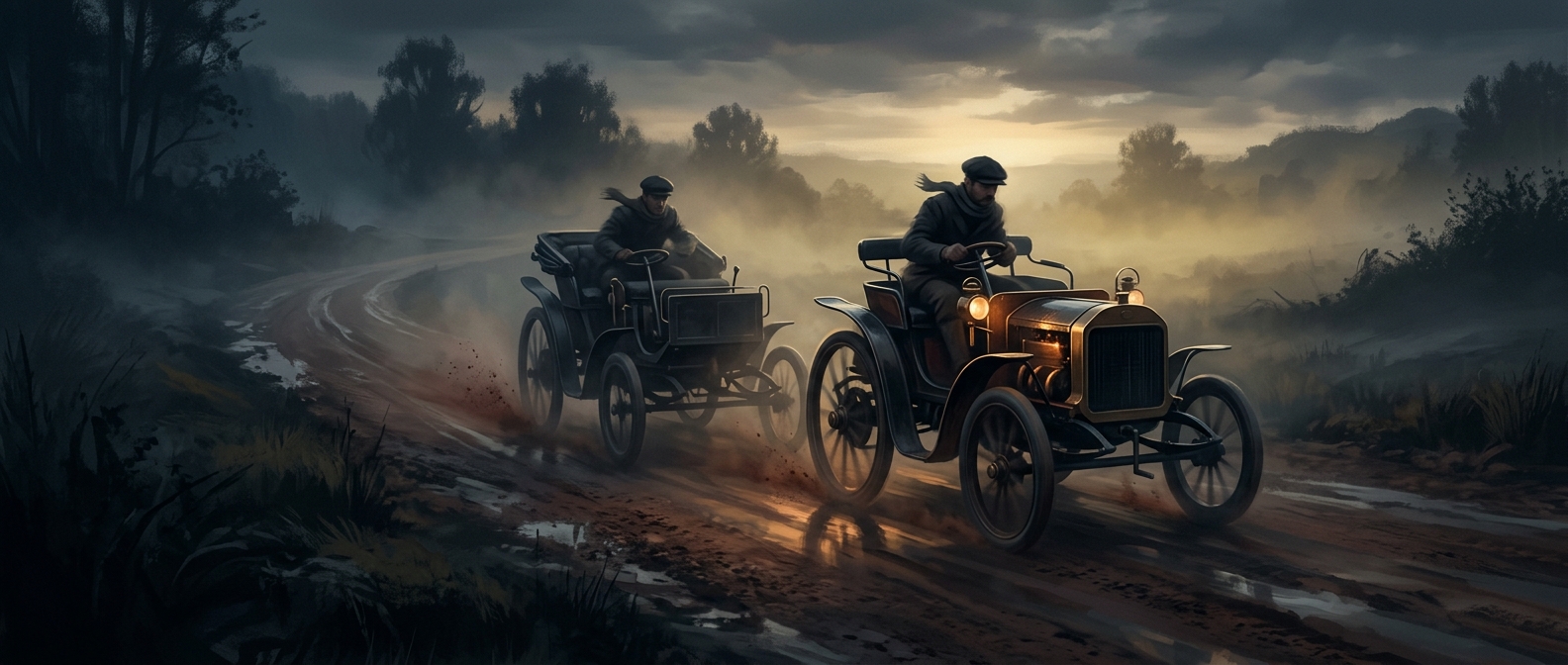
Before car became the everyday name for an automobile, English used it for other kinds of wheeled conveyance, including railway carriages. As motorized road vehicles became familiar, motor car distinguished them from those older uses. In ordinary speech, motor eventually dropped away, leaving car.
So the name did not begin with the invention of the automobile, and it does not preserve a precise description of how modern cars are built. It carries forward a much older, simpler idea: a vehicle on wheels. The surprising part is that a word now associated with traffic and commutes once belonged to the same broad vocabulary as the wagon and chariot.