Why a boss gets another phase
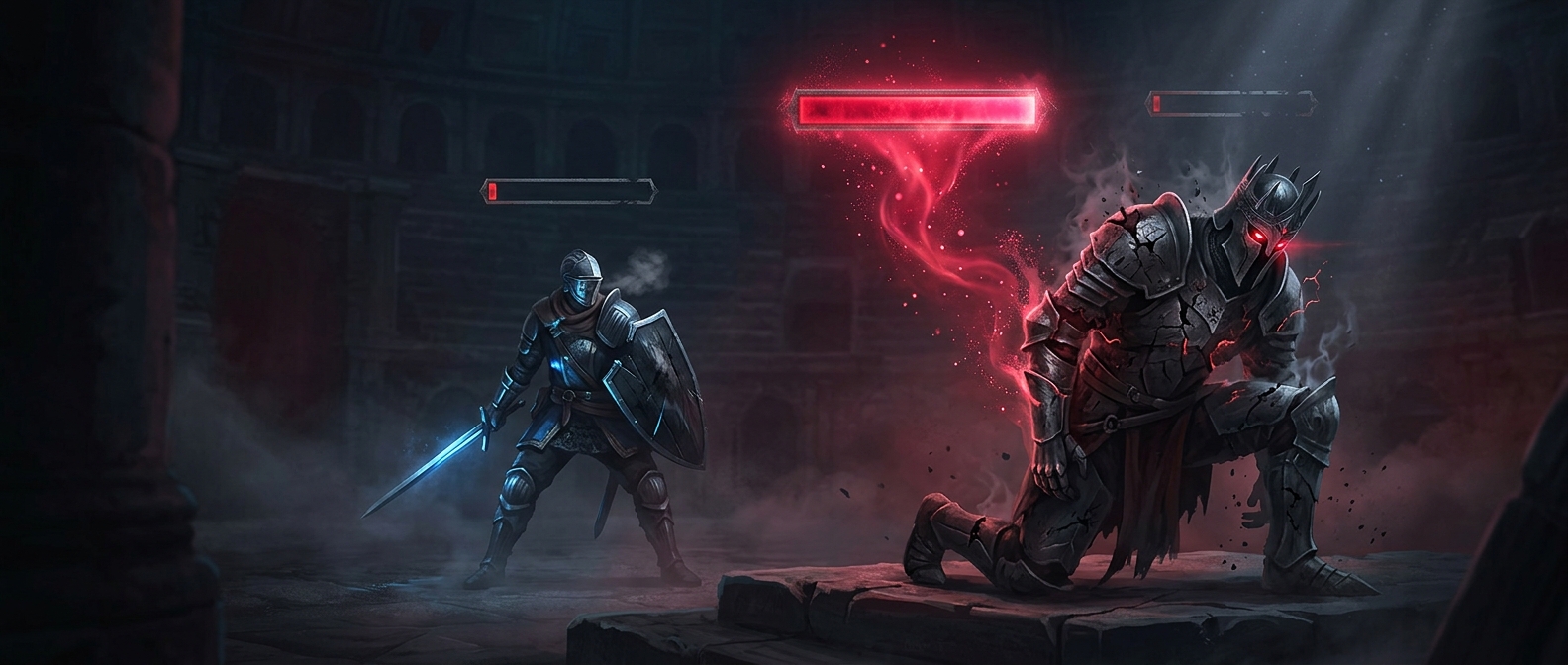
A second health bar turns a victory that seemed complete into a change of terms. The glow and recovery signal that the enemy has not simply survived: the fight is entering a new phase, often with a different set of attacks, movement, or openings. The bar makes that shift legible. Players can see that the challenge has reset in some way, rather than wonder why their damage suddenly seems to have stopped mattering.
The real test is what you have left
The design also makes earlier decisions carry forward. Healing items, ammunition, special attacks, and other limited resources spent in the first phase are usually not restored just because the display changes. A player who rushed to finish the opening stage may reach the tougher one with little room for mistakes. That creates a tension between dealing damage quickly and saving enough to adapt.
A second phase is most satisfying when it changes the player’s problem, not just the amount of damage required. New patterns can make knowledge gained in the first phase useful while demanding fresh timing or positioning. The result is a compact story of escalation: the apparent finish becomes a test of whether the player understood the fight well enough to face it again under pressure.