A Threat With a Built-In Beat
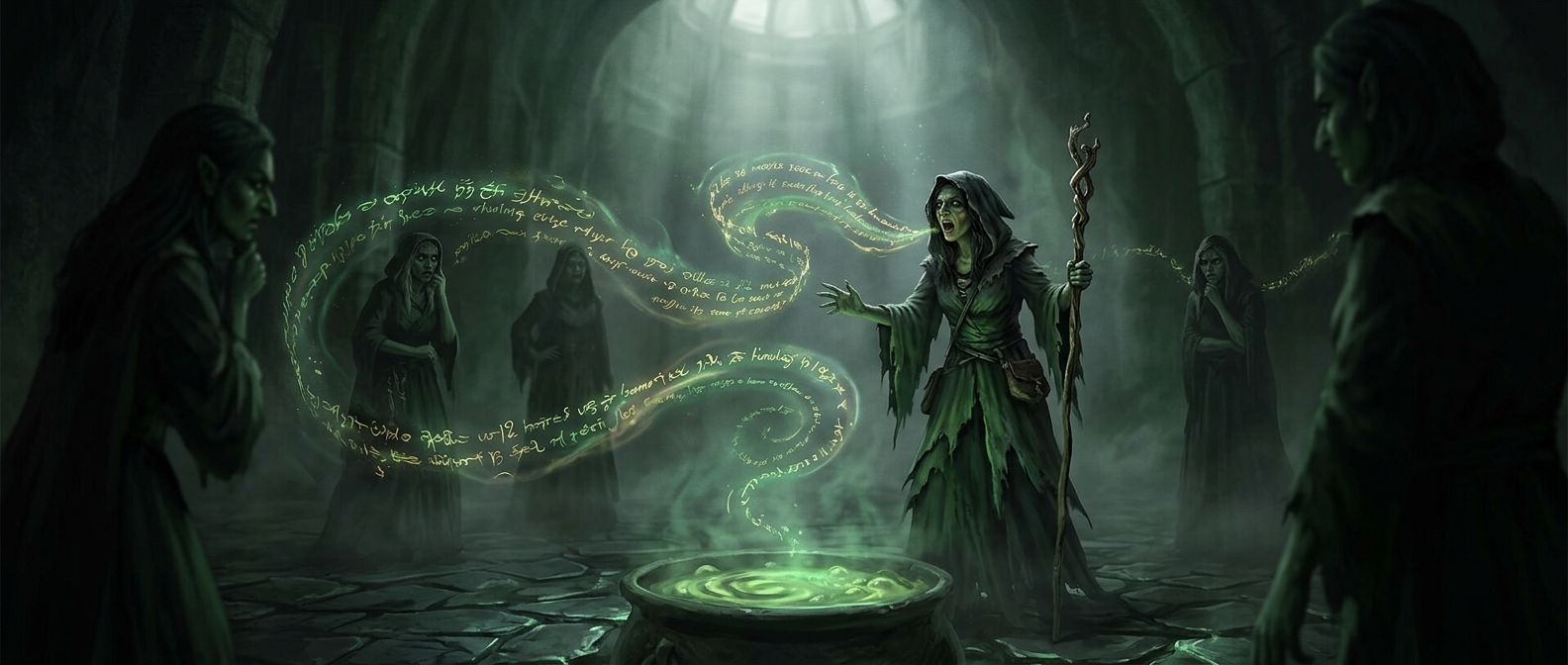
An AABB rhyme scheme pairs the first two lines, then gives the next two lines their own rhyme: “glow” with “show,” followed by “flight” with “night.” When the green witches’ taunts follow that pattern, their threats arrive with a rhythm as regular as a chant. The rhyme is not just decoration; it shapes how each line lands.
Why the Pattern Gets Under Your Skin
A threat usually asks for attention to its meaning: what danger is coming, and when? A neat couplet adds a second thing to notice. The listener can hear the line reaching for its partner, sometimes anticipating the rhyme before the sentence is finished. That predictability can make the speaker seem theatrical and controlled, even while the words are meant to menace.
The contrast is part of the effect. A threat is serious in content, but a rhyme can make it sound sing-song. That mismatch may make the witches feel more distinctive—and their repeated need to rhyme more grating—than an ordinary villain’s warning.
A Voice That Follows the Journey
Because the couplets recur throughout the journey, the pattern becomes a recognizable feature of the witches’ presence. Even when the exact taunt changes, the listener knows what kind of performance to expect: one threat, then its rhyming counterpart. The irritation is built into the delivery as much as the words. Each encounter carries the same verbal signature, turning a fleeting insult into a running nuisance that players can recognize before it is over.