Why the silhouette feels so strange
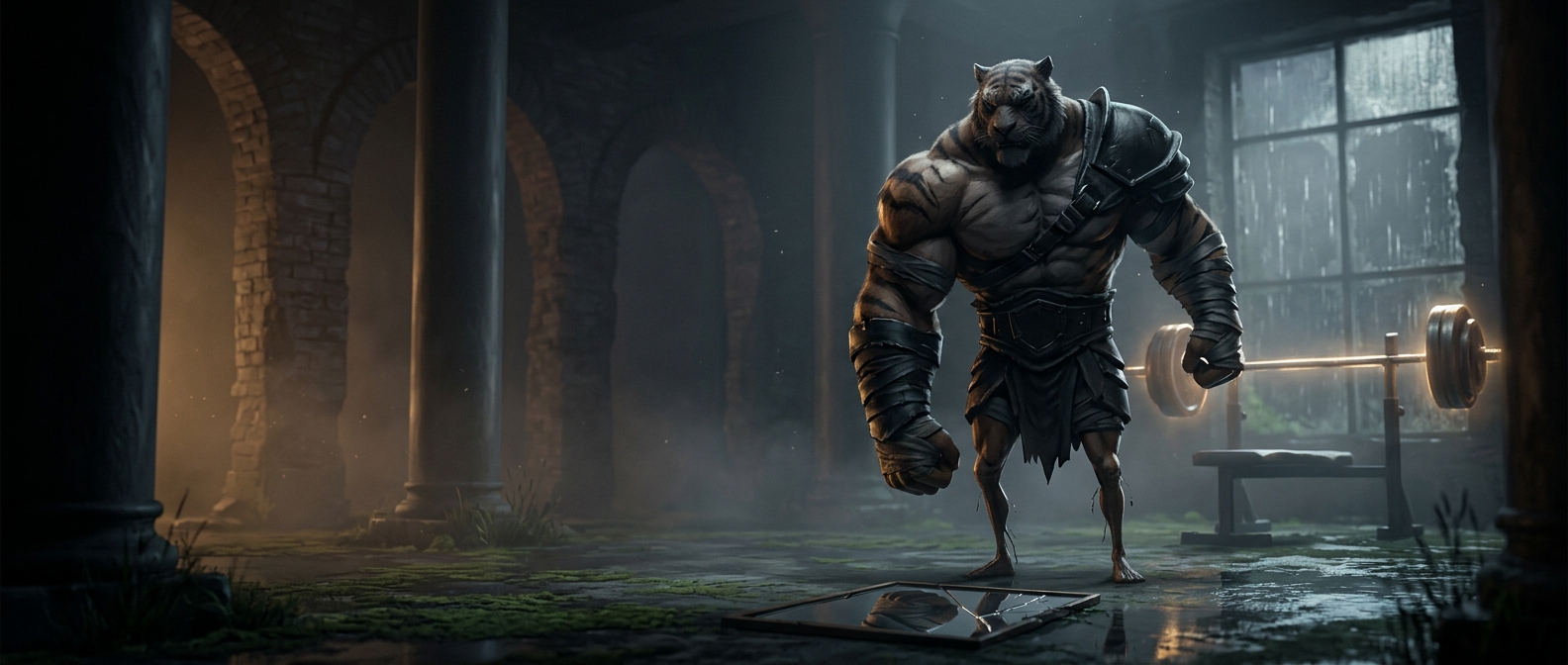
In a game character, proportions are more than anatomy: they help players recognize a figure quickly, even when it is small on screen. A huge upper body creates a broad, powerful outline; legs that are much narrower than expected disrupt it. The mismatch makes the character look less like a conventional athlete and more like a visual joke.
The design has to move, too
A character model is usually built around a digital skeleton that drives its movement. If the torso is enormous while the legs are tiny, ordinary actions—walking, turning, or keeping balance—can look odd unless the animation is designed to suit those proportions. That can be part of the appeal: the game does not have to make the figure move realistically if the goal is to make the figure memorable.
The same extreme shape that makes the character instantly recognizable also sets the terms for every pose. Even standing still, the narrow legs make the oversized shoulders seem more exaggerated.