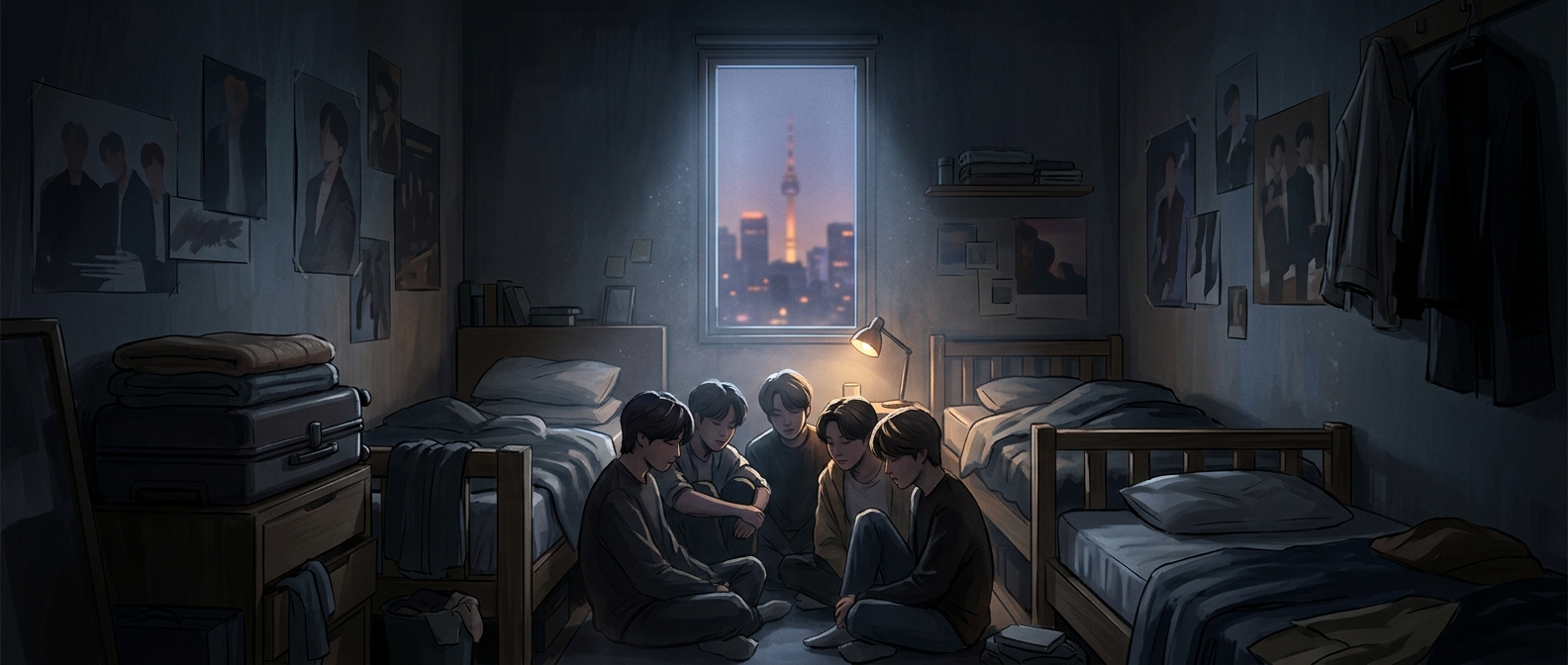
A dorm makes a group easier to coordinate
A K-pop group is not just a set of performers who meet onstage. Members may need to move together between practice, recording, styling, filming, and other scheduled work. Housing them in one place can simplify the practical problem: fewer separate commutes to organize, and more chances for managers to coordinate the group’s day around a shared schedule.
That arrangement also shapes life between appointments. Roommates share ordinary routines—getting ready, waiting for one another, and negotiating limited space. Repeated small interactions can make people more familiar and help a group develop habits for living and working together. The same closeness, however, leaves less room to be alone.
Convenience and oversight come together
Dorm living can be useful to an agency precisely because it concentrates the group. If members are under one roof, it is easier to know where they are and to manage departures, arrivals, and schedule changes. That does not mean every agency imposes identical rules or that every group has the same housing arrangement; conditions can vary. But a dorm can serve both as practical accommodation and as an instrument of close management.
The tradeoff is especially visible when a group becomes successful. Career progress may bring more work and public attention, but it does not automatically change the routines or living arrangements established during training and early promotions. Members may still share bedrooms or bathrooms, with privacy and personal space limited by the household setup. Whether that continues depends on circumstances rather than a single industry-wide rule.
The dorm is therefore more than a place to sleep: it is part of the system that keeps a group’s daily life organized—and makes the boundary between work and home unusually thin.