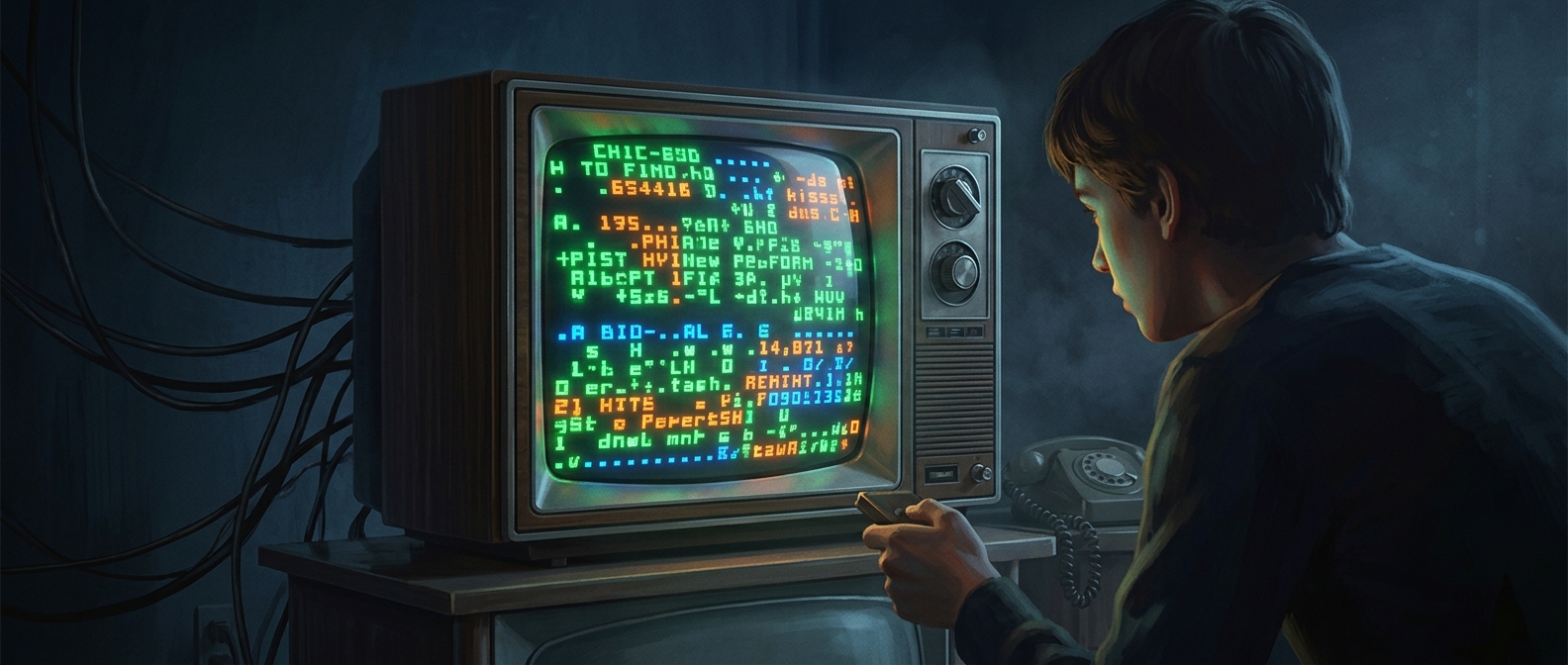
A television became a terminal
Viewdata’s clever move was to split the job between two familiar devices. The telephone line carried requests and information; the television turned that information into something people could read. A small decoder connected the set to the line and translated incoming codes into letters, numbers, and simple colored shapes on the screen.
That made the television more than a passive receiver. Viewers could use a keypad to ask for a particular page, and the system would send the corresponding text back over the connection. In effect, the phone line provided a two-way path: the user asked, and a central computer answered.
Why the pages looked blocky
Viewdata did not send a detailed photograph of each screen. It sent compact instructions for arranging text and simple graphics. The television’s decoder built the page from those instructions, a practical approach when telephone connections could carry only limited amounts of data.
The tradeoff was visible: letters and shapes had a coarse, tiled appearance, and retrieving a page could take time. But the same constraint made it possible to deliver useful information through infrastructure many households already had, without waiting for a dedicated computer network in every home.
A new habit of looking things up
The important change was not just that a TV could show written information. It was that people could choose what to call up instead of waiting for a broadcaster to put it on screen. A weather page became something a viewer could request when needed—an early, modest version of the on-demand screen now taken for granted.