A living figure in a designed landscape
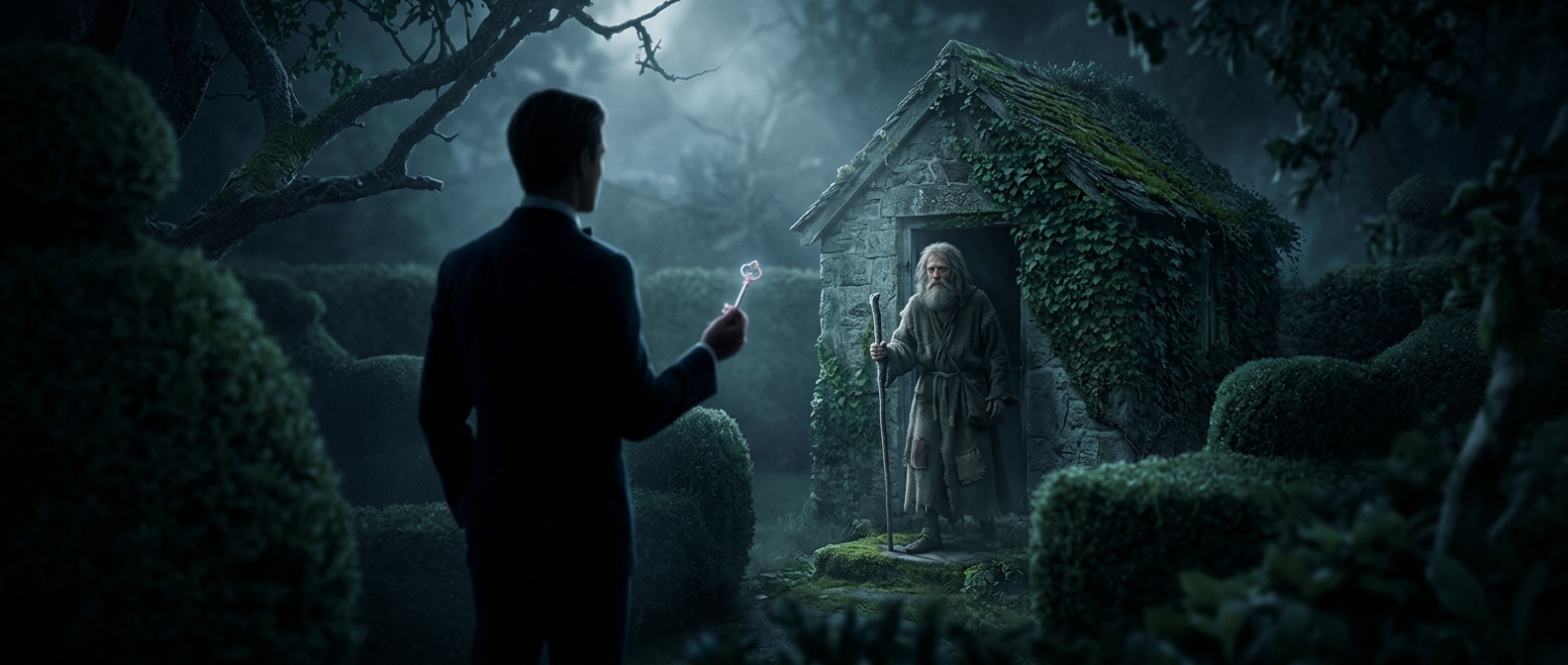
In some wealthy estates, the garden was meant to look less like a formal display and more like a scene discovered in the countryside. A rustic hut or grotto could make that illusion feel convincing; a person living beside it made the scene seem inhabited. The “hermit” was not simply a visitor who happened to settle there, but a worker hired to perform a role within the landscape.
That role turned a human life into part of the garden’s composition. Letting hair grow, wearing plain or unusual clothing, and keeping apart from ordinary estate life could help create the impression of someone who had withdrawn from society. The effect depended on contrast: the hermit’s apparent simplicity made the landowner’s carefully arranged grounds seem more natural and contemplative.
Paying for the appearance of solitude
The arrangement had an obvious economic bargain. The landowner paid for a distinctive attraction, while the worker supplied the time and behavior needed to sustain it. A long-growing hairstyle, for example, was not just a costume detail; it required the worker to follow the role beyond a single staged appearance.
The hermit also gave visitors something a stone structure could not: a person to notice, interpret, and talk about. Yet the apparent retreat from worldly life was itself commissioned by a wealthy household. That tension was part of the spectacle. The garden’s “wildness” was carefully produced—and even its solitude could be hired.