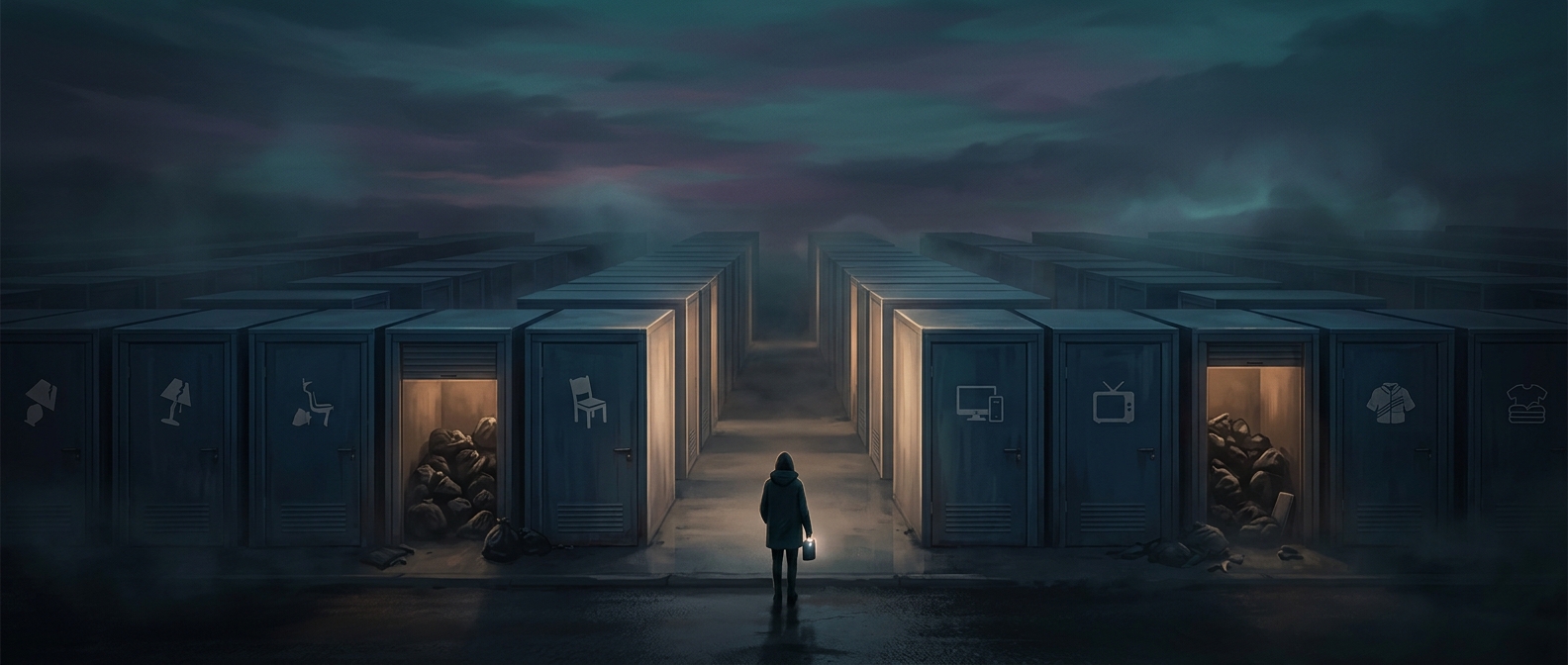
How a monthly bill can keep clutter in limbo
A storage unit turns a decision about unwanted belongings into a recurring expense—and often postpones the decision altogether. Instead of choosing what to keep, sell, or discard, a renter can move the items out of sight and pay for the option to decide later.
That option can feel valuable when the contents are uncertain: boxes may hold family keepsakes, useful tools, or something worth selling. But checking requires time and effort. The renter may need to travel to the facility, sort through everything, arrange a sale, or pay to haul it away. Each task makes “deal with it next month” an easy choice.
Why the original cost can matter more than resale value
People often judge an item by what they paid for it or by what it once meant, not just by what a buyer would pay now. Selling it cheaply can feel like admitting the purchase was a mistake; discarding it can feel like losing its remaining possibility. Keeping it preserves that possibility, even when no specific future use is planned.
The storage charge also arrives in small, repeatable increments. A large one-time cost to clear everything can feel harder to accept than another monthly payment, even if continuing to rent gradually costs more than the belongings could bring in a sale. Past spending cannot be recovered, but it can still shape what feels like a tolerable choice.
The real decision is about the next step
The contents do not have to be worthless for storage to become uneconomical. The relevant comparison is between the expected benefit of keeping them and the future cost—in money, time, and effort—of maintaining and eventually sorting them. Until someone makes that comparison, the unit can function as an expensive waiting room for a decision.