Why bleach can ruin a marked banknote
U.S. bills may look like paper, but their substrate is a durable blend of cotton and linen fibers. Those fibers are made mostly of cellulose—the same structural material found in plants. That fabric-like construction helps a bill survive folding and handling, but it also gives harsh chemicals something to attack.
The cleanup can damage more than the color
Bleach works by oxidation: it chemically alters colored molecules so they no longer absorb and reflect light in the same way. That may fade a stain, but the reaction is not neatly limited to the dye. Strong bleach can also damage cellulose, shortening and weakening the fibers that hold the bill together.
The result may be a note that is pale in places but brittle, frayed, or weakened enough to tear. Soaking or scrubbing adds more stress to fibers already harmed by the chemical. A bill can lose its practical usefulness even if some of its original color returns.
A costly tradeoff
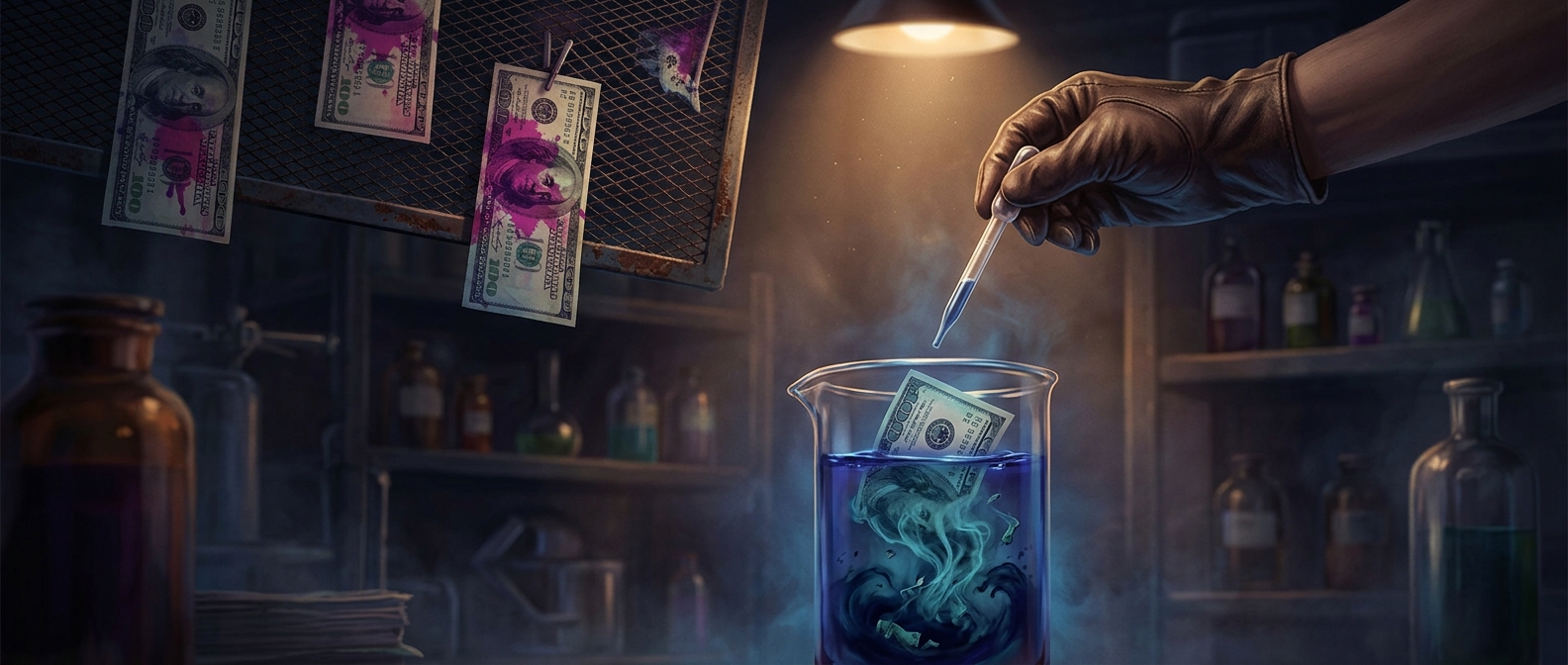
A dye pack is meant to make stolen cash conspicuously marked; removing the stain is not a simple matter of washing fabric. The more aggressively someone tries to erase it, the greater the chance of trading an obvious mark for damaged money. The stain may be visible, but the attempted fix can compromise the material that makes the bill usable.