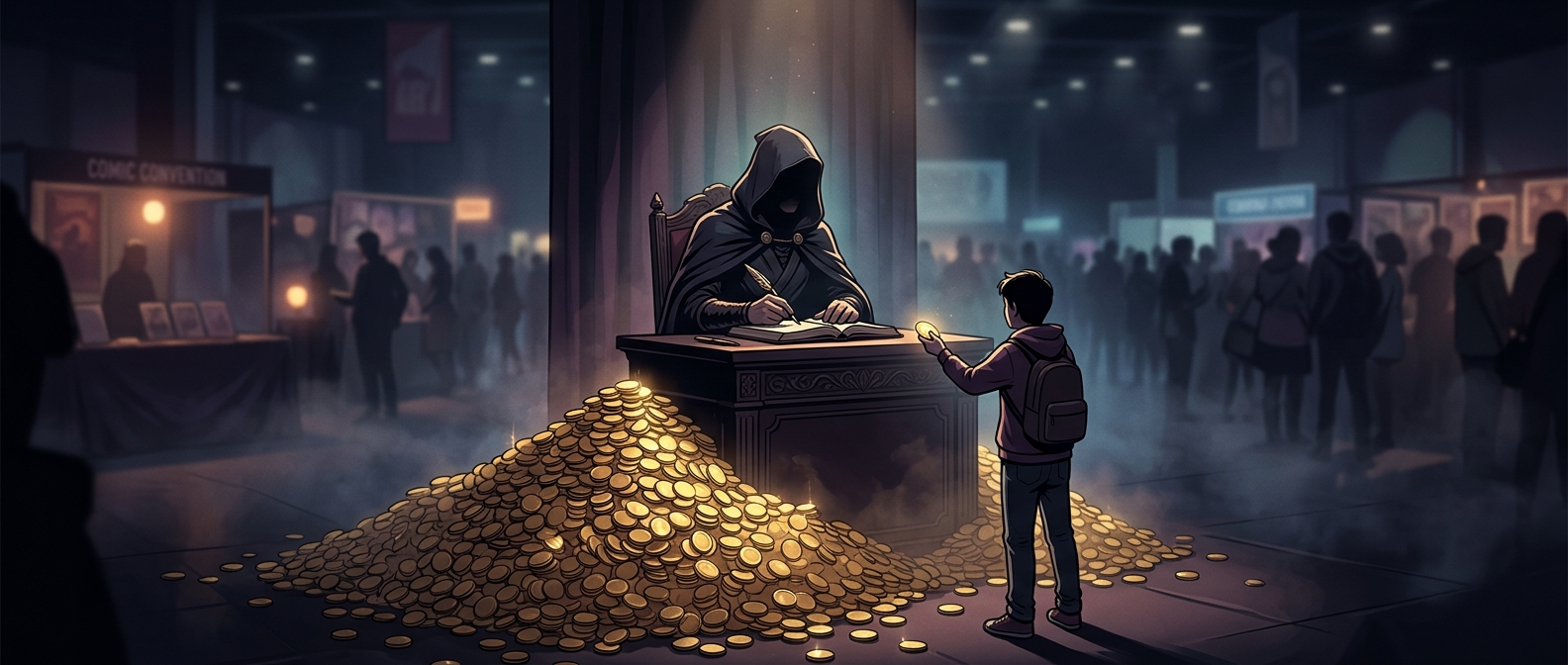
The price is for access, not pen time
A signature can take seconds, but its price is not calculated like a fee for each second of labor. At a convention, the scarce thing is the chance to meet a particular performer in person. If many fans want that chance and the performer has limited time at the event, demand can support a high price even when each interaction is brief.
The performer’s appearance is also part of a larger commercial arrangement. Convention organizers must make the event work financially, while guests and their representatives may have their own fees or terms. The exact split and pricing vary, but the autograph table sits inside that event economy—not outside it as a simple exchange of ink for money.
Why the photo matters
A glossy photo gives the transaction a ready-made keepsake. Fans do not have to bring an item, and the image connects the signature to a recognizable role or moment. That makes the purchase feel more complete: the autograph is both proof of the encounter and a physical reminder of why the performer matters to the fan.
The short interaction is part of the product, too. A greeting, a few words, or a quick personal detail can make a standardized photo feel tied to one specific meeting. The value is therefore partly emotional and partly about access—something a fan cannot reproduce later by simply buying the same image elsewhere.
A brief moment with a long afterlife
For the convention, a fast signing lets many visitors pass through a limited window. For the fan, the signed photo can last long after the queue disappears. The mismatch between a few seconds of signing and a lasting souvenir is precisely what makes the price seem striking: the purchase is measured less by how long it takes to make than by what that moment means to the person paying.