The Price Is for Time, Not Just Cleanliness
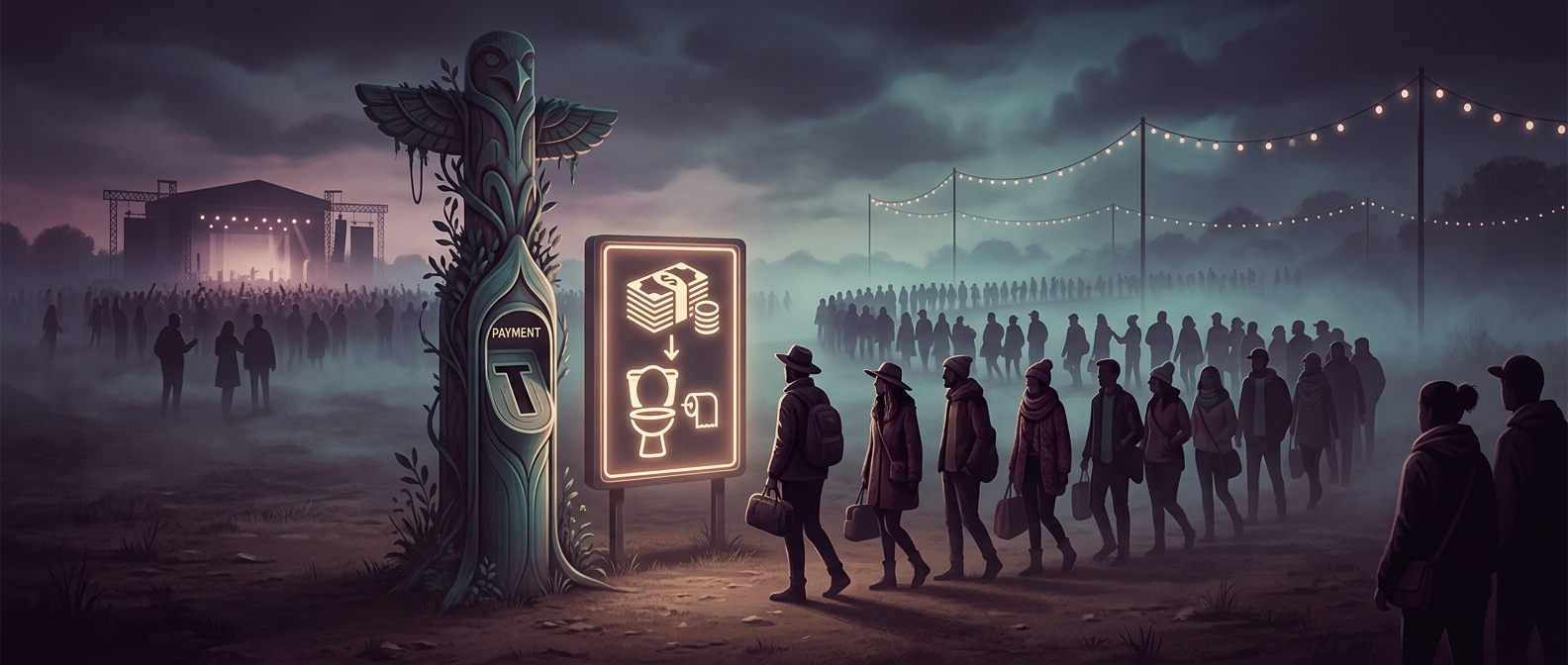
At a festival, a toilet’s value depends on more than how clean it is. The standard option may be free, but it can cost attendees time: walking across a crowded site, waiting in line, and missing part of a performance. A paid portable toilet can command a premium even if it is only modestly cleaner because it may offer a shorter, more predictable stop.
That is a familiar economic tradeoff: people pay to avoid a cost that does not appear on a receipt. In this case, the hidden cost is time—and, for someone who has planned a day around particular sets, the chance of missing something they came to see.
A Captive Audience Changes the Calculation
Leaving the festival grounds can mean a long walk, a lost place among friends, or dealing with entry rules on the way back. So the free alternative outside the venue may not be a realistic substitute. When people are effectively confined to the event for hours, even a small convenience inside can become valuable.
That gives organizers and vendors room to charge for a better-located or less crowded option. The price does not need to buy luxury in the usual sense. It only has to feel worthwhile compared with the inconvenience of the alternatives.
Scarcity Is Part of the Product
Festival toilets are temporary infrastructure serving a large crowd in a limited space. Demand can surge between performances, while queues and walking distances make capacity feel tighter than the number of toilets alone suggests. Paid facilities can segment that demand: attendees with more money or less time to spare can pay to reduce the hassle, while others use the standard provision.
The revealing detail is how little improvement may be needed. When the real commodity is a few minutes—and the ability to stay inside the event—a cleaner toilet is a bonus. The more important purchase may simply be getting back to the music sooner.