The Player Builds a Moving запас
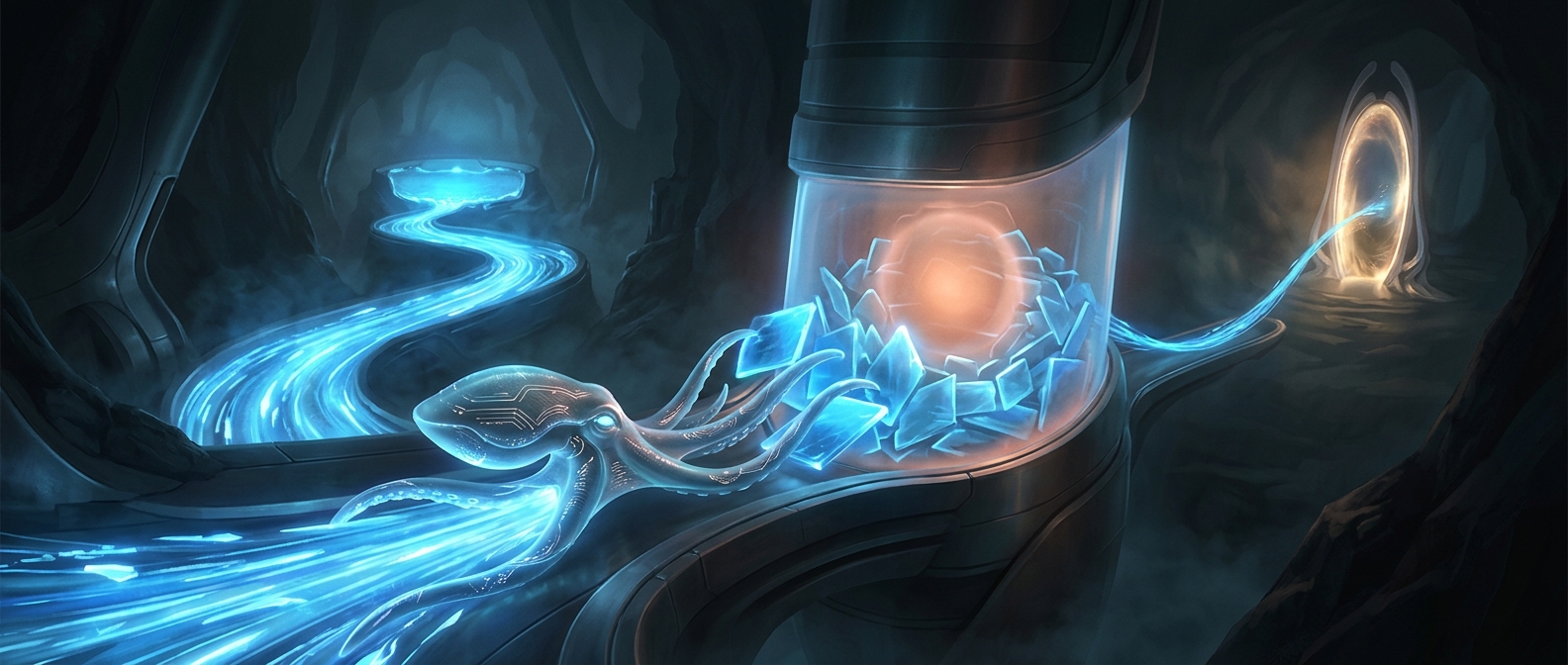
A streaming player does not usually receive a whole film at once. It requests short segments, then places the incoming audio or video in a temporary memory area called a buffer. Playback reads from one end of that queue while the network fills it from the other.
That separation matters because internet delivery is uneven. A segment may arrive quickly, then the next may be delayed by congestion or a weak wireless signal. The player can keep showing what it has already received instead of stopping at the first slowdown.
A Reserve Has Limits
The buffer is more like a pantry than a backup connection: it contains only a limited amount of future playback. If the network pauses briefly, the reserve covers the gap. If the pause lasts longer than the stored material, the player catches up to the end of the queue and must wait for more data.
Players also balance reserve size against responsiveness. Waiting to collect more data before starting can make playback less likely to stall, but it increases the delay before a video begins—and can make live streams feel further behind the action. A smaller reserve starts faster but leaves less protection against a sudden dip in delivery.
Quality Can Adjust, Too
Many services divide video into segments available at different quality levels. When delivery slows, the player may request a lower-resolution segment, which takes less data to download; when conditions improve, it can move back up. This does not eliminate buffering, but it can help the incoming stream keep pace with playback.
The practical consequence is that a short network hiccup may be invisible to the viewer. The player has already fetched the next few moments, so the interruption happens in the connection—not necessarily on the screen.