Why a Billion-Dollar Fine Can Be a Small Price for a Monopoly
A fine’s headline size tells you little about how much it changes a company’s behavior. The key comparison is between the penalty and the economic benefit the company kept—not between the penalty and a number with many zeroes.
A firm may earn enormous revenue while violating competition law, but revenue is not the same as profit. Even so, if unlawful conduct lets it charge more, block rivals, or preserve a dominant position, the resulting gains can accumulate across many customers and years. A one-time penalty may then be only a modest cost of doing business.
The Incentive Depends on the Expected Cost
Companies weigh risk, not just the maximum possible fine. The expected cost of misconduct depends on the chance it will be detected and successfully challenged, the size of the penalty if it is, and how long the process takes. If enforcement is uncertain or delayed, the company may benefit from the conduct for years before paying anything—and the value of that earlier benefit can exceed the eventual bill.
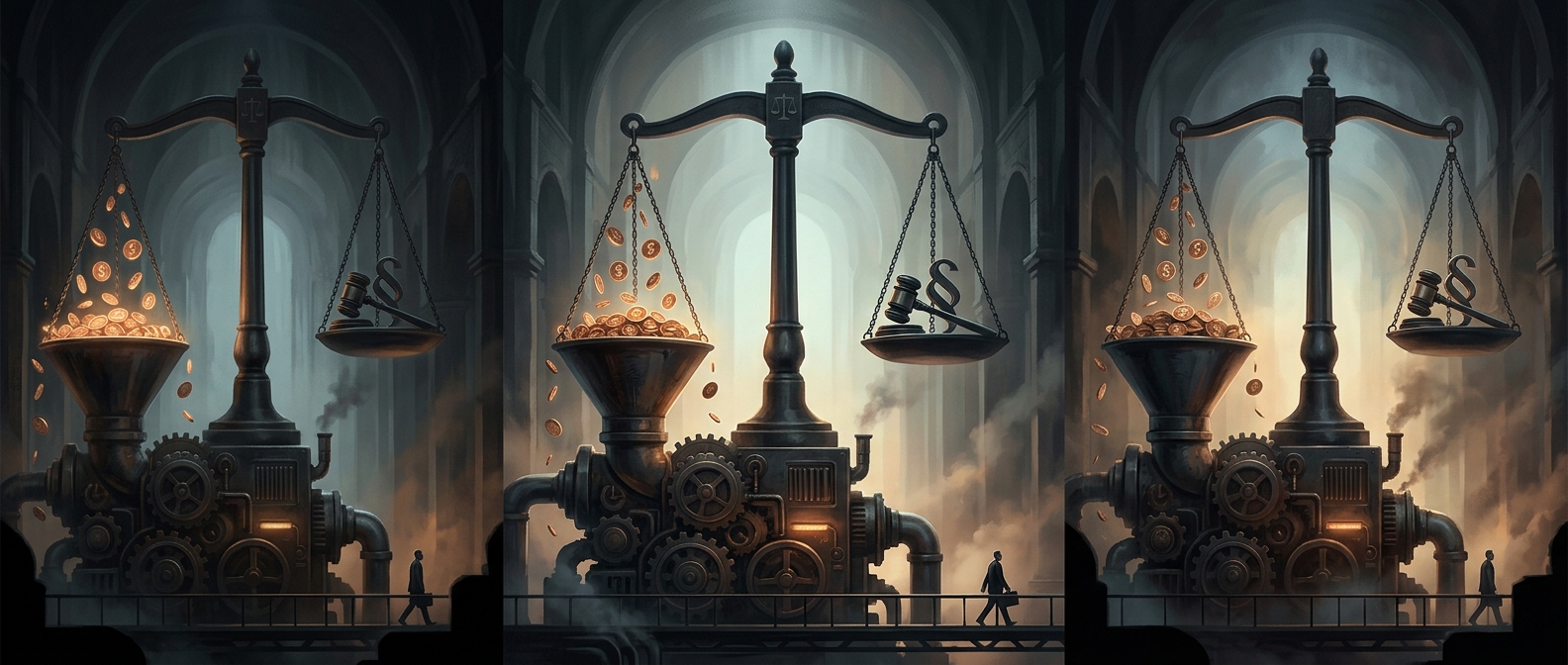
That is why a large fine can still fail to deter. If the likely penalty is smaller than the expected gain, breaking the rules may look profitable from the company’s perspective, even when the conduct is illegal. Penalties can also be contested or reduced through legal proceedings, so the announced amount is not always the final amount paid.
The Number Needs a Denominator
A fine is more meaningful when compared with the company’s finances and the gains or harm linked to the violation. Rules for setting penalties differ by jurisdiction and case; some systems consider factors such as the seriousness or duration of the conduct, and some use revenue in calculating limits. There is no single formula that makes every billion-dollar fine equally painful.
The practical question is whether the penalty changes the company’s future calculation. If it costs less than the advantage gained, the fine may punish past conduct without removing the incentive to repeat it.