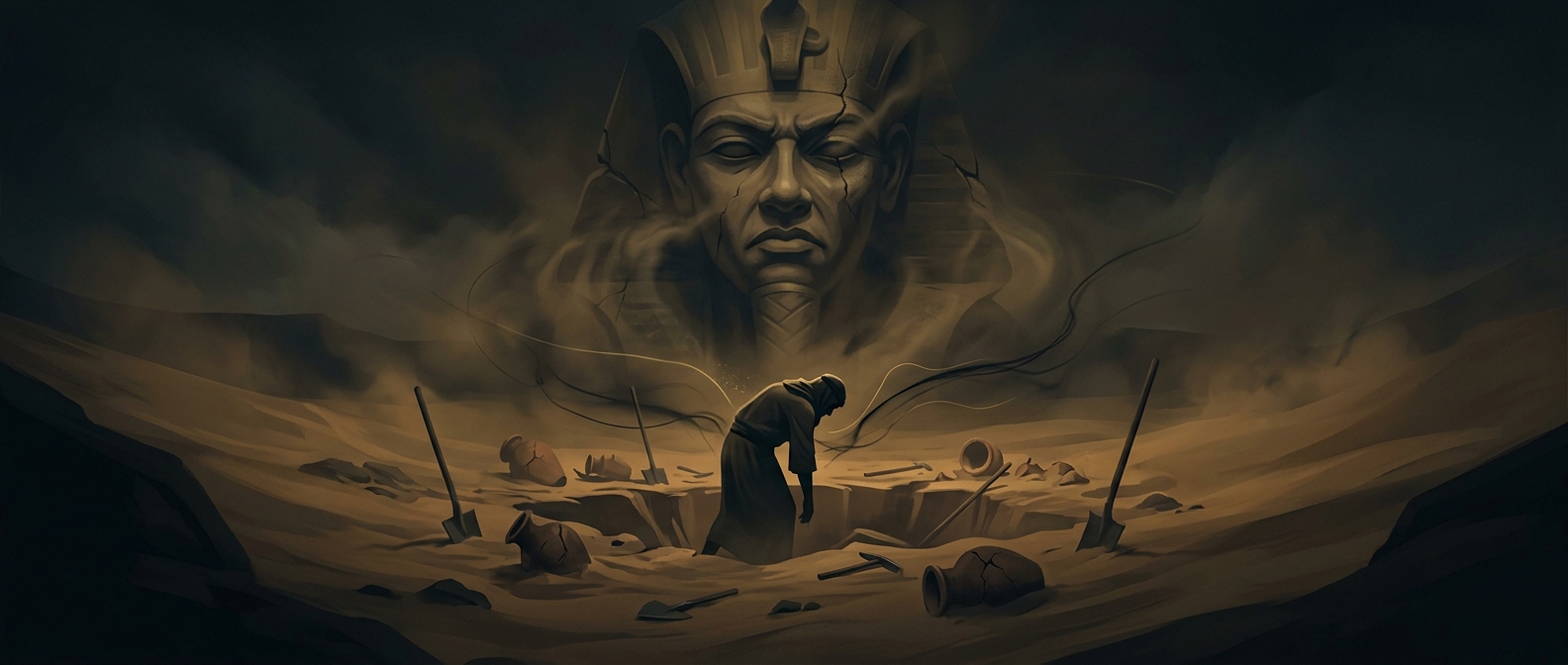
What happens when a sealed tomb is opened
For centuries, fine dust can settle in an enclosed chamber alongside fragments of stone, cloth, wood, and other decaying materials. When people break a seal, move objects, or sweep the floor, that material can become airborne. In a poorly ventilated space, workers may breathe in a concentrated cloud before it has time to settle again.
The danger is ordinary but real: airborne particles can irritate the nose and lungs, causing coughing or shortness of breath. The smallest particles can travel deep into the lungs. Dust mixed with mold or other biological material may also trigger allergies or, in some circumstances, illness—especially for people with existing lung problems or weakened immune systems.
Why the curse seemed like an explanation
An archaeological expedition was a risky workplace. People spent long days in cramped, dusty chambers, often without modern respiratory protection, while also facing heat, exhaustion, accidents, and infections. If someone became ill after a tomb was opened, the timing could make the tomb seem responsible in a more mysterious way.
That timing is not evidence of a supernatural force. Nor does the age of a tomb make its dust uniquely lethal: the actual risk depends on what is in the air, how much is inhaled, and a person’s health. The practical response is to control dust, improve ventilation where possible, and use suitable protective equipment—not to treat the chamber as cursed.
A newly opened tomb can pose a genuine hazard, but its most immediate threat is the material disturbed inside it.