How the Brain Turns Two Taps Into a Crawling Sensation
Touch receptors report changes at particular spots on your skin; they do not send a tiny object’s continuous route to the brain. When two taps land close together in space and time, the brain receives two separate bursts of touch information and works out whether they belong to one event.
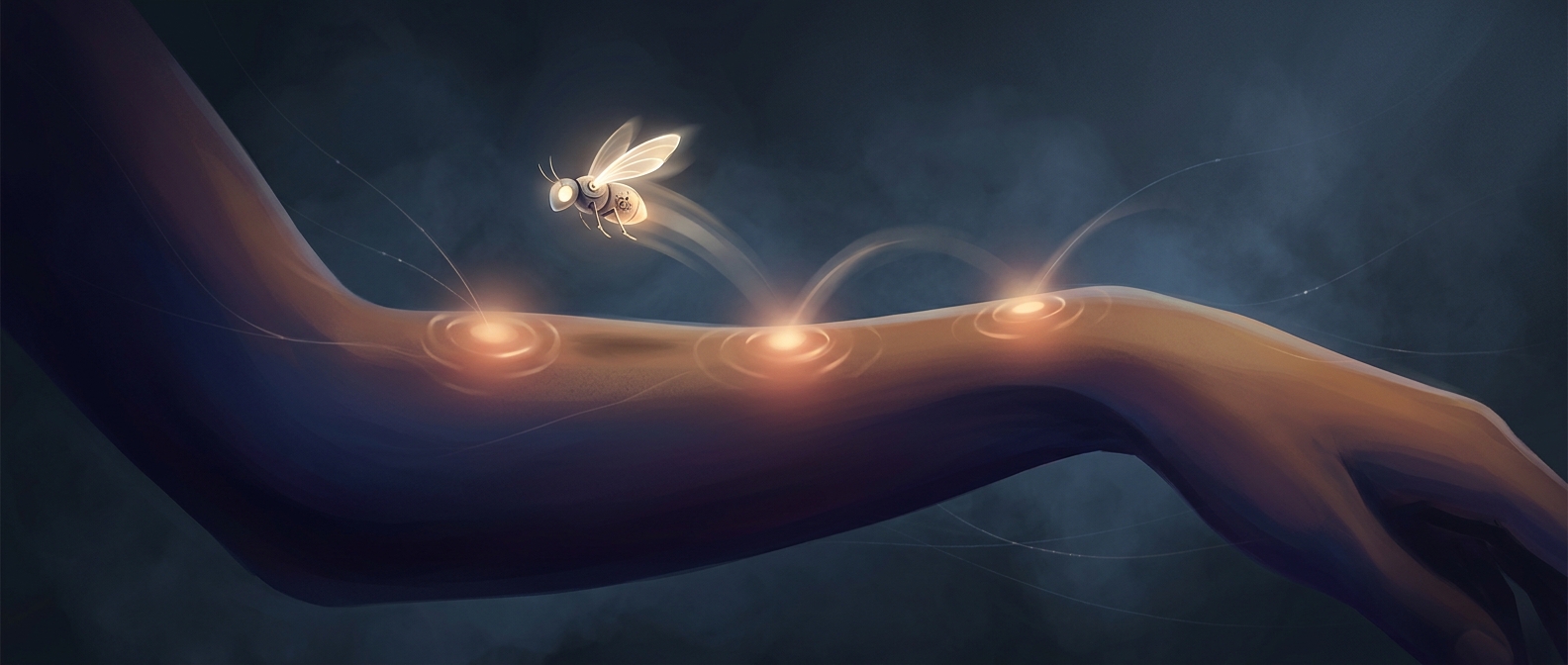
If the taps are sufficiently near each other, the brain may interpret them as the endpoints of a single movement. Instead of experiencing two isolated touches, you can feel something traveling across the skin. This is called tactile apparent motion: a perceived movement created by successive touches, rather than by anything actually moving between them.
Why It Can Feel Like a Bug
The sensation depends on how the taps relate to one another. Their timing and distance help the brain decide whether they are separate touches or stages of one event. When the pattern resembles a small thing moving across the arm, the brain supplies a plausible interpretation—a crawling insect—along with the missing journey between the taps.
That does not mean the brain is simply making up a sensation from nothing. The taps are real; the continuous crawl is the brain’s best fit for the signals it receives. The same basic trick helps perception make a connected scene from incomplete information: separate inputs become one event when their timing and location suggest a common cause.
The Missing Journey
A flipbook creates apparent movement from still pictures shown in sequence. In a similar way, touches at successive locations can make movement seem continuous even though the skin was stimulated only at those points. The surprising part is not that the taps are mistaken for a bug, but that the brain can supply the in-between—and make that inferred path feel as immediate as the touches themselves.