A Hotel Safe’s Backup Is a Tradeoff
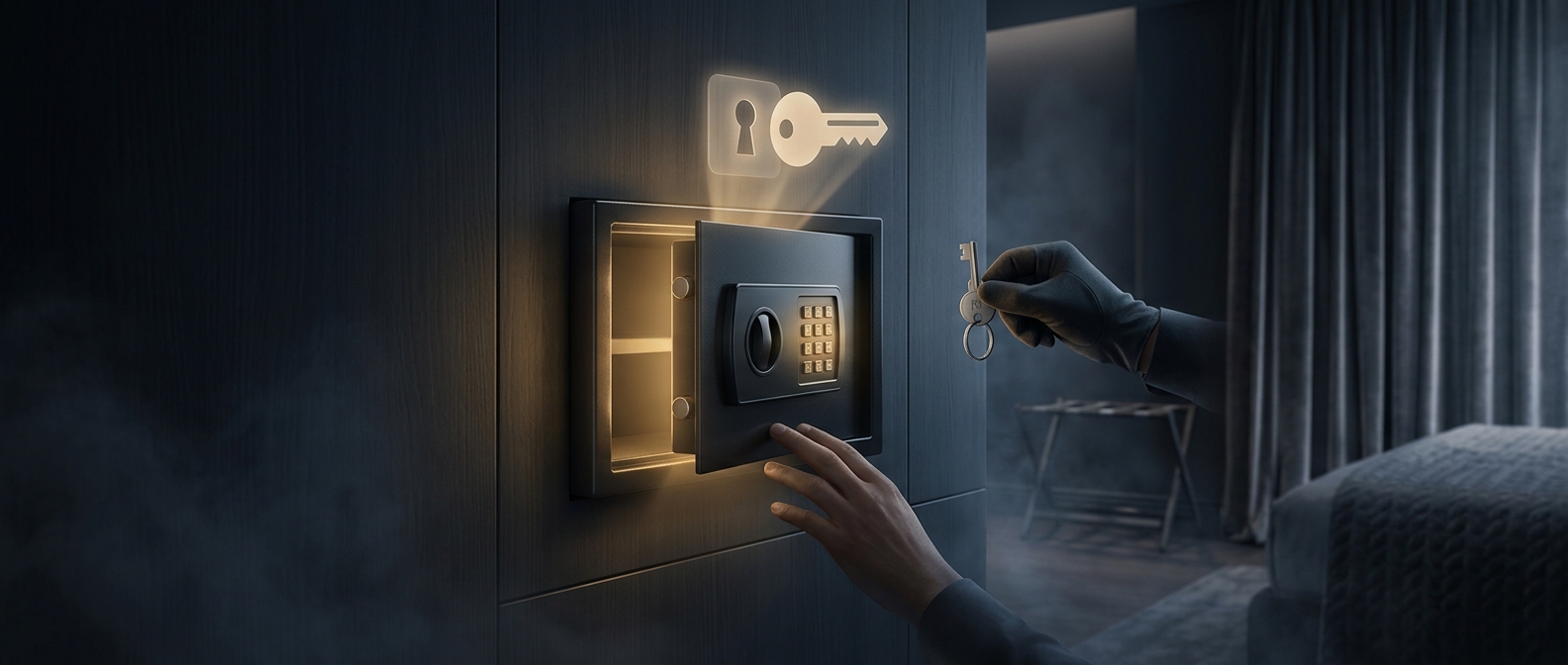
A room safe has to solve two competing problems: it should keep a guest’s belongings inaccessible to someone who opens the door, but it should not become unusable when the guest forgets a PIN or the electronics fail. Manufacturers and hotels address that problem with an override method—often a staff-controlled code, service key, or both.
That backup is useful during an ordinary stay. A guest who checks out with a locked safe can’t simply take it along, and hotel staff need a way to recover its contents and reset the unit for the next visitor. But the backup also means the PIN is not the only route into the safe. On some models, default service credentials have circulated online, while other models use different procedures or have been reconfigured by the property.
What That Means for Guests
A safe’s keypad can make it feel like a private lock, but the override system is part of the design. Its protection depends not only on the guest’s PIN, but also on how the hotel manages staff access and whether the safe’s setup has been changed from its default. The presence of an override does not, by itself, mean someone has accessed a guest’s belongings; it does mean a room safe is not equivalent to a personally controlled home safe.
For items that would be especially difficult to replace, ask the hotel about its secure storage options rather than assuming the in-room safe is the strongest available choice. The practical detail to remember is simple: the keypad is the guest-facing lock, not necessarily the only way the safe can be opened.