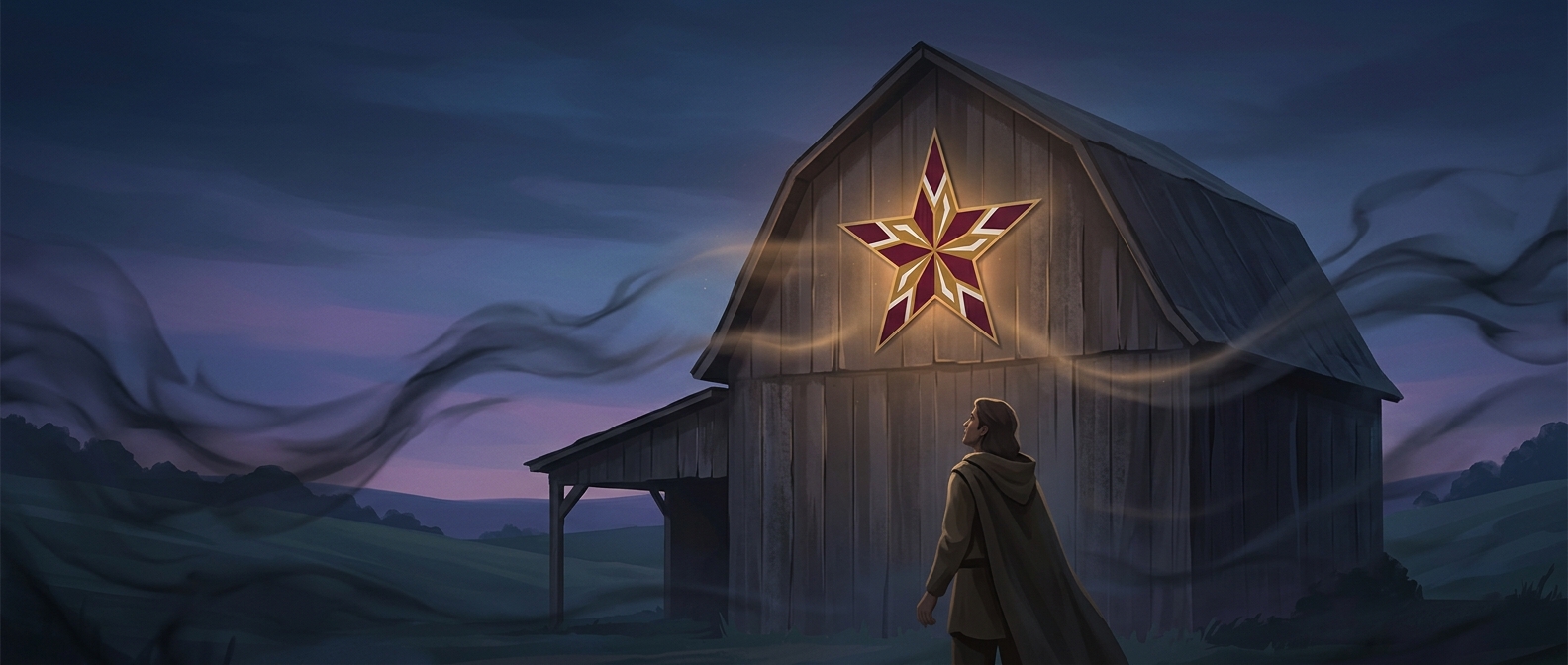
A painted pattern meant to guard the farm
A barn star was more than a bright mark on a broad wall. In parts of Pennsylvania and neighboring areas, farmers painted geometric rosettes—often built from repeated points, circles, and bands—as folk symbols associated with protection and good fortune. The idea was that a carefully chosen design could help keep misfortune away from the household, livestock, or harvest.
That protection was symbolic, not mechanical: the paint could not stop a storm or illness. Its purpose lay in expressing a hope for safety and placing that hope where it mattered most, on the buildings that sheltered a farm’s work and animals.
Why put the symbol on a barn?
A barn’s large, visible surface made it a natural canvas. A star high on the wall could be seen from the road or fields, turning a practical building into a public expression of care for the farm. Painting one also made the motif part of ordinary rural life, rather than something kept in a book or carried as an amulet.
The patterns could be intricate, but their meaning was not always fixed: a rosette might be understood as protective, auspicious, or simply pleasing to look at. The same painted star could therefore serve as both decoration and a visible wish for good luck.