When the brain’s self-story quiets
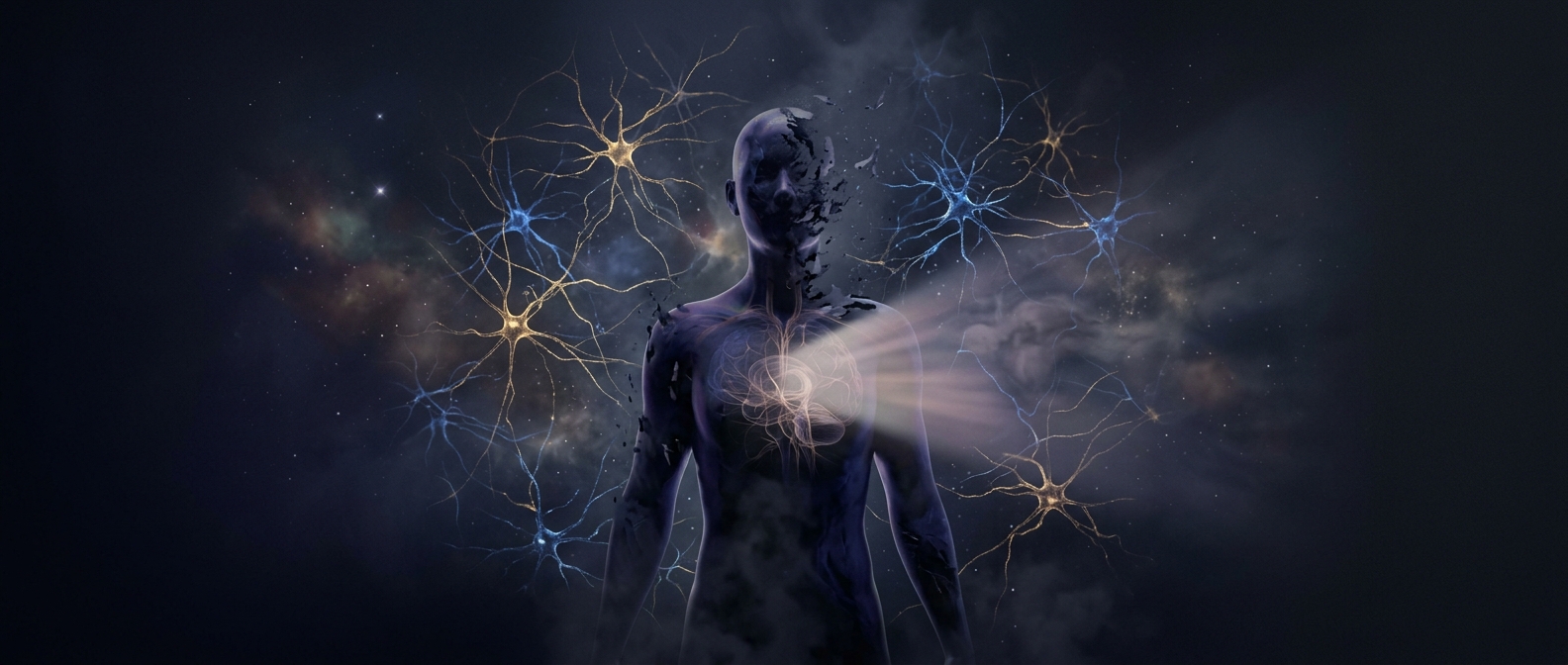
Ego dissolution is the felt weakening of the usual distinction between “me” and everything else. People may describe a softened sense of personal identity, boundaries, or ownership of their thoughts. In studies of psychedelic experiences, this state has been linked to reduced activity in the default mode network (DMN), a set of interacting brain regions involved in reflecting on oneself and connecting present experience with personal memories.
The DMN is not a single “self center,” and it does not generate every part of identity. It helps the mind keep returning to questions such as who you are, what has happened to you, and what your experiences mean. When activity in this network changes, the familiar stream of self-focused thought may become less dominant. Sensations and ideas can then feel less organized around a stable personal narrator.
A shift in coordination, not an off switch
Psychedelic chemicals alter signaling between brain cells, changing how networks communicate. The observed connection with ego dissolution is therefore better understood as a shift in the brain’s ongoing coordination than as a chemical switch that simply turns the self off. The experience can feel profound, but the brain remains active; other systems continue processing perception, emotion, and thought.
That distinction helps explain why ego dissolution is not identical to unconsciousness or memory loss. A person can remain aware while feeling that the usual boundaries of identity have loosened. The notable consequence is that the mind’s self-story—which normally makes experience feel like it belongs to one continuous “me”—can temporarily lose some of its organizing force.