What “ego death” describes
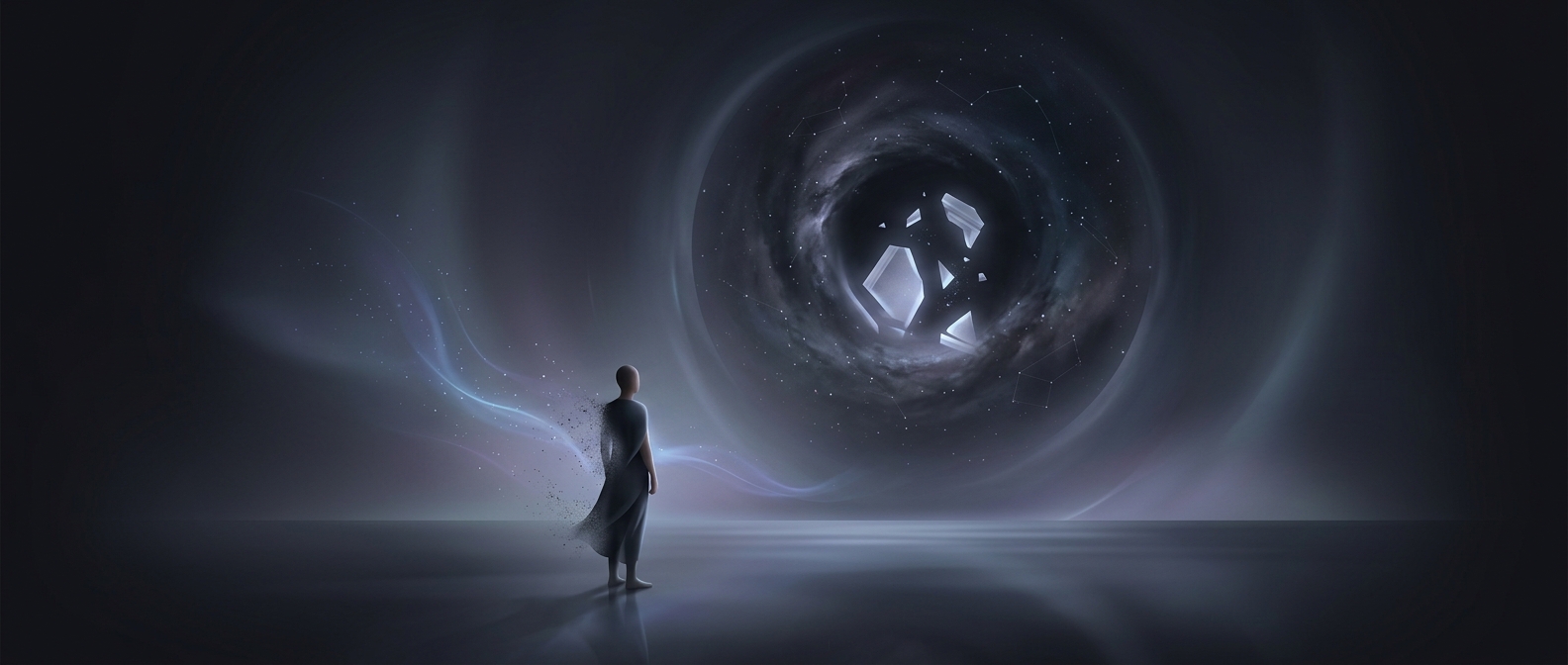
The phrase ego death does not usually mean that a person’s personality has literally vanished. It names a temporary experience in which the ordinary sense of being a separate, continuous self becomes faint or seems to drop away. Someone may feel less identified with their personal story, thoughts, or body, while the world feels unusually unified or immediate.
The experience can arise in different settings, including meditation, intense religious practice, and psychedelic drug use. The phrase is used broadly, so two people who call an experience “ego death” may mean quite different things.
The self is more than one feeling
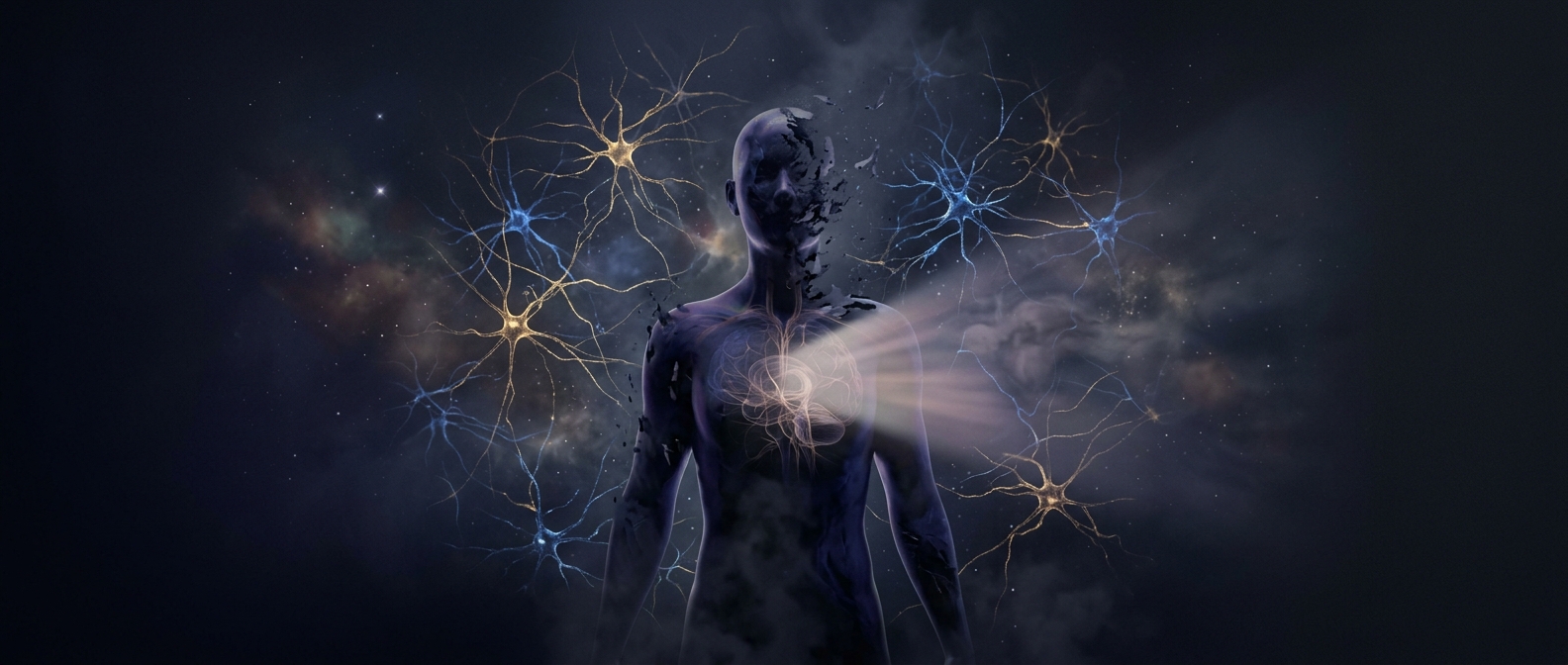
In everyday life, the mind quietly combines several signals into a steady sense of “me”: memories and plans, awareness of the body, and the impression that thoughts belong to one person. These processes usually work together so seamlessly that their construction is easy to overlook. In an unusual state, parts of that familiar self-model may become less prominent or less integrated. A person can then experience thoughts without the usual feeling of ownership, or feel that the distinction between self and surroundings has softened.
That helps explain why the experience can feel profound without permanently changing someone’s personality. The shift is in how the self is experienced at that moment, not proof that the person has ceased to exist or acquired a new identity.
Why interpretations differ
Some people understand the experience through a spiritual tradition, as a glimpse of connection or the loosening of attachment to the self. Others describe it in psychological terms—as a temporary alteration in self-awareness. Those interpretations can matter deeply to the person, but the experience alone cannot establish that the self has literally merged with the universe.
The striking part is how much ordinary identity depends on a feeling the mind usually supplies without notice: the sense that “I” am here, and everything else is outside.