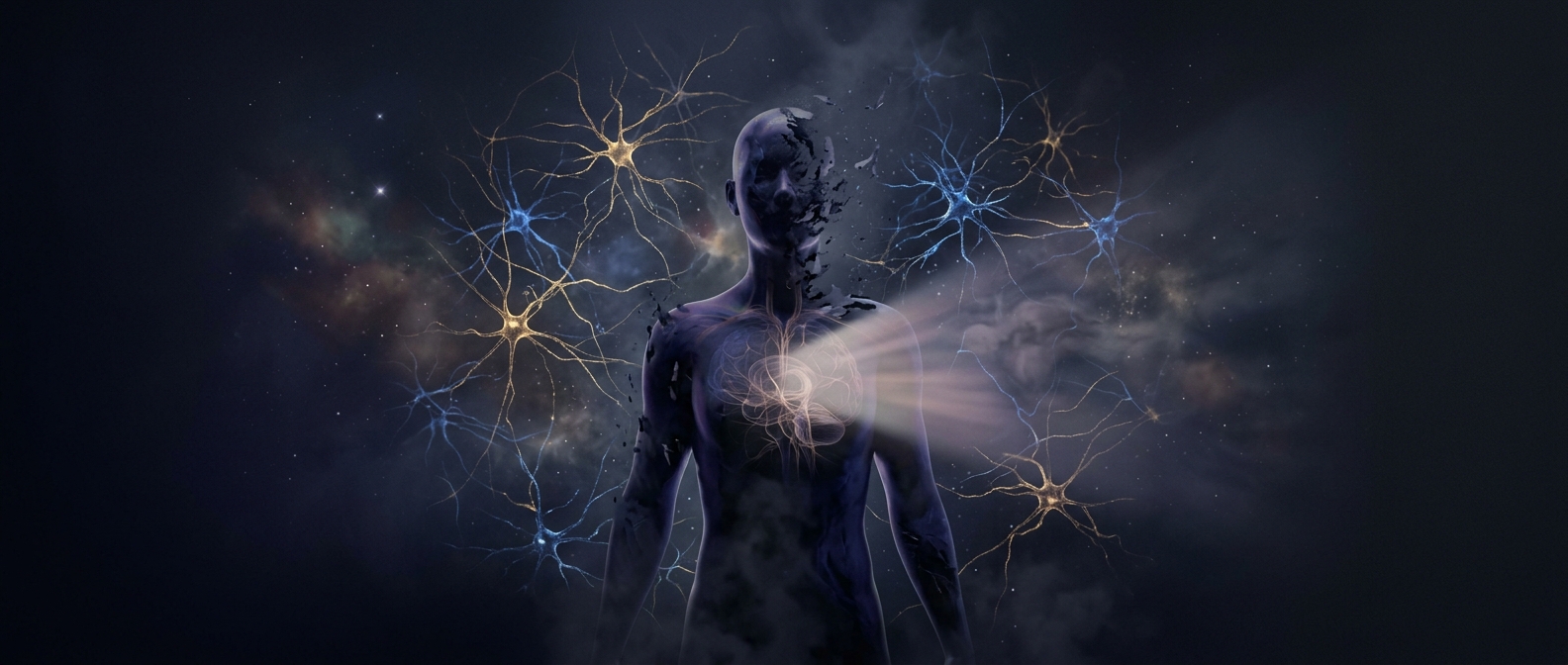
When the “main character” feeling loosens
In contemplative practice, ego dissolution usually means a temporary or lasting shift in how tightly someone identifies with the self—not the disappearance of their memories, personality, or practical needs. The familiar sense of “I am the center of this story” can become less convincing. Thoughts and emotions still arise, but may feel more like events passing through awareness than proof that every moment is about “me.”
How meditation can change the perspective
Meditation often trains attention to notice thoughts without immediately following or defending them. A practitioner might catch the mind turning a small slight into a verdict on their worth, or treating a personal plan as if the world must cooperate with it. Repeatedly seeing those reactions come and go can make the self-story feel less fixed and all-important.
That shift is not necessarily a dramatic revelation. It may be as ordinary as listening to someone else without rehearsing a reply, or accepting a setback without making it a judgment on one’s entire life. The point is not to conclude that the self is unreal in every sense, but to hold its concerns with less automatic centrality.
Less central does not mean less human
A person can still care for their body, keep commitments, and value relationships. What may change is the reflex to treat personal status, comfort, or success as the measure of everything. In that sense, “forgetting your own importance” means loosening the demand to be the universe’s main character—not forgetting who you are or that your choices affect other people.
The practical consequence can be small but telling: a disappointment remains disappointing, yet no longer has to become the whole story.