The fork where anger lost its grip
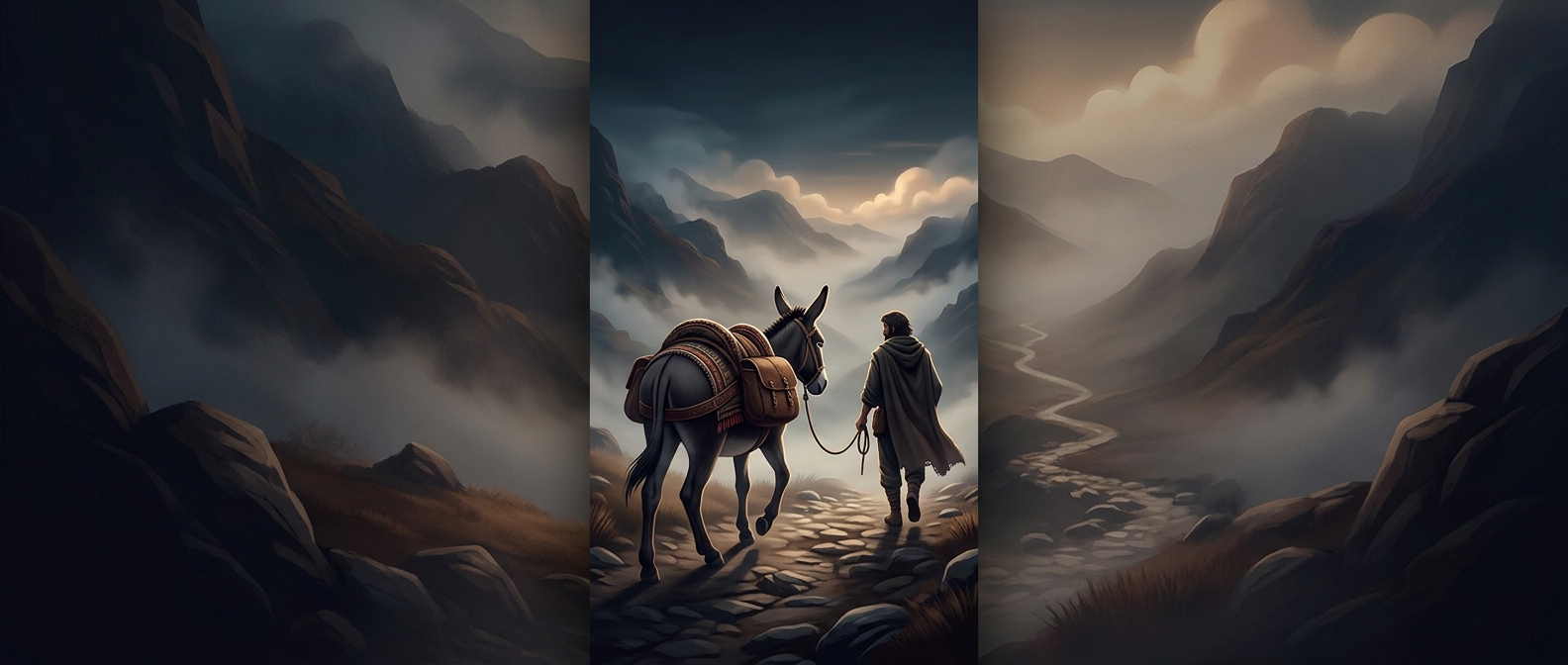
The choice at the crossroads is not really about finding the fastest route. The traveler has just been insulted, and one road would carry him toward the person who wounded his pride. By dropping the reins, he gives up control at the exact moment when anger is urging him to act.
The donkey’s choice turns the story’s lesson into a physical action. Instead of debating whether the insult deserves a reply, the traveler lets the animal lead him along the peaceful road. The pause changes what happens next: no pursuit, confrontation, or retaliation follows.
A small act of restraint
In a spiritual reading, the donkey need not possess special wisdom. Its role is to interrupt the traveler’s impulse. Following it becomes a way to step outside the contest over who has been wronged and who must answer for it.
That distinction matters. Restraint here is not proof that the insult was harmless, nor does the story require the traveler to approve of it. It shows how refusing to chase a provocation can prevent another person’s words from dictating the next decision. The donkey chooses the road; the traveler chooses not to turn anger into a destination.