How a Small Deposit Turned Into Leverage
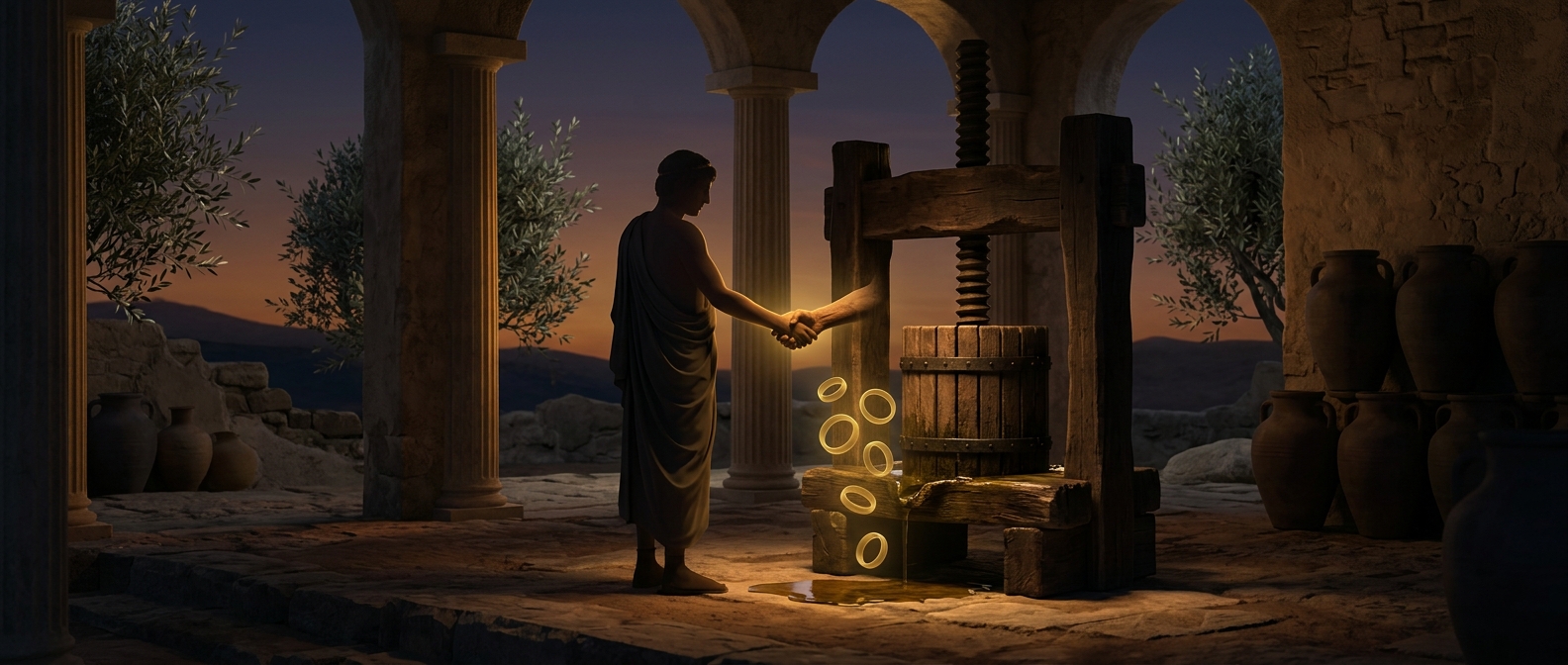
Months before the olives were ready, Thales of Miletus reportedly paid owners of olive presses for the right to use their equipment during harvest. He did not need to buy the presses outright. His deposits secured access in advance, when demand was still uncertain and the owners had reason to accept a modest payment.
That arrangement resembles an option: paying now for the right, but not the obligation, to make a later transaction. If the harvest brought a rush of farmers needing presses, Thales could exercise his right and rent out the capacity at a higher price. If demand stayed weak, he could let the opportunity go, limiting his loss to what he had paid to reserve access.
The Presses Were Valuable at the Bottleneck
Olives had to be processed soon after harvest, so pressing capacity mattered most during a short, busy season. Farmers arriving with ripe fruit could not easily wait for equipment to become available. By securing access before that bottleneck formed, Thales positioned himself between the press owners and the farmers who urgently needed their services.
The profit, in the story, came not from making olive oil but from controlling scarce capacity at the moment it became valuable. The owners received money in advance; Thales took the risk that demand would not rise enough to cover his deposits and other costs.
An Early Lesson in Market Timing
The story is often treated as an early example of options trading because it shows how a small upfront payment can buy a chance to profit from a future change in demand. Aristotle recounted it to illustrate Thales’s ability to make money, not as a surviving market record with the details of a modern financial contract.
Its practical lesson is still clear: when a resource is cheap to reserve before anyone knows how urgently it will be needed, access itself can become an asset. By harvest time, farmers were competing for presses; Thales had arranged to be the person who could offer them.