Why Garnet Grains Cut Surface Material
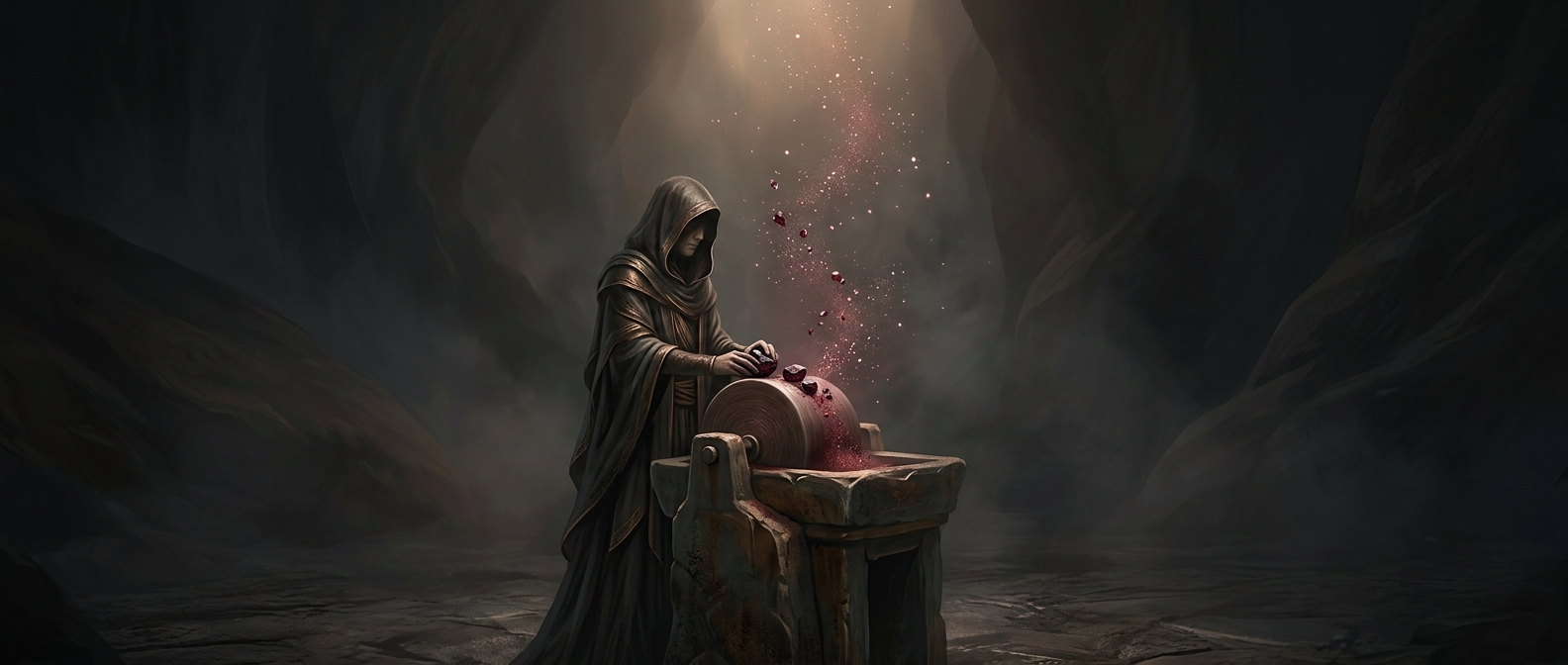
Sandpaper works through thousands of small, hard particles dragged across a surface. Each grain acts like a tiny cutting edge, scraping away wood, paint, or another material. Garnet is hard enough to do that effectively, and crushing it produces angular pieces with edges that can bite into a surface rather than simply slide over it.
As the grains wear, some fracture and expose new edges. That helps the abrasive keep cutting, though the paper eventually becomes clogged or too worn to work well. The grit number describes the size of the abrasive particles: coarser grains remove material faster and leave deeper scratches; finer grains make a smoother finish.
A Practical Balance, Not Maximum Hardness
Garnet is not the hardest available abrasive. Its appeal is the useful combination of cutting ability and affordability. For many sanding jobs, an abrasive does not need to be exceptionally hard; it needs to remove material reliably at a cost that makes sense for the task.
That balance makes garnet useful in industrial sandpaper, where large quantities of abrasive grains are bonded to a flexible backing. The practical result is a sheet that can turn rough material into a more even surface through repeated, controlled scratches—without requiring the most expensive or hardest mineral available.