Why a collision can be more valuable than a hoop
Croquet’s most consequential shot may be the one that sends an opponent’s ball away from its route. In many forms of the game, a player who hits another ball earns a special follow-up called a croquet stroke: the player moves their own ball beside the one they struck, then hits it so the two balls travel in chosen directions. That can propel the opponent toward a boundary—or use the opponent’s ball as a convenient way to send your own closer to the next hoop.
The exchange turns a simple lawn course into a contest over position. A ball knocked out of a useful spot may have to spend time getting back into play, while a well-aimed pair of strokes can leave several of a player’s balls lined up for later turns.
The hoops shape the route—and the choices
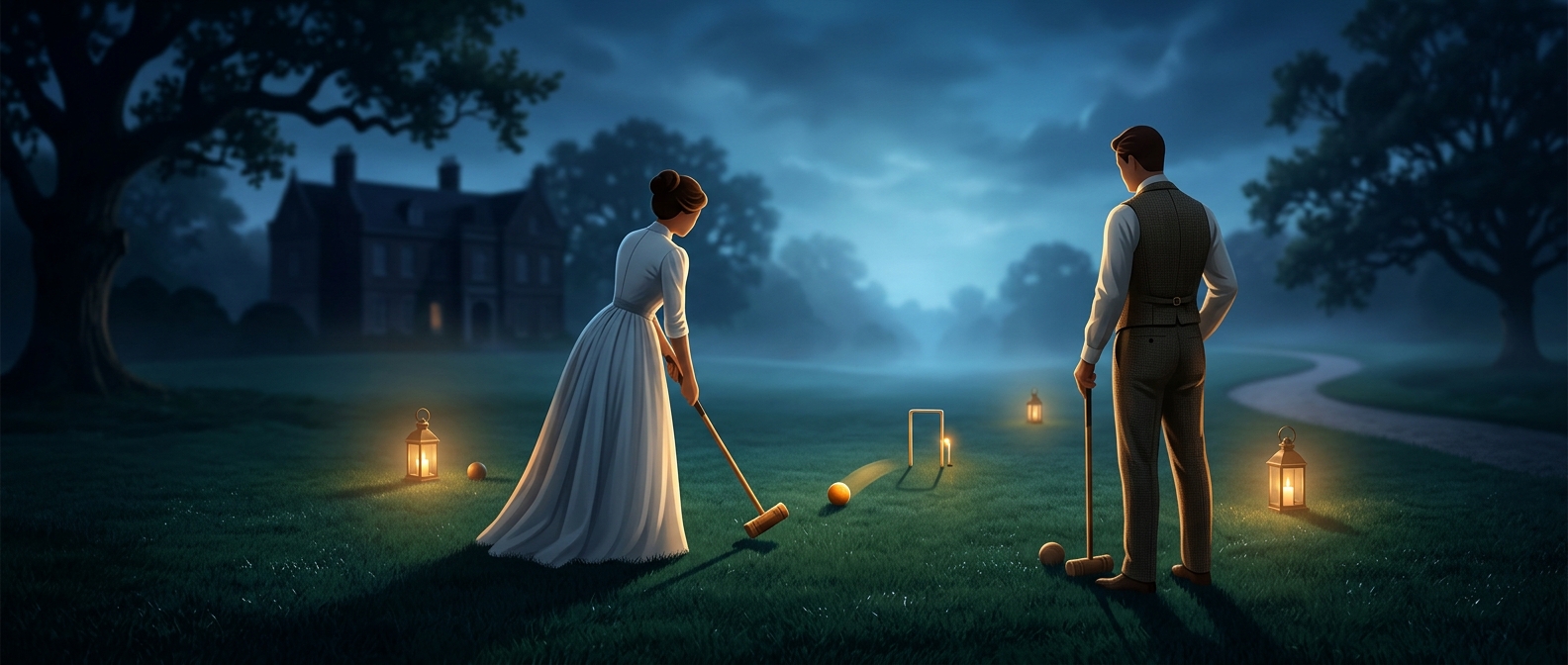
The wire arches, commonly called hoops or wickets, form a course that balls must pass through in a prescribed order. A player has to balance two aims: advance toward the next hoop and avoid leaving a ball exposed to an opponent’s shot. A direct approach may be risky; a detour that brings balls together can create a chance to use the croquet stroke and move more than one ball strategically.
That is why the game can look deceptively calm. The decisive action is often not a hard hit but a carefully chosen contact: which ball to strike, where to leave it, and whether to make progress now or disrupt an opponent first. Rules differ among croquet variants, especially in how extra strokes work, but the central tension remains: each ball is both a route to the goal and a tool for controlling the others.