The table supplies the upward bounce
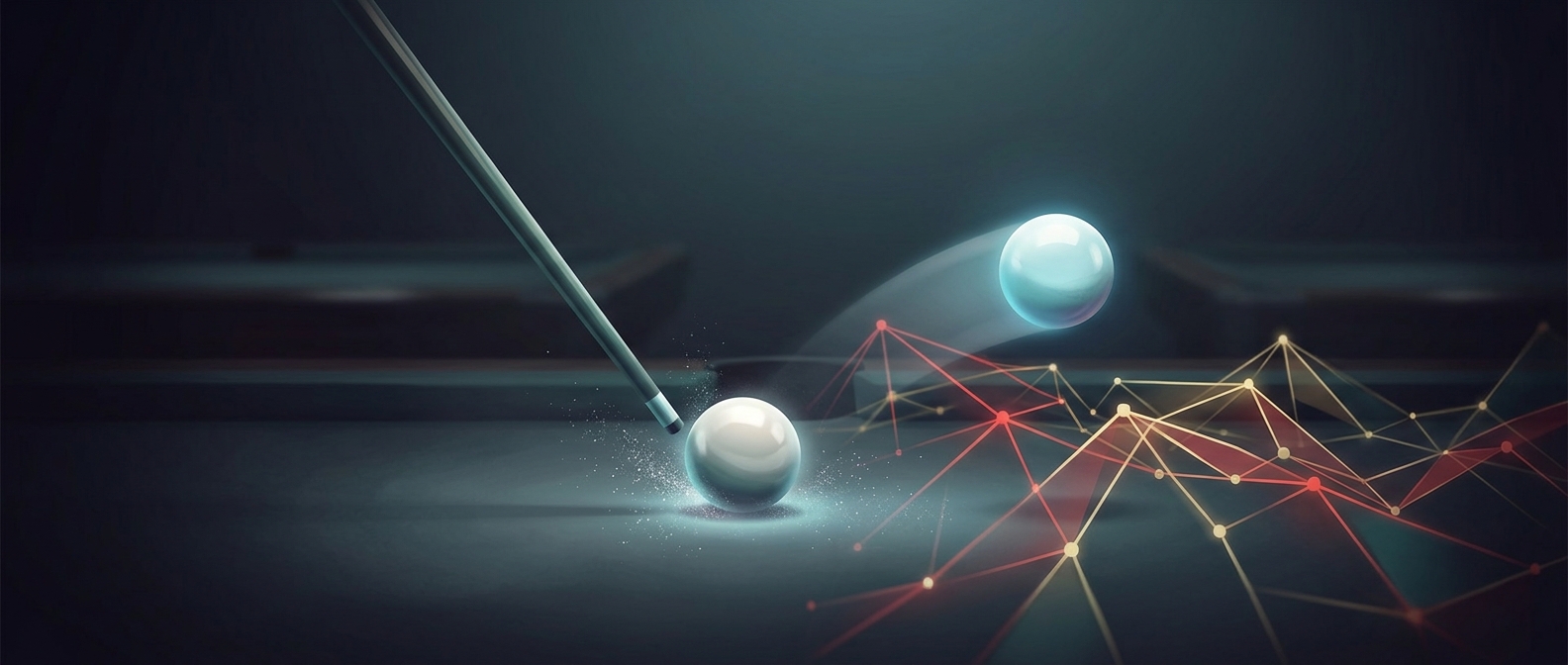
A jump shot is less like scooping the cue ball into the air than making it bounce. The cue is raised so the tip drives the ball sharply downward as well as forward. The ball presses into the cloth and the rigid slate beneath it; those surfaces push back, sending the ball upward.
That rebound happens quickly. The cue ball keeps much of its forward motion, so it travels in an arc rather than rising straight up. If the arc carries it high enough, it passes over another ball or obstacle and lands on the other side.
Why the stroke has to be controlled
The height depends on the angle and force of the stroke, along with where the cue tip contacts the ball. Too little downward impulse may leave the ball rolling into the obstacle; too much or a poorly controlled hit can send it off course. The player is balancing two goals: creating enough upward rebound to clear the obstacle while preserving the direction needed for the shot.
Because the ball must rebound from the playing surface, the cue cannot simply slide underneath it to lift it. The useful image is a fast, angled bounce: the table turns the downward part of the stroke into the upward motion that lets the cue ball clear the obstruction.