Why a Sentence Can Mislead Before It Ends
Understanding a sentence is not usually a word-by-word wait until the period. Readers build a rough structure as they go, deciding who is acting and which words belong together. That speed is useful—but it means an early, plausible interpretation can take hold before later words show it is wrong.
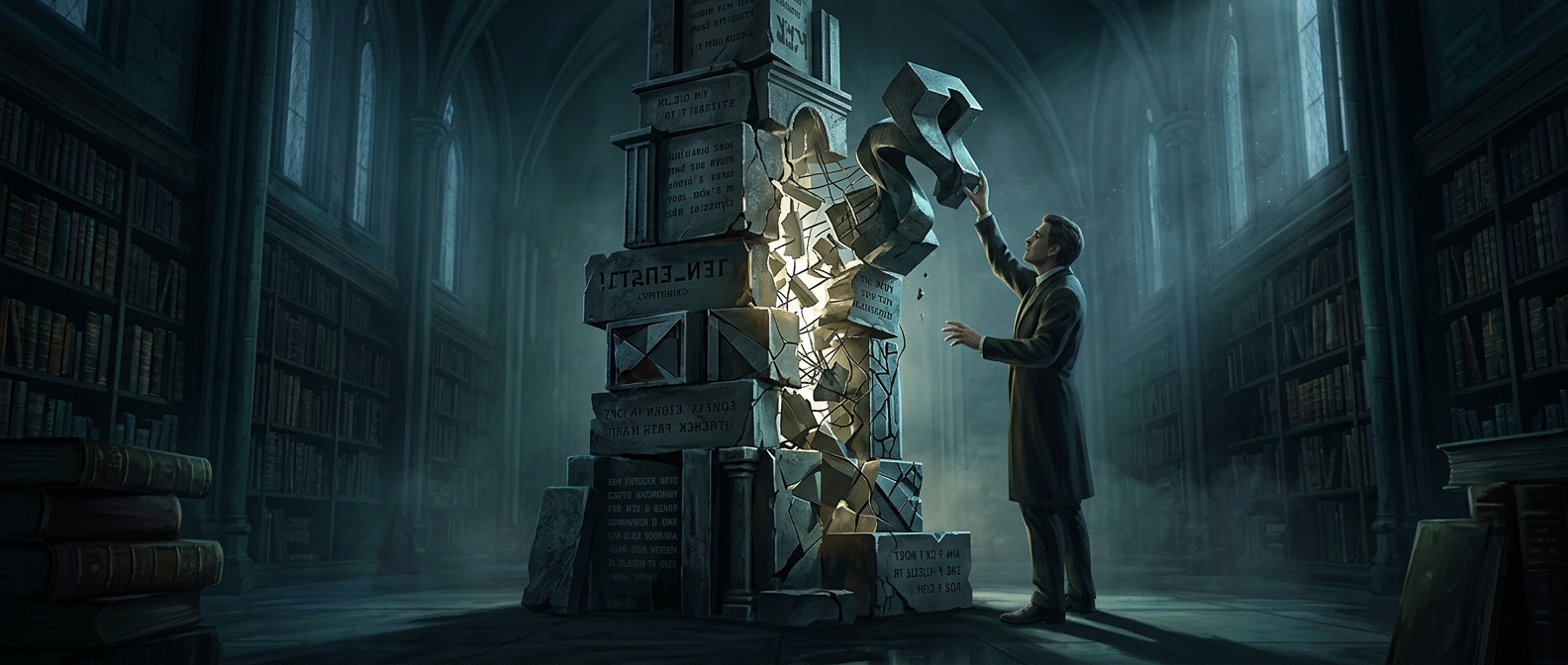
Consider: “While the man hunted the deer ran into the woods.” At first, “the deer” can seem to be the object of “hunted”: the man hunted the deer. But the sentence’s actual structure makes “the deer” the subject of “ran.” The reader must revisit the earlier words and regroup them: while the man hunted, the deer ran into the woods.
The Cost of Changing Course
This kind of trap is often called a garden-path sentence: it leads the reader toward one interpretation, then forces a turn. The difficulty is not that the sentence lacks grammar. It is that its opening supports a familiar reading, while the complete sentence requires a less immediate one.
The reread takes effort because the mind has to do more than add the new word. It must revise the relationships already assigned to the old ones. A comma after “hunted” would make the intended boundary clearer; without it, the reader is more likely to commit to the misleading parse.
What This Means for Language Systems
A language-processing system also has to infer structure from a sequence of words, and an ambiguous sequence can lead it toward the wrong grouping. Systems differ in how they represent and revise those guesses, so the human experience is not a perfect model of machine behavior. But the underlying challenge is similar: a locally convincing reading can conflict with the sentence’s full structure.
That is why a sentence can be grammatically sound yet hard to process—and why one small boundary, such as a comma, can prevent a reader from having to rebuild the sentence halfway through.