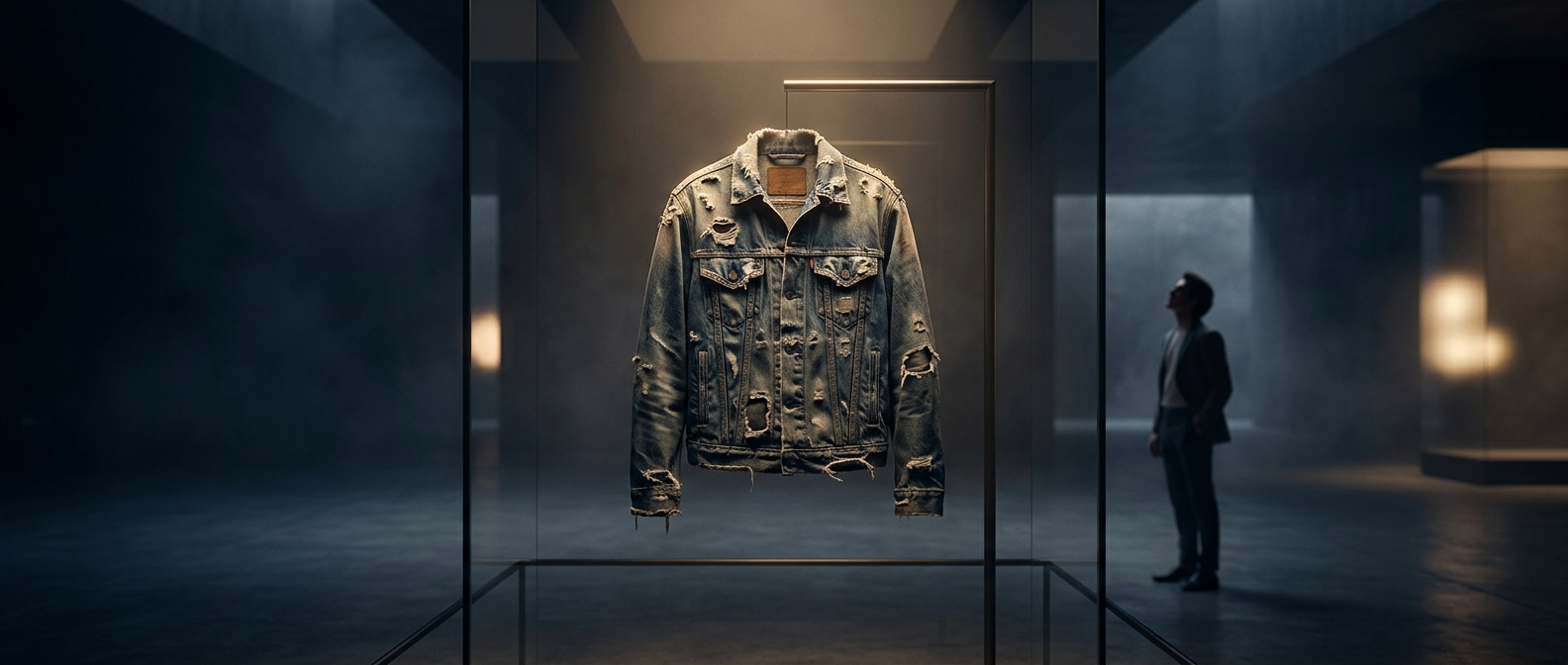
Why Wear Can Add Value to Vintage Jeans
A new pair of jeans can be faded or torn at a factory, but that finish is designed to look broadly similar from one pair to the next. Vintage wear is different: years of use create creases, soft spots, fading, and frayed edges in patterns shaped by the original owner’s movements. To some buyers, those marks make a pair feel individual—and difficult to reproduce convincingly.
The Price of a One-Off Look
That appeal changes how shoppers judge condition. In many clothing markets, damage lowers an item’s value because it makes the garment less useful. In vintage denim, visible wear can be part of the product’s appeal, especially when it gives jeans a strongly aged look. A buyer may be paying not just for a garment, but for a particular appearance that took time to develop.
Supply also matters. A vintage pair with desirable wear cannot simply be reordered in the same size and pattern. The more distinctive the fading or distressing, the harder it may be to find a close substitute. That scarcity can support a premium, though it does not mean every worn pair is valuable: fit, brand, construction, and the extent of the damage still affect demand.
When “Worn” Becomes “Too Worn”
The market’s dividing line is usefulness. Fading and surface fraying may signal character, while holes or weakened fabric can make jeans uncomfortable or likely to tear further. Sellers and buyers are therefore weighing two things at once: the look of age and the risk that the garment has little life left. The same worn knee that makes a pair distinctive can also make it harder to wear.