The world had to make sense on foot
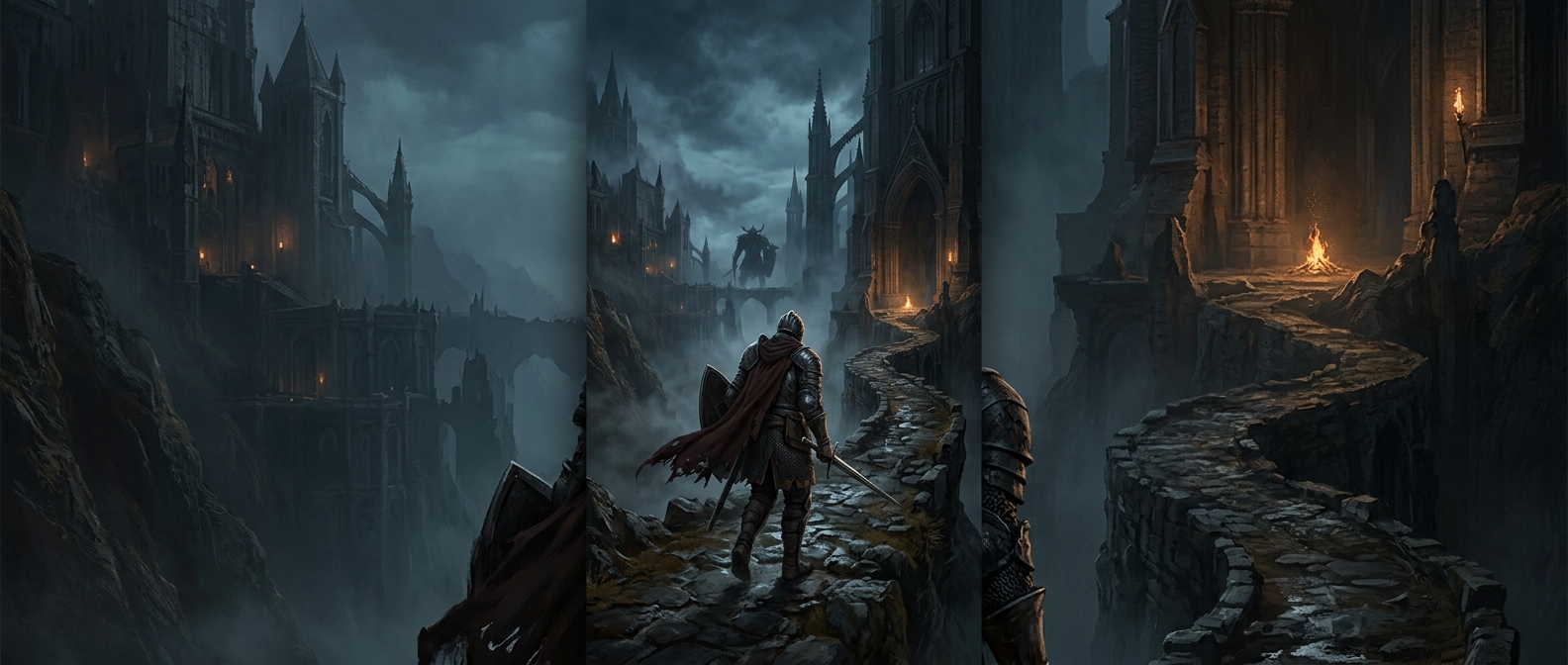
Before the Lordvessel unlocks warping, reaching a distant bonfire means traveling there through the world’s connected routes. That makes geography part of the challenge: a locked door, elevator, or narrow passage can determine how long a dangerous return trip takes.
Dark Souls often folds its regions together. A path that initially seems to lead deeper into danger may eventually open a shortcut back to familiar ground. Discovering that connection changes the practical shape of the level: a daunting journey can become a much shorter run once the player finds the right door or mechanism.
Shortcuts become a form of progress
Without routine fast travel, a newly reached bonfire is more than a place to recover. It is a foothold in the map. Players have to judge whether to press onward, turn back, or risk carrying their accumulated souls farther from safety. Retracing a route also gives earlier areas new meaning: their exits and unopened gates become clues to where a shortcut might lead.
The Lordvessel eventually changes that relationship by allowing travel between certain bonfires. But by then, players have spent much of the game learning the world as a continuous place rather than a menu of destinations. The delay makes opening a shortcut feel like a concrete gain in both safety and time.