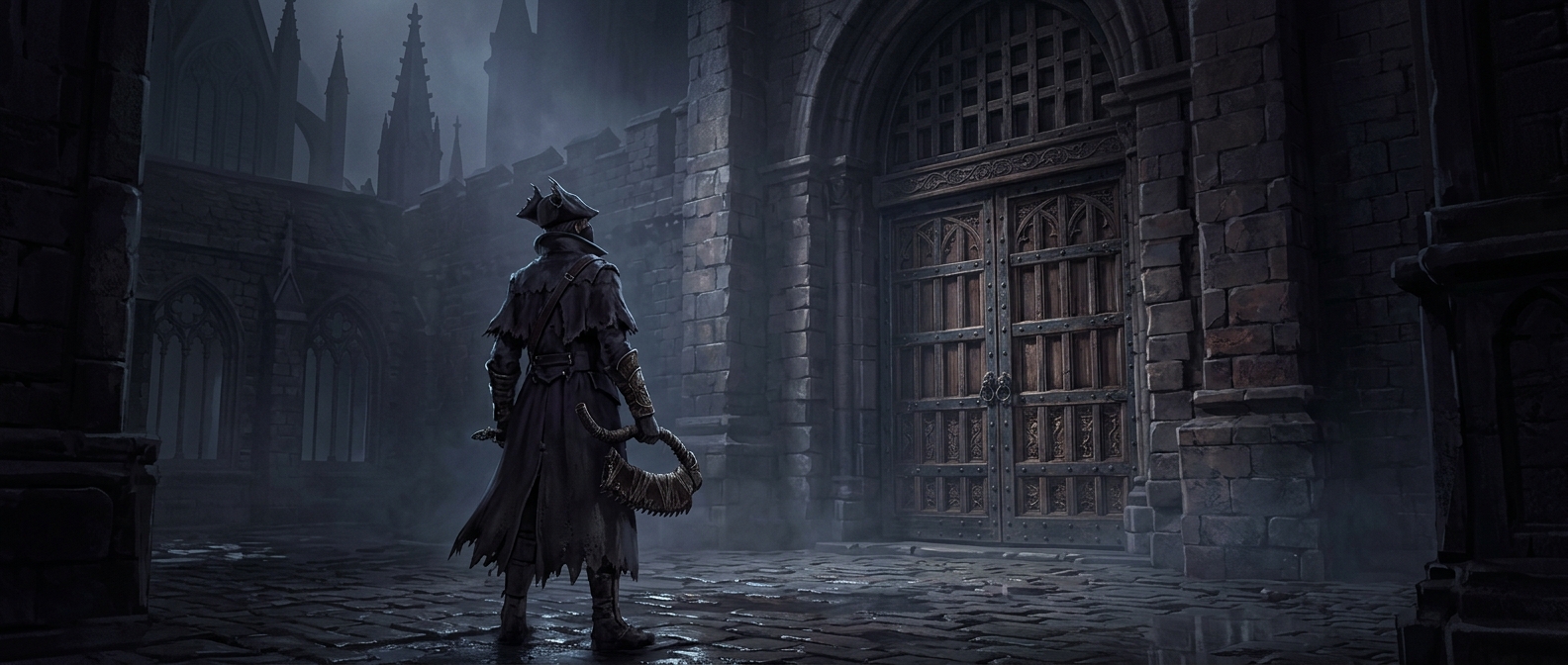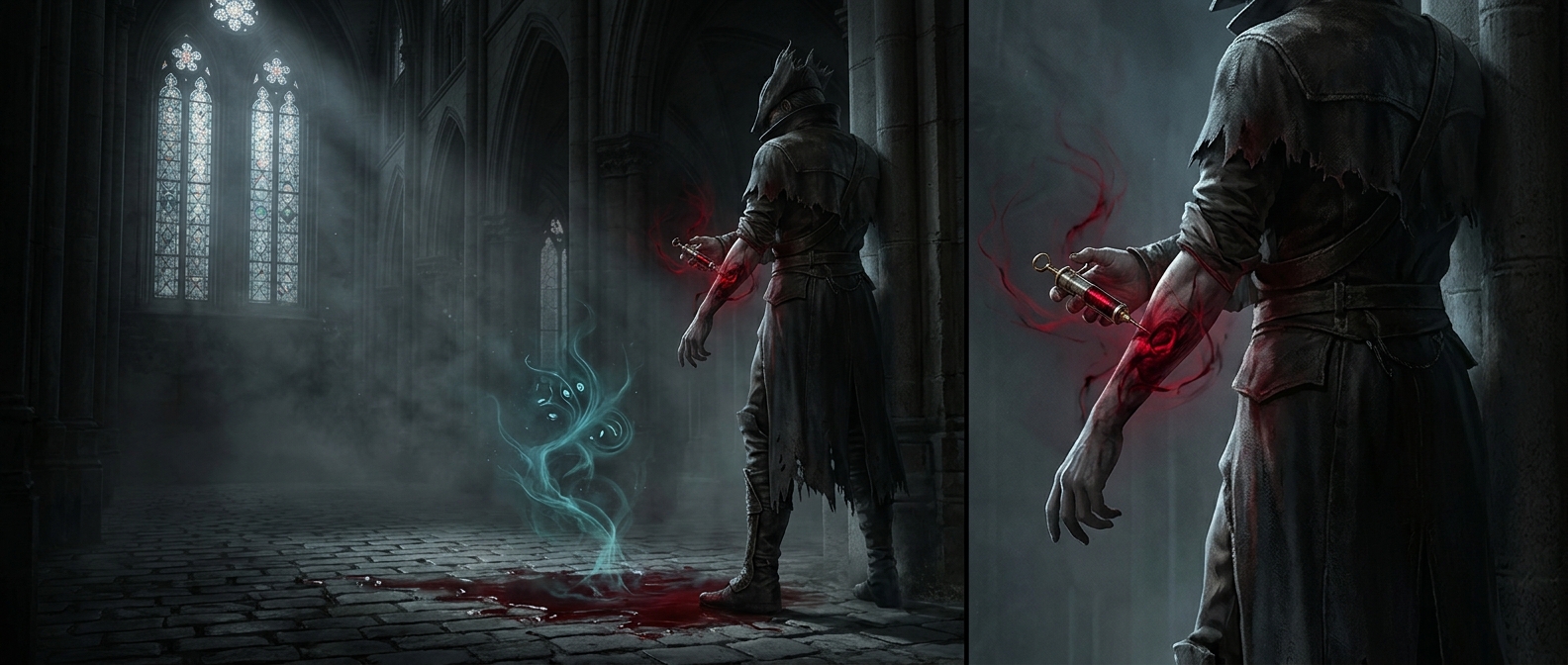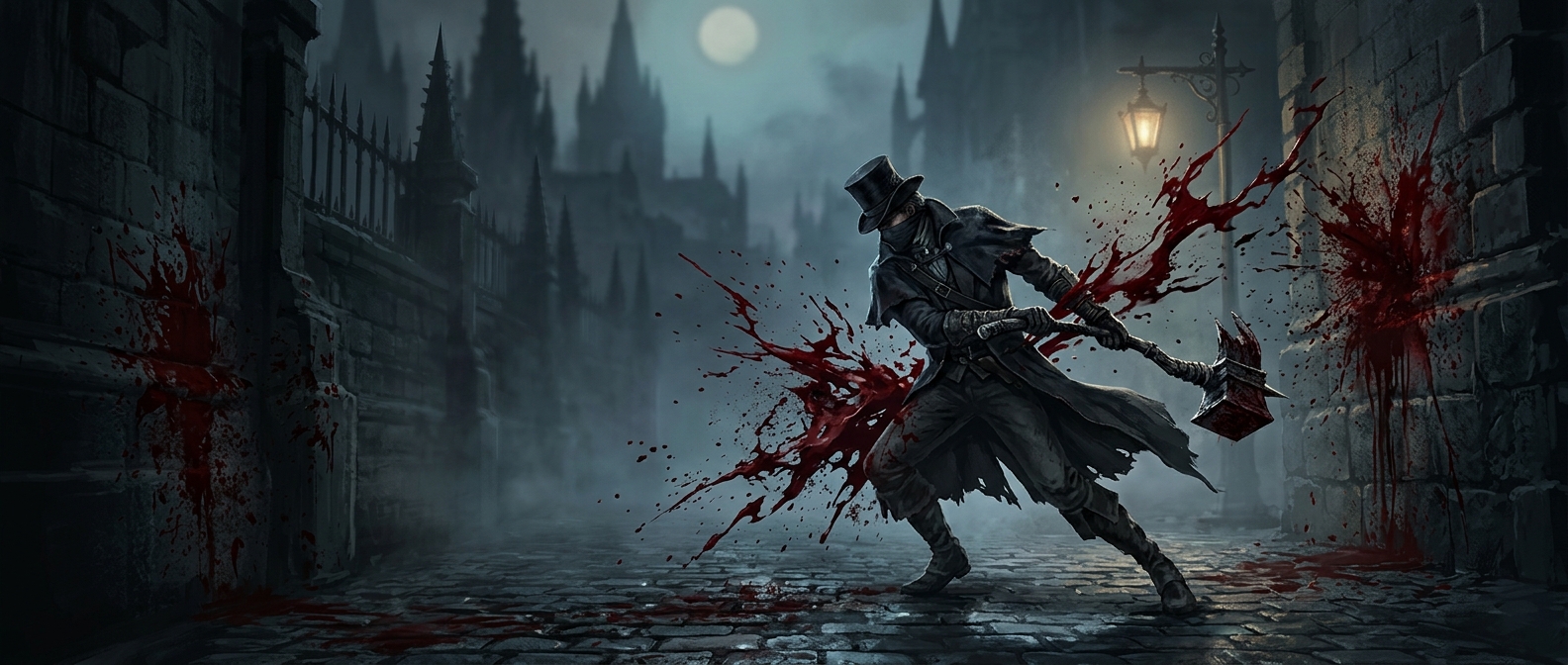
Bloodborne turns taking a hit into a brief chance to fight back
When an enemy strikes, some of the lost health remains temporarily recoverable. The health bar shows this portion in a different color; land attacks before it fades, and you regain health. This mechanic, called rally, makes a hit more than a simple setback: it starts a short contest over whether you can reclaim what you lost.
The system rewards pressure, not recklessness
Rally works best at close range, where you can answer an enemy’s blow with your own. That creates a distinct choice: retreat to avoid further danger, or press an attack while the opportunity to recover is still open. A successful counterattack can keep a fight going without spending a healing item, but another enemy strike can cost you more than you win.
The recovery is limited. It applies only to the temporarily recoverable portion of health, and attacking does not make a character invulnerable. Players still have to read an enemy’s movements, choose when to commit, and recognize when escaping is safer.
Why aggression becomes part of survival
In many action games, getting hit is a cue to back away and heal. Bloodborne makes that response less automatic: sometimes the quickest way to recover is to attack. The result is a combat rhythm built around close observation and decisive retaliation. A player who reacts quickly may turn a mistake into a small recovery; one who keeps swinging blindly may turn it into a defeat.