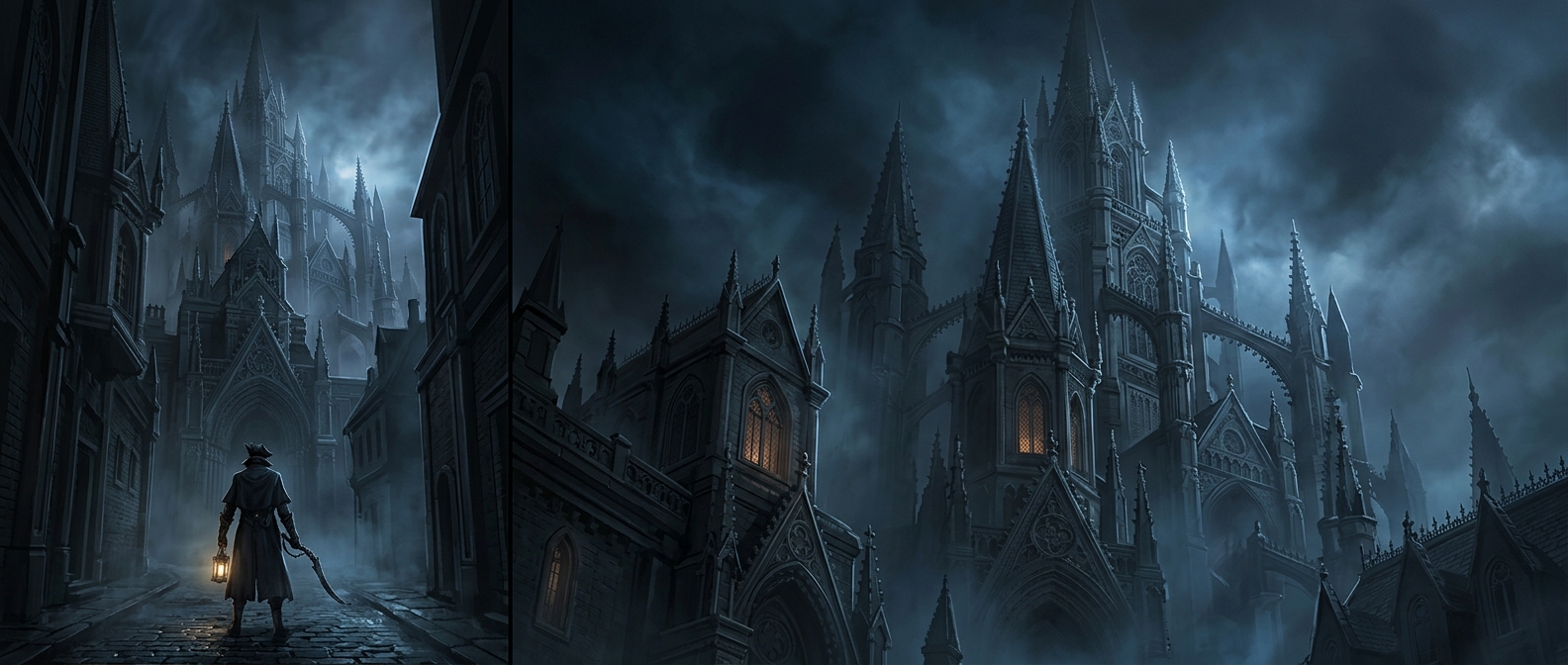
A City Built to Feel Older Than Its Monsters
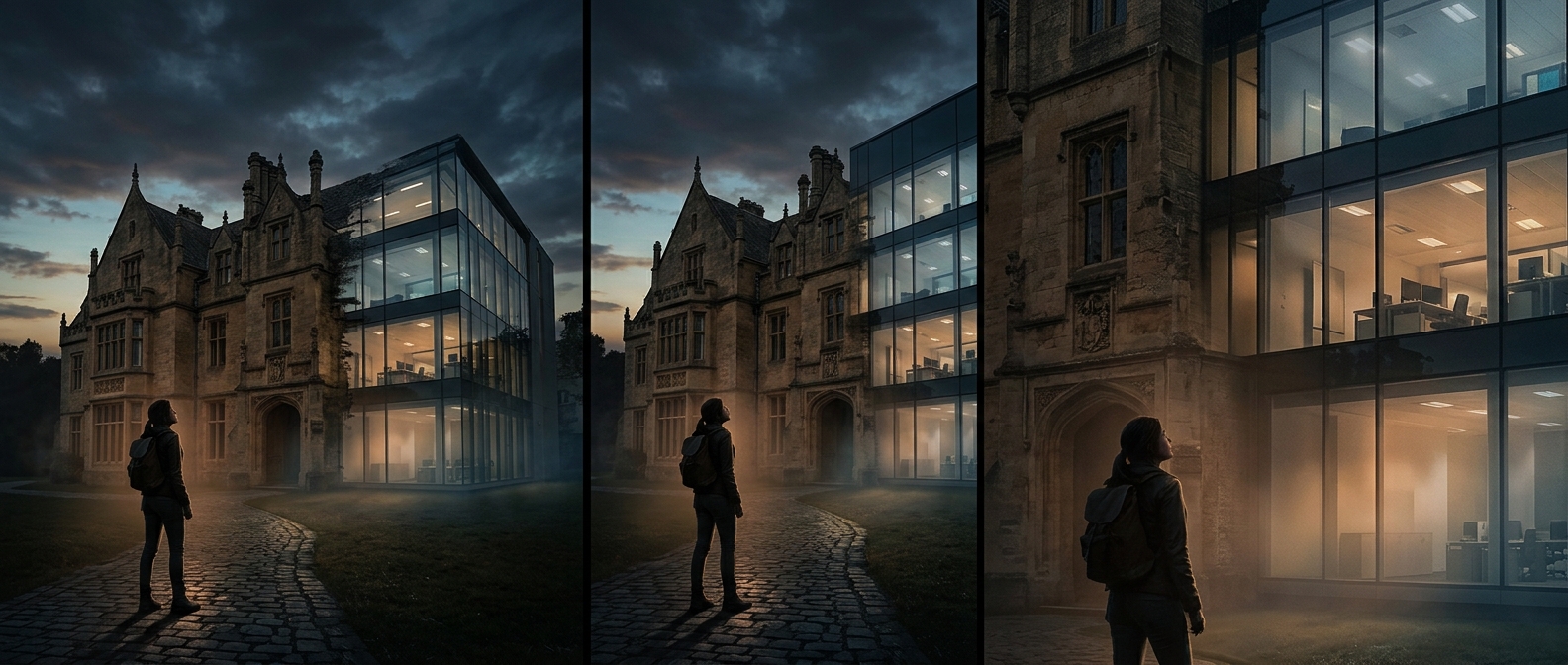
Yharnam’s architecture does more than provide a Victorian-looking backdrop. Its steep roofs, narrow streets, ironwork, and crowded stone façades make the city feel like a place shaped over generations—long before the player arrives. That sense of ordinary history gives the horrors a sharper contrast: a beast lunging from a doorway seems to have invaded a recognizable civic world, not a purpose-built monster arena.
Why the Streets Feel So Confining
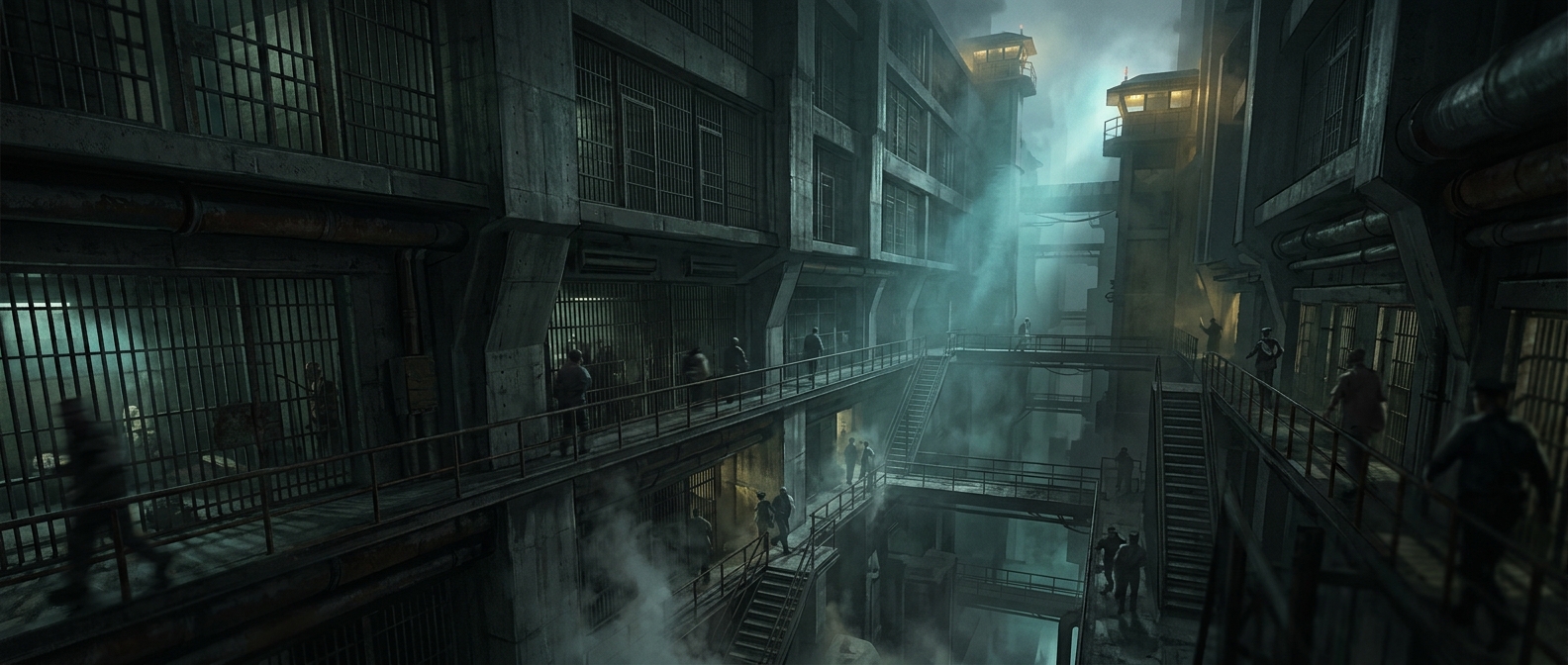
The design repeatedly turns streets into funnels. Tall buildings close in above the player, while gates, stairways, and cramped passages limit the view ahead. This makes navigation feel uncertain and lets threats emerge from corners or doorways. The architecture also supports the game’s combat: narrow approaches can make it difficult to evade several enemies at once, encouraging players to read the space and draw foes into more manageable encounters.
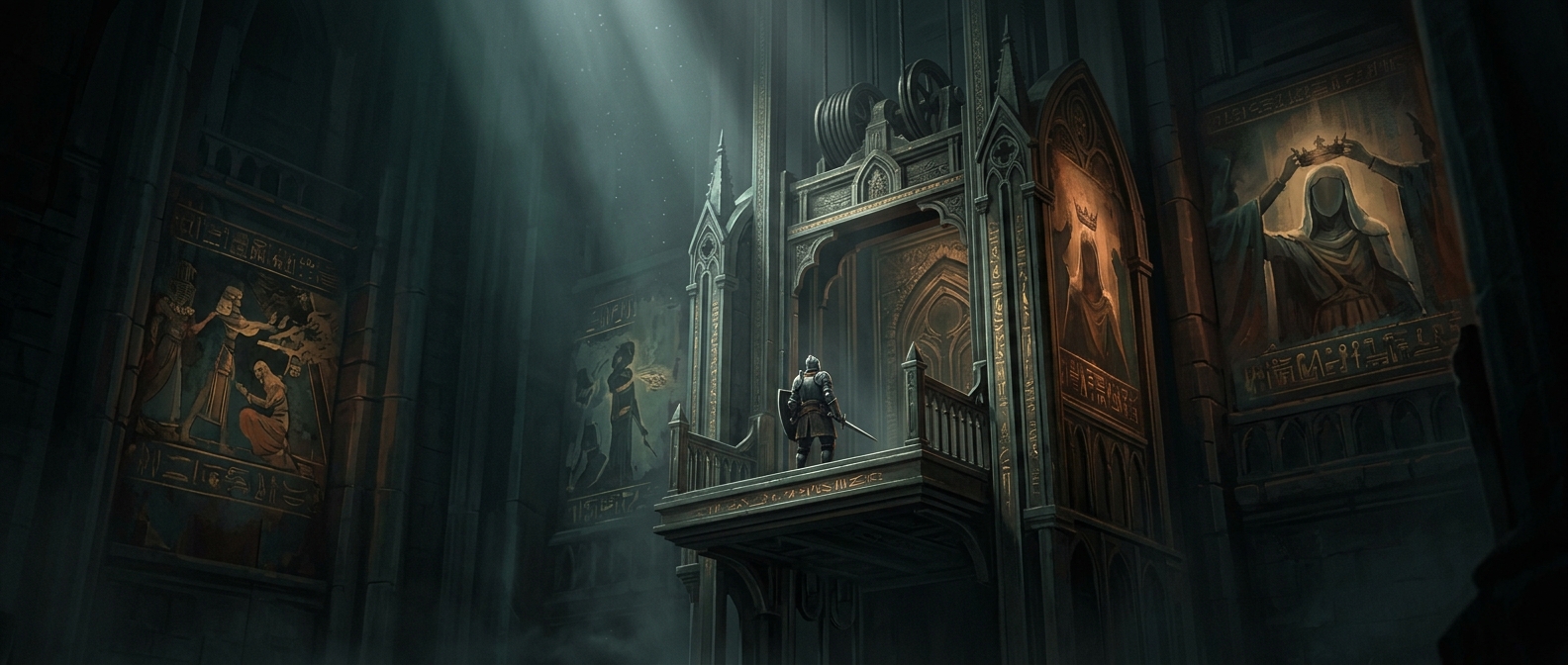
The city’s many ledges, balconies, and layered routes offer glimpses of places the player may reach later. These sightlines help Yharnam feel interconnected, even when its layout is initially hard to understand. A route that loops back to a familiar street can turn exploration into a gradual reconstruction of the city in the player’s mind.
The Buildings Carry the Mood
Victorian and Gothic influences bring associations of age, wealth, and urban density, but Bloodborne twists that visual language toward decay. Ornate stonework and looming spires suggest a proud city; grime, darkness, and bodies in the street show what has become of it. The result is not simply a contrast between handsome buildings and grotesque creatures. The architecture makes the monsters feel like the ruin of a society, rather than an interruption of the scenery.