Why Ordinary Objects Make Compelling ASMR
A household object has no single “ASMR sound.” A wooden block can produce a low, solid knock; a synthetic sponge gives a softer, grainier tap; thin plastic adds sharp crackles. The appeal comes from these small differences in texture, which become unusually noticeable when a microphone is close and the rest of the recording is quiet.
Turning a Sound Into a Sequence
Creators often repeat a sound, vary its speed, or move between objects. That gives the listener a pattern to follow—and small changes to notice—without adding a melody or a spoken explanation. A brisk series of taps can feel energetic, while pauses and slower repetitions give each sound room to register. The object is simple; the performance is in the timing, pressure, and angle of contact.
Close recording also changes the scale of the experience. A tap that would disappear in a busy room becomes an intimate, detailed event in headphones. The microphone can pick up the scrape before impact, the hollow ring afterward, or the flutter of a wrapper being handled. Those incidental sounds help make the recording feel immediate rather than polished into a conventional musical track.
The Constraint Is the Creative Choice
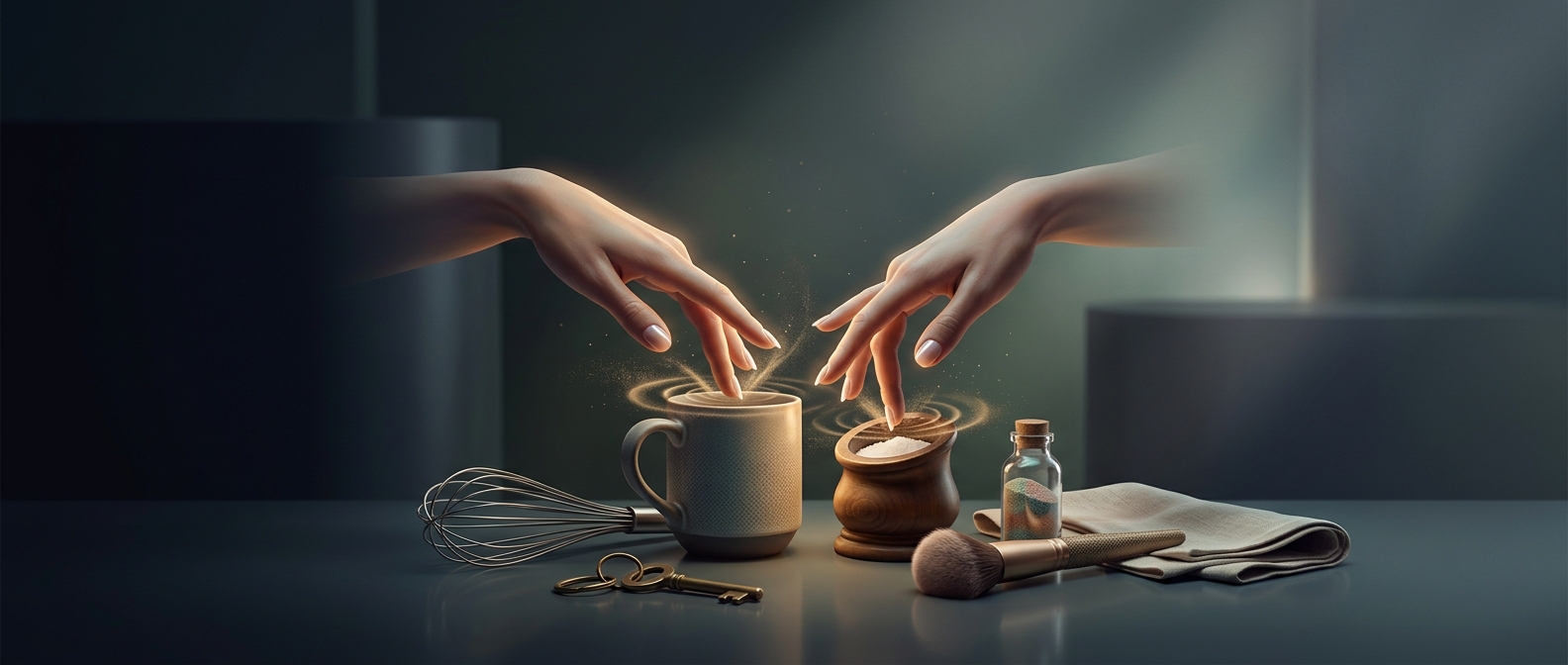
Because the objects are familiar, the creator does not need to explain what they are. Viewers can concentrate on how each one sounds. That makes ordinary materials useful tools: they are easy to handle, but varied enough to offer different textures. The surprising part is that the performance can transform a sound people usually ignore into the main event.